Rural Acreage Fence in La Center, WA: Dogs, Deer, Gates and Terrain
A planning guide for La Center acreage owners choosing safe dog containment, deer deterrence, driveway gates and a maintainable fence layout.
Source-reviewed homeowner guide
Quick takeaways
- ✓Use different fence zones for dogs, gardens, entries and long boundaries.
- ✓Confirm city limits before applying La Center or Clark County height rules.
- ✓Long rural runs need a written maintenance and inspection plan.
Divide the acreage into real fence jobs
A long rural perimeter rarely needs one material everywhere. Separate the driveway and public-facing entry, dog yard, garden or orchard, utility area, wooded edge and any livestock use. Record the animal size and behavior, desired visibility, maintenance access and how often each gate will operate. A dog that digs needs a different detail than a deer deterrent, and neither automatically satisfies pool or livestock requirements.
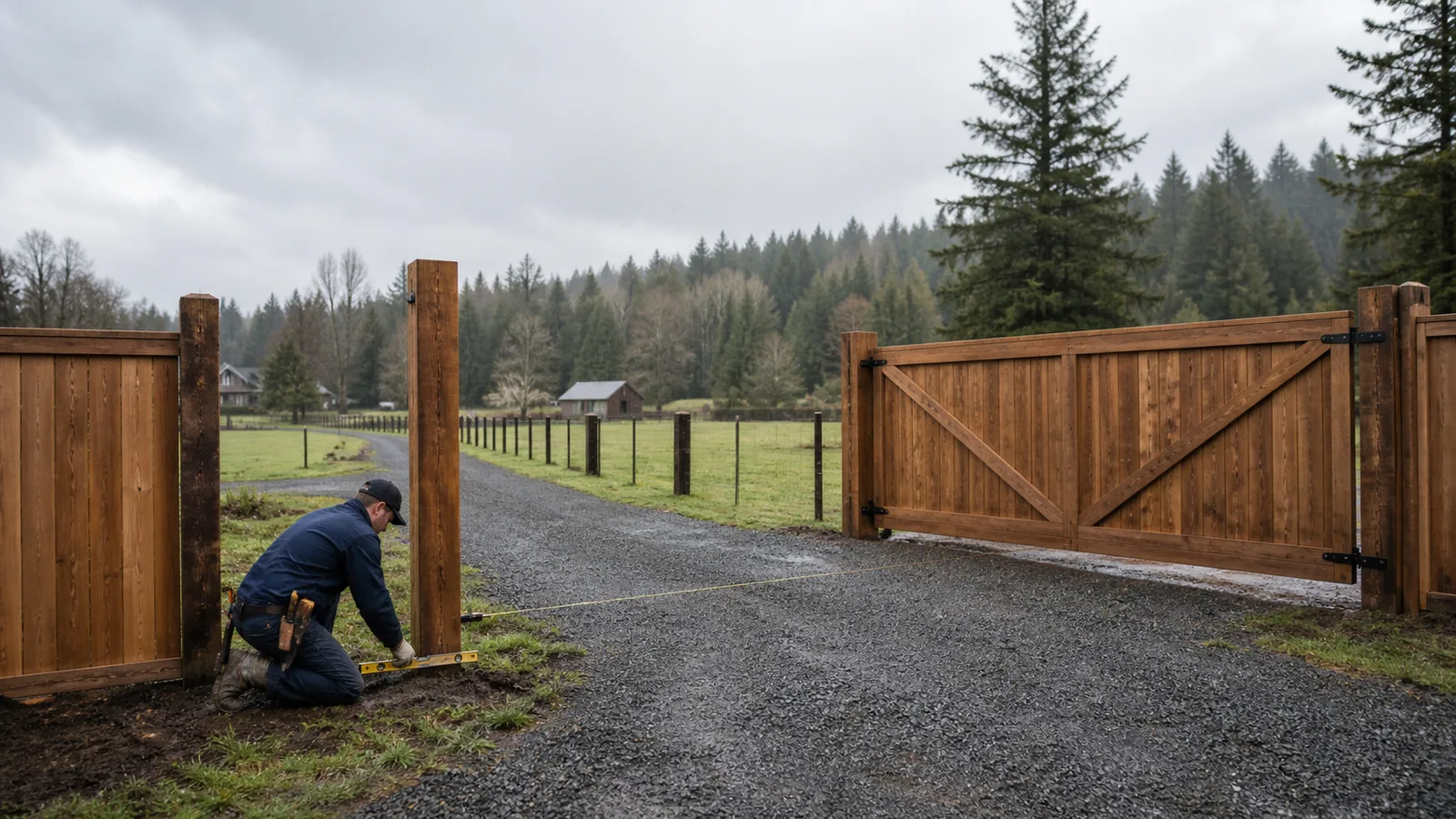
Walk the line with a map and mark grade, wet ground, seasonal drainage, brush, large roots, rock, existing wire, shared roads, easements and corners where equipment must turn. Measure gates for the actual truck, trailer, mower or emergency access rather than a guessed width. A shorter secure dog enclosure plus a simpler outer boundary may perform better and cost less than making every foot a tall solid privacy fence.
Match mesh, height and bottom detail to the purpose
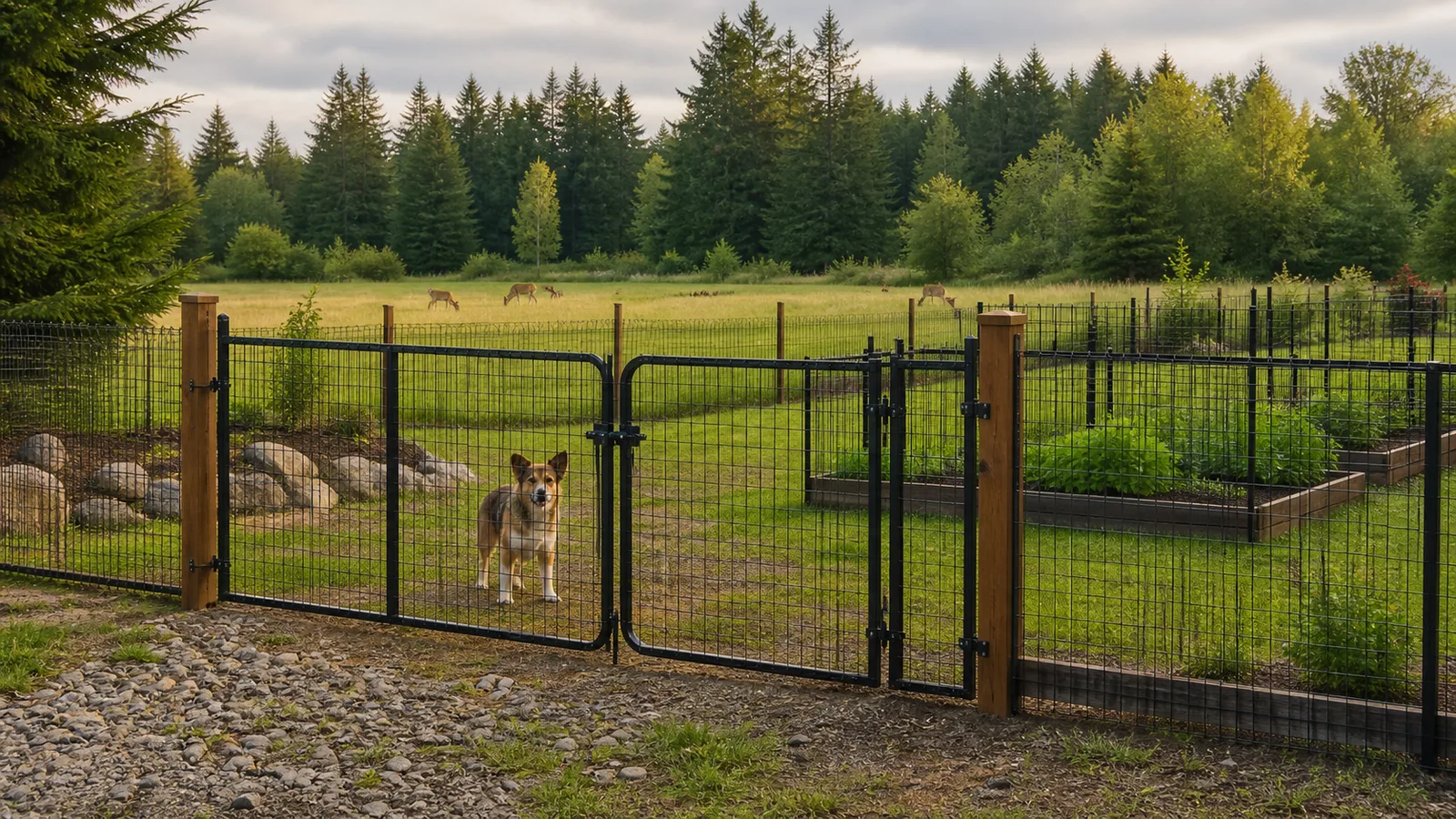
For dogs, opening size, wire strength, bottom gap, corners, gate latches and climbability all matter. Small mesh near the ground can protect paws and prevent a small animal from squeezing through, while a dig-prone dog may require a purpose-designed buried or surface apron that does not create sharp edges. Do not rely on loose lightweight garden netting as permanent containment. A double-gate transition can reduce escape risk at a busy driveway.
Deer pressure is site-specific and no fence is a behavioral guarantee. Height, visibility, angle, depth of protected area and nearby landing space affect deterrence. A garden may justify a focused tall enclosure rather than a full acreage barrier. Keep wildlife movement, roadside visibility and neighbor impact in mind. Solid privacy panels add major wind load and can block views; open agricultural or chain-link systems often fit long runs better when privacy is not the primary goal.
- •Separate plan for dogs, garden, entry and outer boundary
- •Mesh opening, wire strength, bottom gap and corners specified
- •Gate width based on real vehicles and emergency access
- •Wet areas, drainage paths, roots and brush mapped
- •Maintenance lane and vegetation clearance preserved
Confirm whether the address is city or county
A La Center mailing address does not prove that the parcel is inside city limits. The City of La Center publishes maximum fence heights of six feet in side and rear yards and four feet in the front yard, and asks homeowners to call before construction when permit status is uncertain. Unincorporated Clark County publishes different permit thresholds, including a general exemption for fences seven feet or less while still requiring compliance with setbacks, easements and local code.
Identify the parcel and jurisdiction before designing the height. Check recorded easements, road approach, critical areas and drainage restrictions. A driveway gate with power, access controls or lighting can add electrical work and permitting. A fence serving a pool, retaining wall or specialized agricultural use can have rules beyond ordinary residential screening. Ask the responsible authority about the exact use rather than presenting only the word “fence.”
Price the system by zones and maintenance
Ask for a plan and separate quantities by fence type. The bid should list line verification, clearing limits, corner and brace assemblies, post material and spacing, wire or panel specification, gates and hardware, utility locate, permit, equipment access, debris disposal and restoration. Clarify who maintains vegetation and tension after installation. On long runs, small differences in post spacing, wire grade and gate count materially change both price and performance.
Verify the contractor’s Washington registration, bond and insurance in L&I Verify. Specialty contractors must work within their registered scope, and electrical gate work may require a properly licensed electrical contractor. Inspect corners, braces, tension, sharp wire ends, bottom gaps, gate latches and clearance. Walk the full line after the first storm and seasonally thereafter; fallen branches, soil movement and vegetation can create an escape point even when the original installation was sound.
Plan the next step
Continue with a relevant local service, named request or supporting guide.
Homeowner questions
Is a La Center mailing address always inside the city?+
No. Confirm the parcel jurisdiction before using city or unincorporated Clark County fence rules.
What fence is best for a dog that digs?+
There is no universal material. Specify mesh, bottom gap, corners, gates and a safe anti-dig detail for the dog and soil.
Should the entire acreage use a deer fence?+
Often a focused garden or orchard enclosure is more practical. Evaluate local pressure, protected area and maintenance before fencing the full perimeter.
Who should wire an automated driveway gate?+
Electrical work should follow Washington licensing and permit requirements; do not assume a fence installer can perform it.
Primary sources
Official requirements can change. Confirm the current rule for your address and project with the named authority.