Cedar vs. Vinyl vs. Chain-Link Fence in Battle Ground, WA
A wet-climate comparison of three common fence systems, with Battle Ground height rules, gate planning, maintenance and bid details homeowners should compare.
Source-reviewed homeowner guide
Quick takeaways
- ✓Cedar, vinyl and chain-link should be compared as complete systems.
- ✓Battle Ground’s front, side and rear height rules affect the layout.
- ✓Wet soil, wind, gates and maintenance can matter more than the panel price.
Choose performance before appearance
Start with the reason for the fence: privacy, a dog, a child play area, a pool barrier, garden protection, a street edge or a simple boundary marker. Then record wind exposure, shade, drainage, grade, gate width and how much maintenance the household will actually perform. A material that looks ideal in a catalog can be a poor fit when the run sits in saturated soil, under trees or across a windy open lot.
Do not compare only installed price per linear foot. Posts, footings, rails, panels, fasteners, gates and transitions determine how a fence behaves. Request the same height, total footage, gate count, demolition and site conditions in every bid. A lower material price can be erased by difficult access, old concrete, rock, roots, disposal or a wide gate that needs stronger posts and hardware.
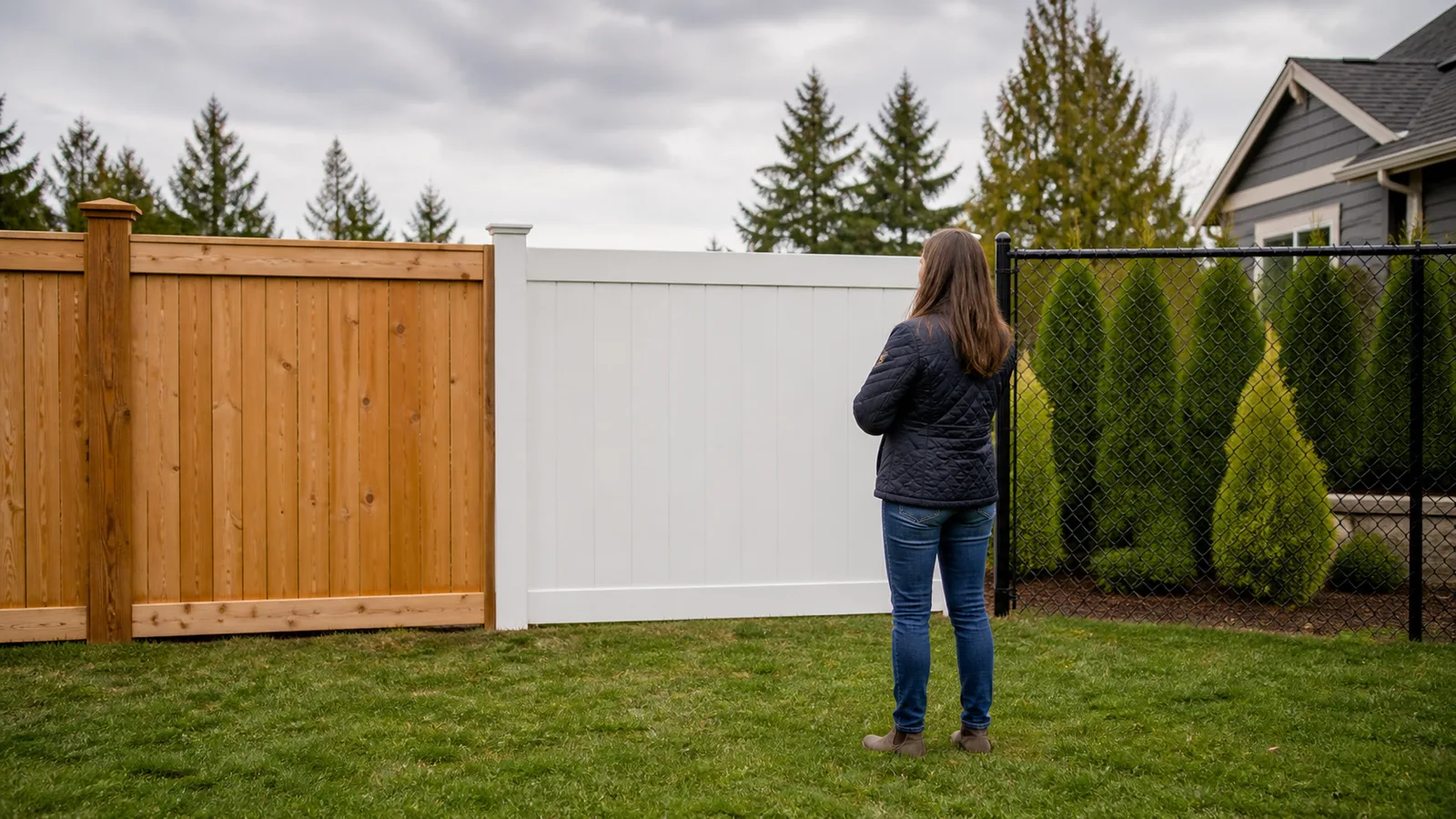
Cedar, vinyl and chain-link solve different problems
Cedar gives warm privacy and can be repaired board by board. It also moves, grays and absorbs moisture, so board spacing, ground clearance, corrosion-resistant fasteners and a realistic cleaning or staining cycle matter. Ask whether the price covers rough or finished boards, board thickness, cap and trim, one or both finish sides, and the waiting period before coating new wood. The posts and drainage at grade usually matter more than decorative details.
Vinyl offers privacy without routine staining, but product quality, reinforcement, thermal movement and wind design vary. A damaged proprietary panel may be harder to match years later. Chain-link preserves visibility, drains freely and often suits pets or utility areas, but privacy fabric adds wind load and changes the visual result. Ask for mesh gauge, coating, terminal posts, top rail, tension wire and gate frame. For every system, compare the complete specification rather than the material name.
- •Purpose, height and privacy level for each fence run
- •Post size, spacing, footing and response to wet soil
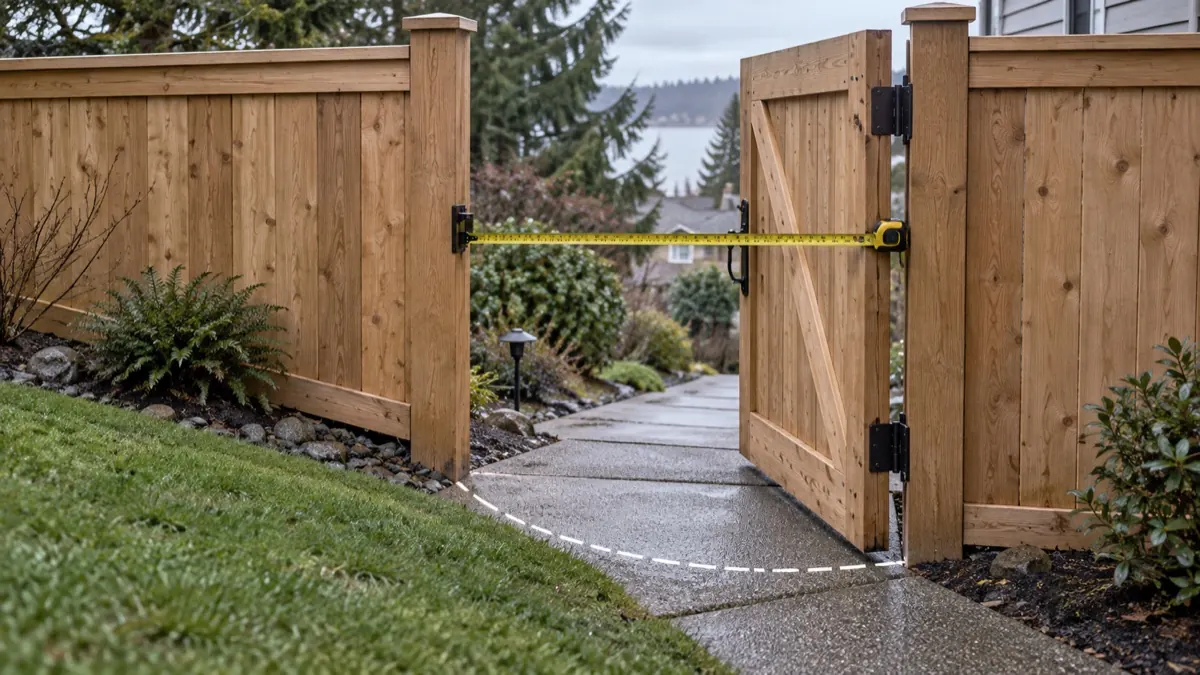
- •Gate opening, frame, hinge, latch and drop-rod hardware
- •Wind exposure and any added privacy fabric or solid panels
- •Finish, cleaning, replacement-parts and warranty plan
Fit the design to Battle Ground rules
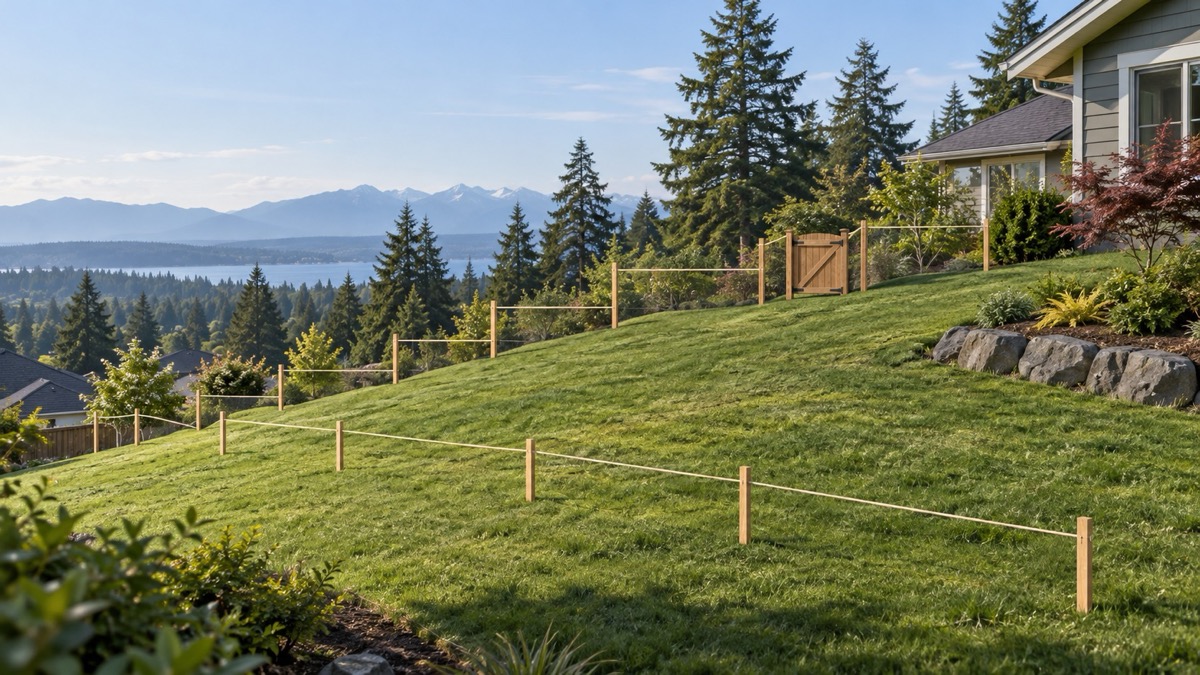
Battle Ground’s residential information says fences 42 inches or less generally do not require a permit, while taller fences do. It describes a 42-inch maximum in the required front-yard area and a six-foot maximum for side and rear fences, with structural posts and framing facing the lot interior. Sight-distance and retaining-wall conditions can add constraints. Confirm the current interpretation for the parcel before ordering materials.
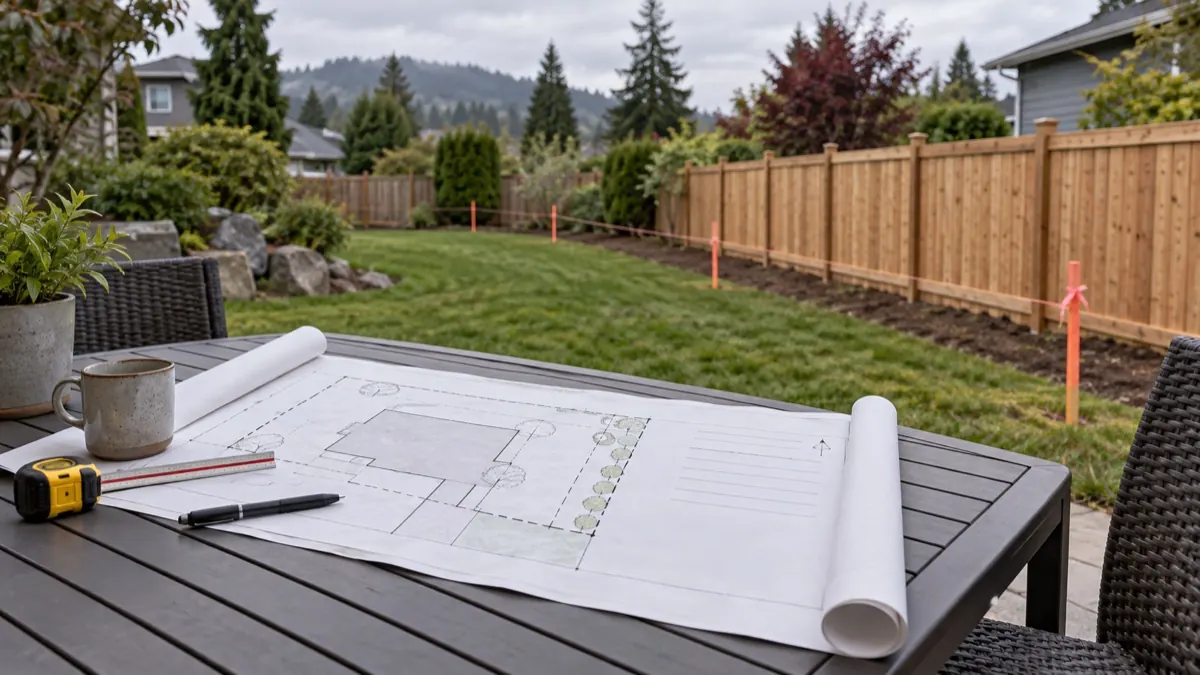
The city rule and a private HOA standard are separate. A corner lot, driveway, easement, drainage facility or retaining wall can make a simple catalog layout unsuitable. Show the proposed line, height changes and gate swing on a scaled sketch. If the property is outside city limits, Battle Ground city standards may not control; identify the actual permitting jurisdiction rather than relying on the mailing address.
Turn the material choice into a durable contract
The contract should identify product, dimensions, color or finish, post and footing details, fasteners, gate hardware, demolition, haul-away, utility locate, permits, landscape restoration and exclusions. Ask how the installer handles soft soil, buried concrete and grade changes. For a shared boundary, document which face, trim and access have been agreed with the neighbor. Do not approve substitutions with “equivalent” quality unless the replacement specification is written.
Verify the contractor’s registration, bond and insurance with Washington L&I. During the work, photograph post holes and materials before they disappear. At handoff, operate every gate, check latches and clearances, look for sharp wire or exposed fasteners, and confirm cleanup. Keep a small set of product labels or component information when replacement parts are system-specific. The best material is the one whose complete assembly matches the site and maintenance plan.
Plan the next step
Continue with a relevant local service, named request or supporting guide.
Homeowner questions
Which fence needs the least routine finish maintenance?+
Vinyl and coated chain-link do not need wood stain, but they still need cleaning, hardware checks and repair of damaged components.
Is cedar a bad choice in a wet climate?+
No. Good material, drainage, ground clearance, fasteners and a realistic finish plan are more important than avoiding cedar entirely.
Can privacy fabric be added to any chain-link fence?+
It adds wind load. The posts, footings and frame should be evaluated for the more solid surface before fabric is installed.
Does an HOA approval replace a Battle Ground permit?+
No. Private approval and public permitting are separate requirements.
Primary sources
Official requirements can change. Confirm the current rule for your address and project with the named authority.