Fence Replacement in Vancouver, WA: Property Lines, Permits and a Better Bid
A Vancouver homeowner guide to replacing an aging fence without guessing at the boundary, blocking a water meter or comparing incomplete per-foot prices.
Source-reviewed homeowner guide
Quick takeaways
- ✓Do not treat the old fence or parcel viewer as a surveyed boundary.
- ✓Vancouver’s common six-foot permit exemption still leaves zoning, access and sensitive-area rules.
- ✓Compare bids that include gates, demolition, digging conditions, finish and restoration.
Separate repair, replacement and relocation
Begin by walking both sides of the fence and marking failed posts, loose rails, rot at grade, leaning panels, damaged gates and vegetation pressure. A fence that looks tired may need only several posts and a new finish; a straight run with widespread decay may be a better replacement candidate. Relocating the line is a different project because ownership, setbacks, easements and neighbor expectations become central. Photograph every run and gate from both directions before demolition.
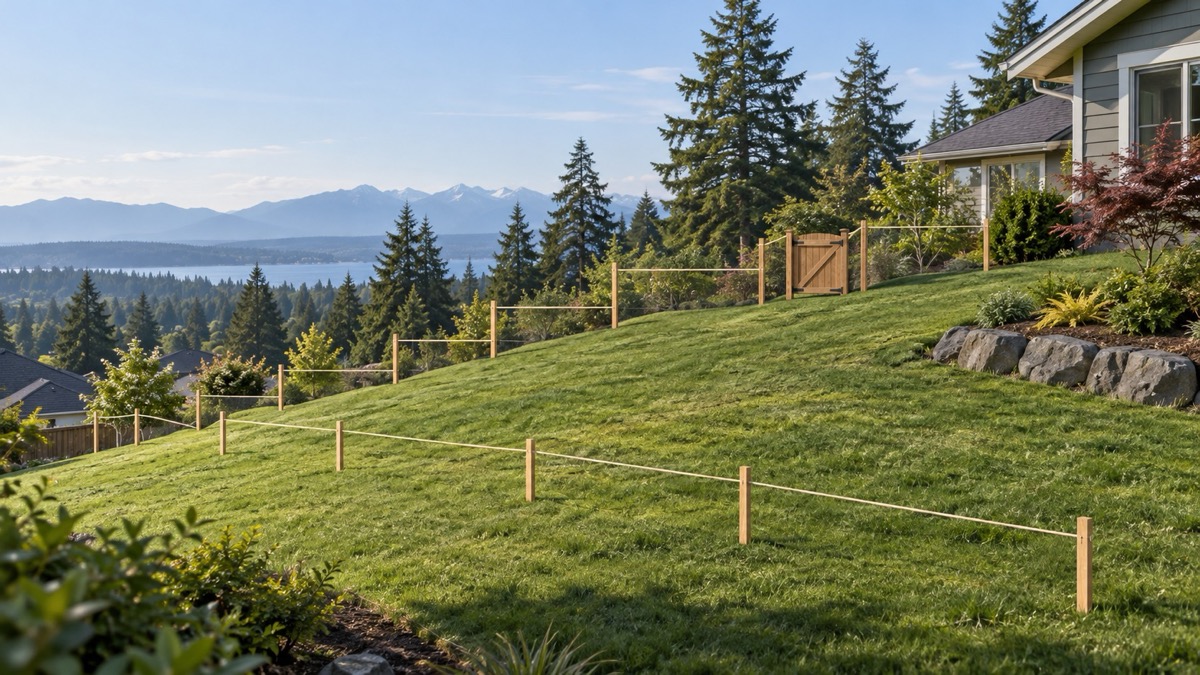
Record total linear feet, approximate height, material, number and width of gates, grade changes, retaining walls, trees, irrigation, utility boxes and access for debris removal. Note who owns adjoining fences and whether the old structure changes at each corner. This field record lets a contractor price the same scope and prevents a low per-foot number from excluding gates, demolition, haul-away, difficult digging or finish work.
Confirm the line before setting posts
A tax map, online parcel viewer or an old fence is not a field survey. Clark County explains that the Assessor does not survey property or resolve boundary disputes. Search for recorded surveys and visible monuments, then use a licensed land surveyor when the location is uncertain or the consequences of an error are meaningful. Do not ask a fence installer to guess a legal boundary from a phone map.
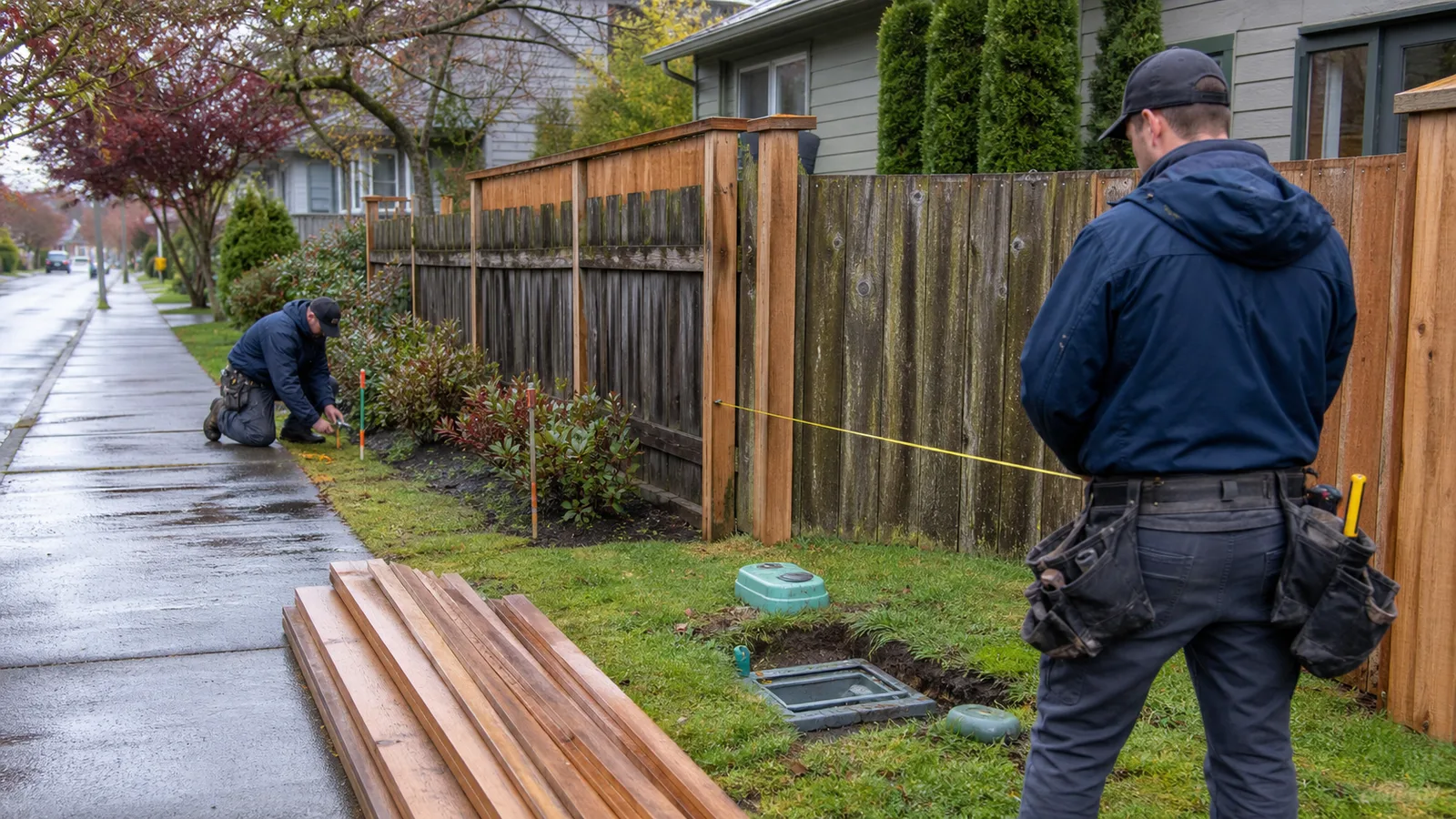
Discuss access and shared costs with the neighbor in writing, but do not treat a conversation as a boundary determination. Check the deed, title report and recorded easements for utilities, drainage or access. Keep posts, footings and concrete on the approved side unless a documented agreement says otherwise. Before digging, the contractor should arrange the required utility locate and identify private systems such as irrigation, lighting or a private drain that public locating may not mark.
- •Recorded survey or surveyor decision when the line is uncertain
- •Utility, drainage and access easements shown on the plan
- •Water meter, hydrant and utility equipment kept accessible
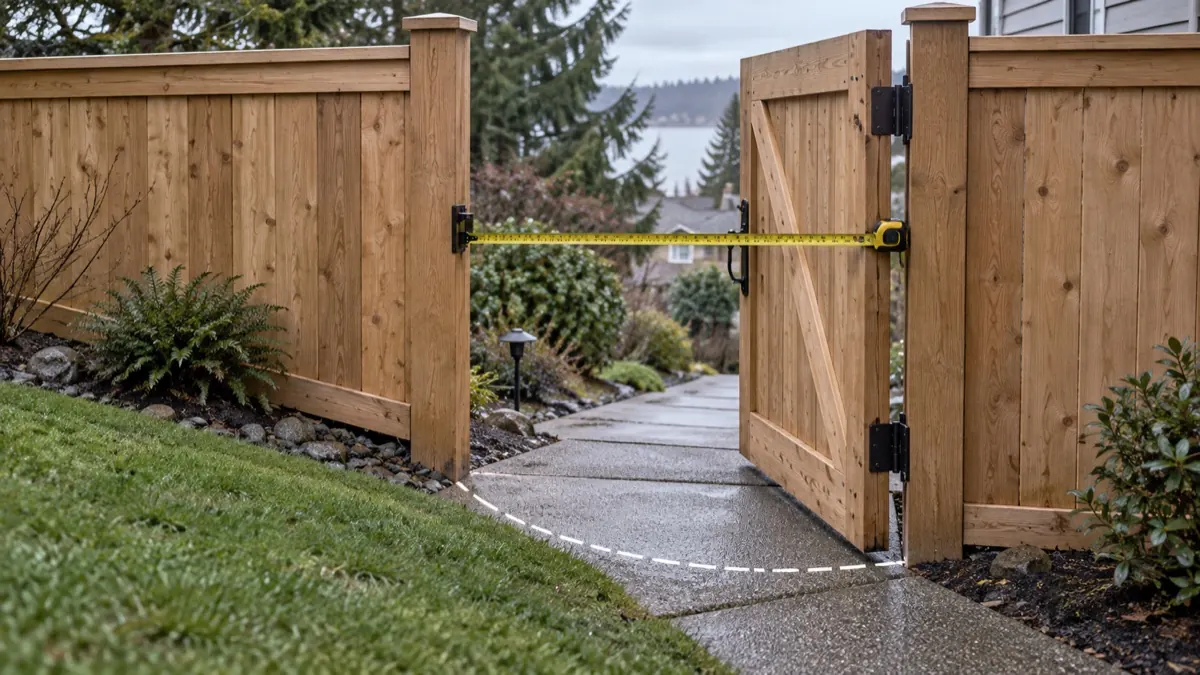
- •Gate swing, latch side and driveway clearance agreed in writing
- •Demolition, haul-away and landscape protection included in scope
Use Vancouver rules as a starting point, not a shortcut
The City of Vancouver says a fence six feet or less outside an environmentally sensitive area generally does not require a residential building permit, while other conditions can trigger review. Permit-exempt work still must comply with zoning, height, setback and building rules. The city also states that fences cannot block access to a Vancouver water meter. Confirm the current rule for the exact address, especially near a critical area, corner sight line or public right-of-way.
A replacement that repeats an old violation does not become compliant because the footprint already exists. Ask planning staff about front-yard height, corner visibility, sensitive areas and any work close to a street. HOA or condominium approval is separate from city review. A private rule can be more restrictive, but an association approval does not replace a permit or city standard when one applies.
Compare complete fence bids
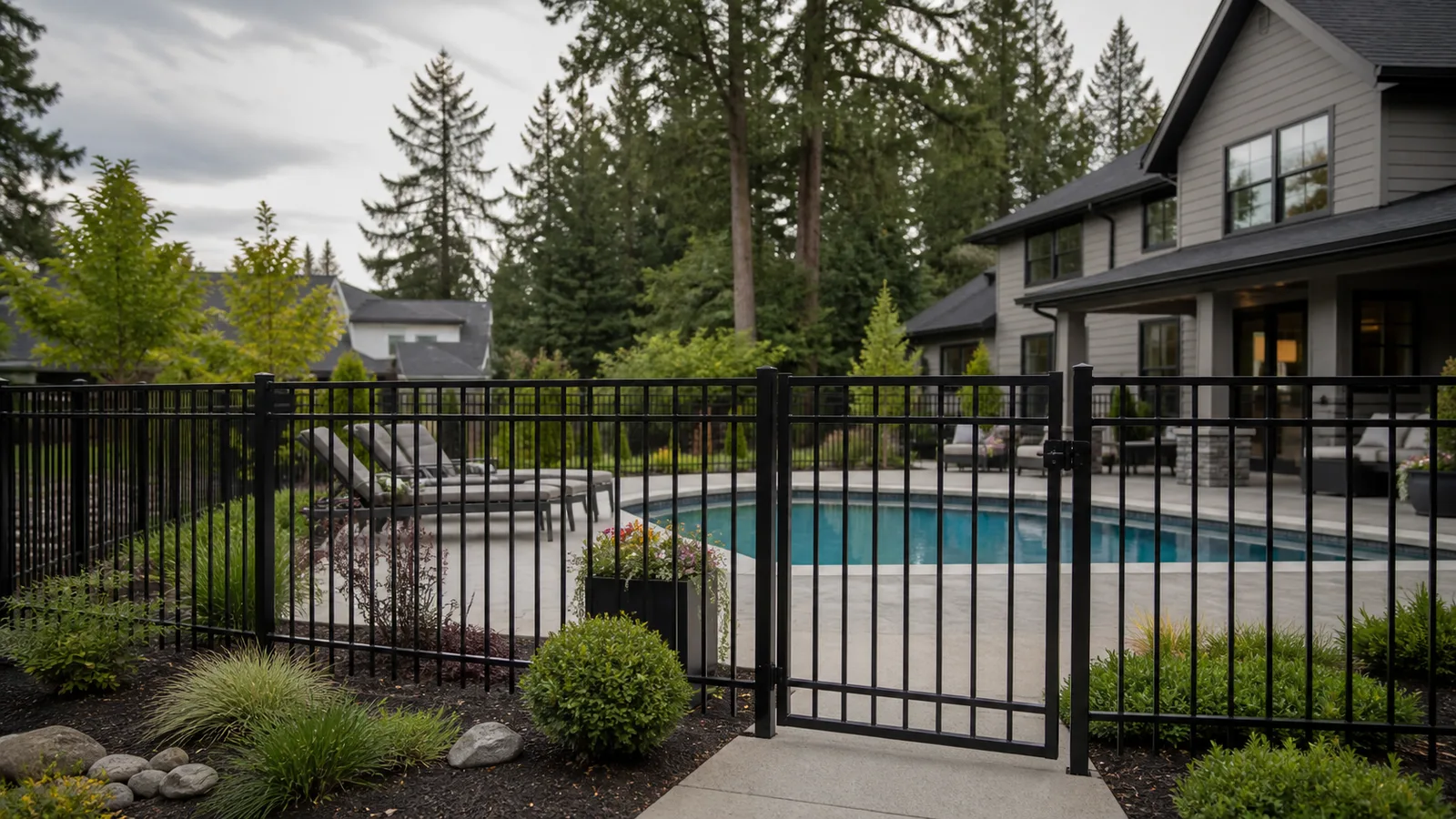
A useful bid identifies layout, total length, height, material and grade, post size and spacing, footing approach, rails, pickets or panels, fasteners, gates, hardware, finish, demolition, haul-away, utility locate, permit responsibility and restoration. For cedar, ask about board thickness, species or grade, ground clearance and when stain or sealer can be applied. For metal or vinyl systems, request the manufacturer and component specification rather than a generic material label.
Verify the contractor’s Washington registration, bond and insurance in L&I Verify under the exact business name on the proposal. Avoid a large cash payment for an undefined scope. Use written change orders when hidden concrete, roots, buried utilities or unstable soil changes the work. At completion, inspect alignment, post firmness, fasteners, gate clearance and latch operation; retain the permit record, material information, final photos and written warranty with the house file.
Plan the next step
Continue with a relevant local service, named request or supporting guide.
Homeowner questions
Does a six-foot fence in Vancouver always avoid a permit?+
No. The city describes a common exemption outside environmentally sensitive areas, but address, height, location, right-of-way and other reviews can change the answer.
Will Clark County tell me exactly where the property line is?+
The Assessor does not survey property or settle boundaries. Use recorded information and a licensed surveyor when the line is uncertain.
Should the fence contractor order the utility locate?+
The digging party should make sure the required locate is completed. Private irrigation, drains or lighting may need separate locating.
What should I inspect before final payment?+
Check layout, height, post firmness, fasteners, ground clearance, gate swing and latch, cleanup, finish and any required inspection record.
Primary sources
Official requirements can change. Confirm the current rule for your address and project with the named authority.