Ornamental Metal Fence in Vancouver, WA: Yard and Pool Planning
How to compare aluminum and steel-style ornamental systems, plan gates and corrosion protection, and avoid treating a decorative fence as an automatic pool barrier.
Source-reviewed homeowner guide
Quick takeaways
- ✓Specify the metal system rather than buying a generic black fence.
- ✓A pool barrier needs project-specific gate and opening compliance.
- ✓Protect coating cuts, drainage and gate operation for long service.
Define the barrier before selecting a style
Ornamental metal can preserve a view while marking a yard, containing a pet or forming part of a pool enclosure, but those uses are not interchangeable. Record the exact purpose, total footage, grade, desired height, gate locations, pet size and exposure to sprinklers or standing water. A low decorative boundary may be attractive and still be unsuitable for a dog, steep drop or regulated pool barrier.
Distinguish welded steel, rackable aluminum panels and other proprietary systems by written specification. Ask about rail and picket dimensions, post size, panel span, coating process, cut-edge treatment, fasteners, gate frames and availability of replacement parts. “Black metal fence” is not enough for comparable bids. The finish warranty may exclude field cuts, coastal exposure, damaged coating or contact with chemicals, so read it before choosing the system.
Treat a pool enclosure as life-safety work
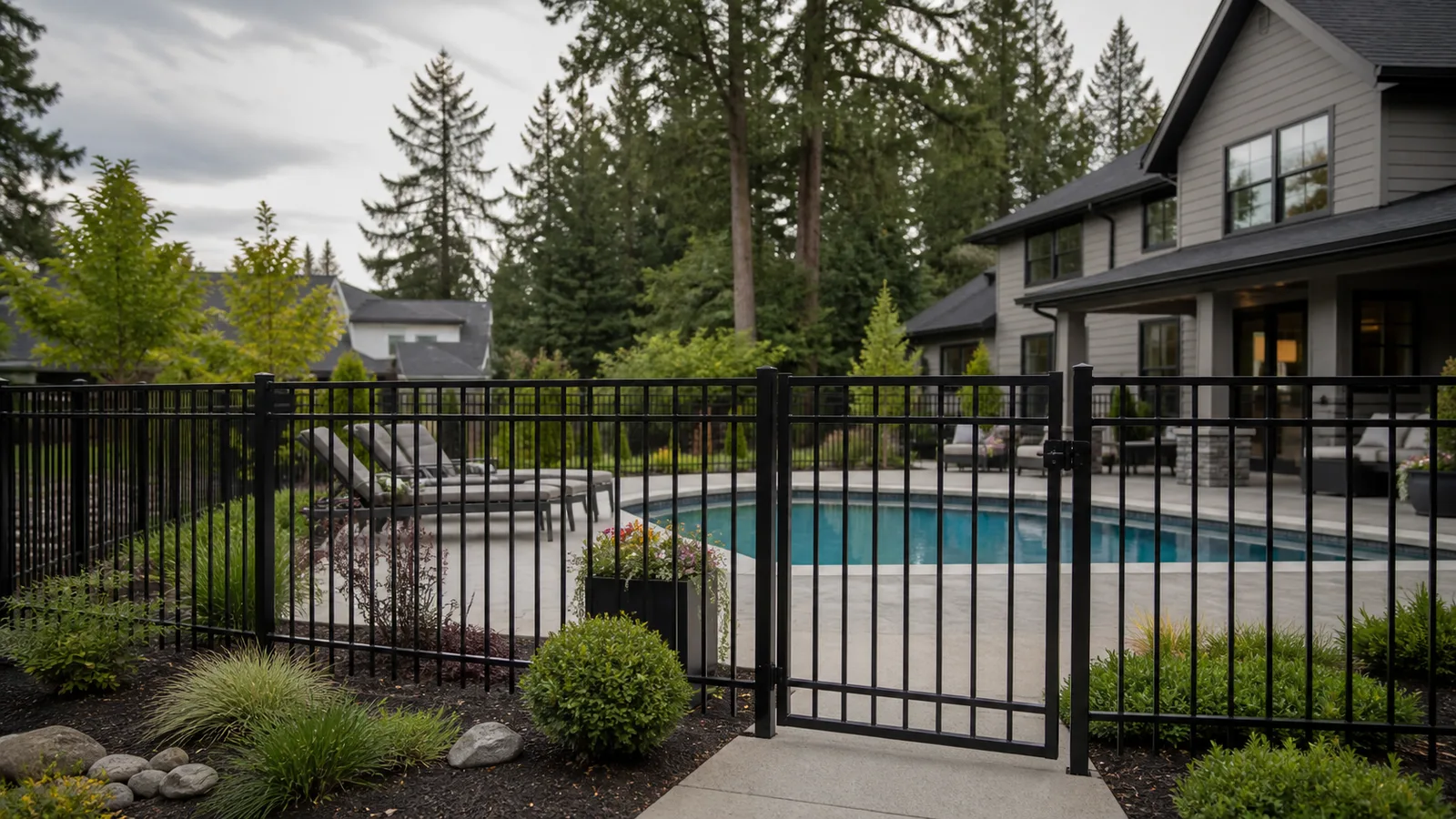
Vancouver publishes a signed swimming-pool enclosure and safety-device requirement as part of its residential resources. The document regulates openings, climbable configurations, gates and latches. For example, it describes outward-opening, self-closing and self-latching pedestrian gates and limits openings in barriers. Confirm the current adopted requirements for the exact pool or spa; do not purchase standard landscape panels and assume they qualify.
Show the pool, house, doors, gates, equipment, grade and fence line on the site plan. A gate that meets the visual design but fails to close from every position is not a functioning safety barrier. Keep furniture, planters and equipment from creating footholds. If an existing wall or building forms part of the enclosure, ask the permitting authority how doors, alarms or other safety devices interact with the proposed fence.
- •Exact use: landscape, pet, fall protection or pool enclosure
- •Panel, post, coating and fastener specification
- •Gate swing, self-closing action and latch location
- •Opening sizes and climbable features checked
- •Drainage, sprinklers and cut-edge protection included
Coordinate the fence with the Vancouver site review
The city checklist asks for a site plan showing existing and proposed fences, height, material, property dimensions, easements, structures, driveways and streets. A retaining wall or pool can require foundation details, sections, engineering and additional documents. Even when an ordinary fence could be permit-exempt, the pool, wall, height, critical area or location can change the review. Confirm the scope before fabrication.
Verify the boundary rather than relying on the old fence. Protect access to meters and utilities, preserve driveway visibility and locate underground services before digging. An HOA approval is separate from city requirements. If a manufacturer drawing is used for permitting, require the installed post spacing, gate hardware and panel configuration to match that reviewed design instead of allowing a field substitution.
Compare installation and long-term maintenance
A complete bid includes layout, material series, post and footing method, rack or step treatment on slopes, welded or assembled gates, hardware, coating repair, demolition, haul-away, utility locate, permit, inspection and landscape restoration. Ask how the installer isolates dissimilar metals and protects drilled or cut areas. Irrigation spraying and soil contact can shorten coating life even when the main panels look durable.
Verify the contractor’s Washington registration, bond and insurance through L&I. At completion, check alignment, sharp edges, coating damage, post rigidity and every gate’s full closing cycle. For a pool barrier, do not accept the enclosure until required inspection and safety operation are complete. Keep product data, color, spare hardware information, permit record, final photos and warranty with the house file.
Plan the next step
Continue with a relevant local service, named request or supporting guide.
Homeowner questions
Is every ornamental metal fence suitable around a pool?+
No. Height, openings, climbability, gates, latches and the complete enclosure must meet the current project requirements.
Is aluminum always better than steel in rain?+
Not automatically. Product design, coating, hardware, cuts, posts and maintenance determine performance.
What should the pool gate do?+
Vancouver’s published requirements describe an outward-opening pedestrian gate that is self-closing and self-latching, subject to the full current rules.
Why keep the exact product series?+
It helps match replacement parts, finish and reviewed engineering later.
Primary sources
Official requirements can change. Confirm the current rule for your address and project with the named authority.