Fence Installation in Ridgefield, WA: Property Lines, Height and Permits
Plan a Ridgefield fence without guessing about property lines, corner visibility, utility locates, HOA rules, gates or permit responsibility.
Source-reviewed homeowner guide
Quick takeaways
- ✓Confirm jurisdiction before using a rule
- ✓Use a survey, not a GIS line
- ✓Treat gates and corner visibility separately
- ✓Locate public and known private utilities before digging
A fence estimate starts with jurisdiction and a real site plan
A mailing address that says Ridgefield does not always prove that the parcel is inside city limits. Permit, setback and right-of-way questions depend on the governing jurisdiction, so confirm the parcel first. The City of Ridgefield publishes building-permit services and a fence or wall permit application; unincorporated Clark County uses its own process. An HOA can add private design rules, but HOA approval does not replace a city or county requirement.
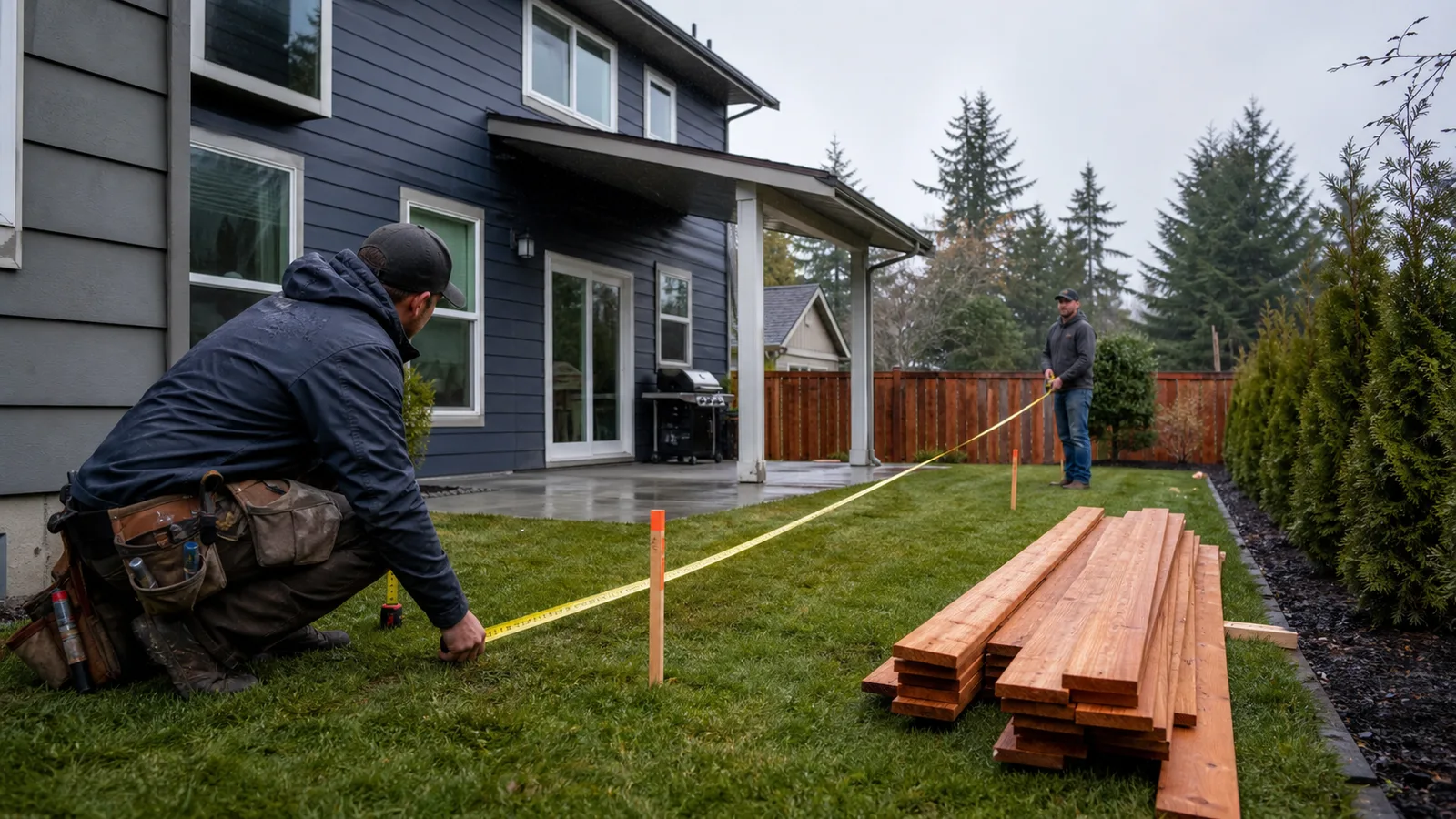
Mark the proposed run on an aerial or survey and identify the house, streets, driveway, gates, slopes, retaining walls and easements. A straight footage total is not enough for a reliable bid. A corner parcel near Downtown Ridgefield raises different visibility questions than a rear-yard replacement in Pioneer Canyon, while an acreage edge near Ridgefield Junction can change access, grading and gate needs. Treat neighborhood examples as planning context, not as substitutes for parcel-specific review.
Do not use an online map as a property-line survey
Clark County explains that its staff does not locate private property lines for owners and directs people to recorded plats, existing surveys or a licensed surveyor. GIS and tax maps are useful research tools, but their lines are not a field survey. Old fence posts, mowing patterns and a neighbor’s recollection are also weak evidence. A few inches of uncertainty can matter when concrete footings, gates or drainage are involved.
Before the contract, decide who will locate corners and what happens if monuments cannot be found. If the project follows a recorded survey, attach it to the scope. Discuss the line with the neighbor without asking the fence contractor to settle a boundary dispute. The written agreement should state whether the fence is placed on the line or offset onto the owner’s parcel and who owns future access for staining, repair and vegetation control.
- •Confirmed city or county jurisdiction for the parcel
- •Recorded plat or survey and visible corner evidence
- •HOA or architectural-review requirements
- •Street, driveway and corner sight-distance constraints
- •Utilities, irrigation, drainage, retaining walls and easements
Height, gates and corners need separate decisions
Do not assume that one maximum height applies everywhere on a lot. Front, side and rear yards can be treated differently, and a fence near an intersection or driveway must preserve visibility. The Ridgefield permit materials are the starting point for city parcels; ask planning staff to confirm the current rule for the address and design. If a taller privacy screen, retaining wall combination or unusual material is proposed, show it clearly rather than calling it a standard fence.
Gates add structural and operational questions: clear opening, slope, swing direction, latch side, post size, vehicle turning and emergency access. An automatic operator adds electrical and safety scope that should be priced separately. For a shared side fence, put the finished side, top profile and future maintenance access in writing. If the project changes drainage or adds fill around posts, flag that before work rather than after water moves toward a neighbor.
Call for utility locates and inspect private systems
Fence posts are excavations. The contractor should plan the required utility-locate process before digging, but public locating does not necessarily identify every private line after the meter. Irrigation, low-voltage lighting, private drainage, invisible pet fencing and septic components can cross the route. Walk the line with the contractor and mark known private systems. Never accept a schedule that requires drilling first and asking questions later.
Access matters too. Note soft ground, steep slopes, narrow side yards, overhead branches and whether equipment must cross a lawn. State who protects and restores turf, removes the old fence, hauls concrete and handles surplus soil. On wet Ridgefield sites, post-hole water and unsuitable soil can change the method; require any change in depth, footing or material to be documented rather than improvised without approval.
Build a bid that can survive the first winter
A comparable fence bid lists linear feet, height, board profile, species or product line, post material and spacing, rails, fasteners, concrete approach, gates, caps, finish, demolition, haul-away, permit and exclusions. Ask whether cut ends and field-drilled holes receive the specified treatment and whether staining is included now, delayed for drying or excluded. A material name such as “cedar” is not a complete specification.
Verify the applicable Washington contractor registration, bond and insurance, then confirm that the registration number appears where required. Agree on deposits, change orders, cleanup and workmanship warranty in writing. KABLAY does not survey land, issue permits or build the fence; it helps a homeowner prepare a clear request for independent professionals. The safest project resolves line, jurisdiction and utility questions before materials arrive.
Plan the next step
Continue with a relevant local service, named request or supporting guide.
Fence contractors in Ridgefield, WA →
Browse the Ridgefield fence category and prepare a local request.
Describe a cedar privacy fence →
Use the named service page and add line, gates and finish details.
Ridgefield permit planning checklist →
Coordinate permits and contractor verification before scheduling.
Homeowner questions
Does a Ridgefield mailing address mean city fence rules apply?+
Not always. Confirm whether the parcel is inside Ridgefield or in unincorporated Clark County before relying on a permit or height rule.
Can the county tell me exactly where my property line is?+
Clark County says it does not locate private property lines. Use recorded documents and, when needed, a licensed surveyor.
Does HOA approval replace a fence permit?+
No. HOA review is a private requirement; city or county permitting, visibility and right-of-way rules remain separate.
What should a fence bid specify?+
Require footage, height, material, posts, rails, fasteners, footings, gates, finish, demolition, disposal, permit responsibility and exclusions.
Primary sources
Official requirements can change. Confirm the current rule for your address and project with the named authority.