Deck Repair in Battle Ground, WA: Wet Wood, Railings and Permits
How to distinguish replaceable boards from structural decay, check guards and stairs, and determine when a Battle Ground deck repair needs permit review.
Source-reviewed homeowner guide
Quick takeaways
- ✓Surface boards and structural load path are different scopes.
- ✓Battle Ground’s 30-inch threshold is only a starting point.
- ✓Repair drainage before coating new wood.
Inspect the load path, not only the surface
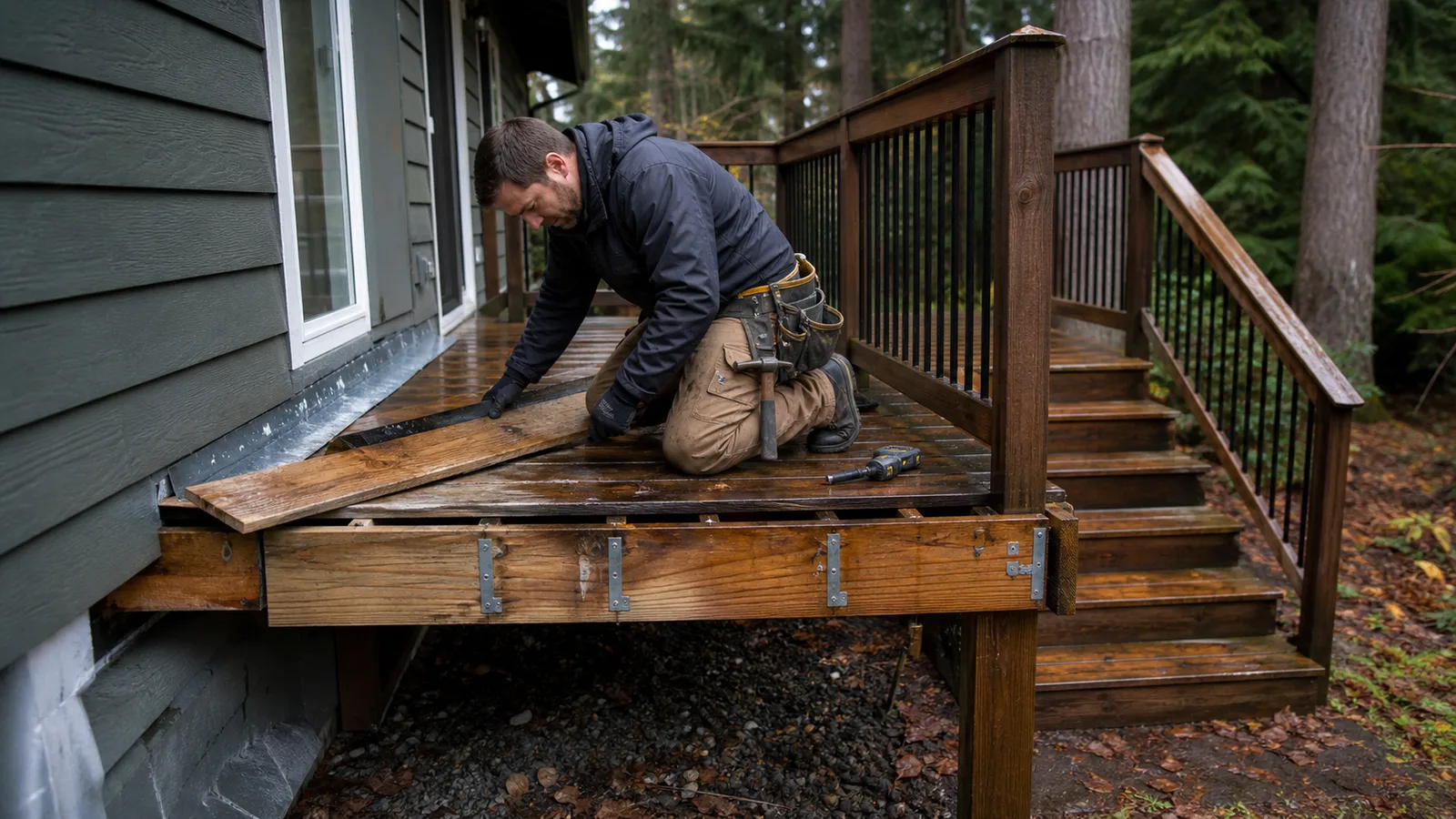
A stained or cracked deck board can be localized, while movement at posts, beams, ledger, stairs or guard connections can be structural. Observe from a safe position and stop using areas that feel unstable. Photograph the deck from above and below, including house connection, flashing, footings, beams, joists, posts, stairs and rails. Do not crawl under an unsafe structure or remove components before evaluation.
Probe only where safe and non-destructive. Record soft wood, fungal growth, standing water, corroded fasteners, loose guards, stair movement and soil contact. A coating may hide damage without restoring capacity. Ask whether the proposal replaces decking only or repairs the load path. If hidden damage is possible, define inspection openings and change-order rules before demolition.
Control water around the deck
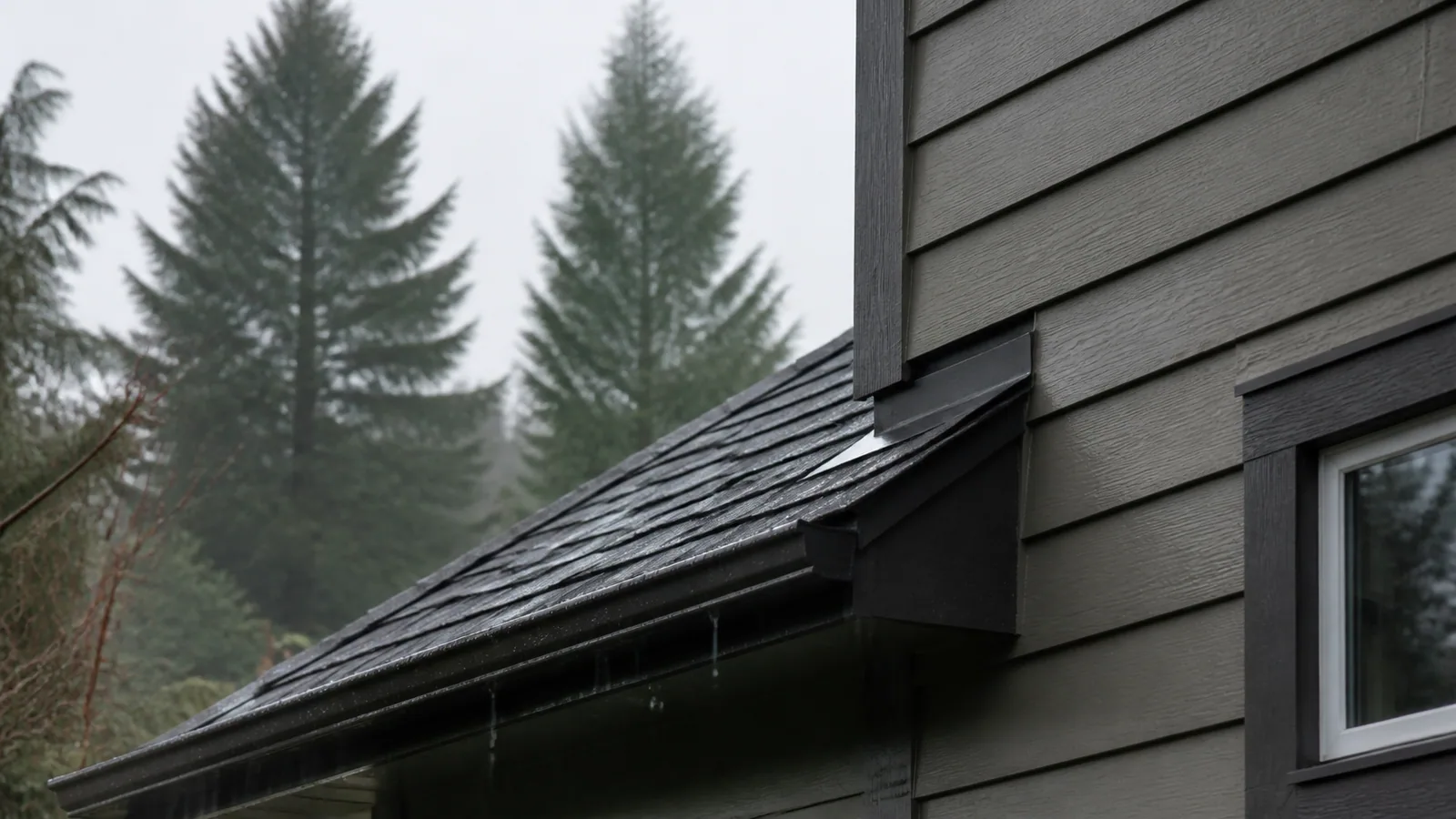
Check roof runoff, deck slope, gaps between boards, flashing at the house, drainage below and sprinklers. Debris trapped at the ledger or between boards holds moisture. New surface boards will not last if water remains against framing. Where a deck sits near a door, siding or crawlspace, coordinate the transitions so repair does not block drainage or create a path into the building.
Wood should be dry enough for the selected coating, and new pressure-treated material may need time before finishing. Ask for cleaning method, prep, fastener treatment and manufacturer conditions. Do not pressure wash aggressively enough to damage fibers. Structural repair, surface replacement and staining should be separate estimate sections even when one contractor performs all three.
- •Ledger, flashing and house connection inspected
- •Posts, beams, joists and footings documented
- •Guards, stairs and handrails checked for movement
- •Drainage and sprinklers corrected before coating
- •Hidden-damage change-order method written
Use Battle Ground permit thresholds carefully
Battle Ground’s residential guidance says decks under 30 inches can be permit-exempt in common cases, while higher decks require permits; its deck handout describes plans, framing, foundations, stairs, guards and connections for permit work. Repairing a structural element, changing a footprint, rebuilding a high deck or supporting a hot tub can require different review. Confirm the exact repair before demolition.
Permit-exempt does not mean structurally optional. Existing defects still need a safe design and suitable materials. Engineering can be required for unusual height, cantilever, loads or soil conditions. If the deck is part of a manufactured home or another regulated structure, different authority may apply. Identify jurisdiction from the parcel rather than only the mailing address.
Close the repair with a durable record
The contract should identify boards, framing, ledger, flashing, posts, footings, guards, stairs, fasteners, demolition, disposal, permit, inspection, coating and exclusions. Require compatible corrosion-resistant hardware. Verify contractor registration and insurance. A handyman scope should not quietly expand into unpermitted structural reconstruction without updated responsibility and documentation.
Before final payment, walk the dry deck, test rails and stairs without unsafe force, inspect fasteners and drainage, and confirm permit final when required. Keep before, opened-condition and finished photos. Record product and color for future maintenance. Reinspect after the first wet season, especially the ledger, stair bottoms, post bases and shaded areas where moisture remains longest.
Plan the next step
Continue with a relevant local service, named request or supporting guide.
Homeowner questions
Can new boards fix a soft deck?+
Only if framing, ledger, posts and footings are sound. Diagnose the load path first.
Does a deck under 30 inches never need review?+
Do not assume so. Scope, structure, loads, location and jurisdiction can change requirements.
When should new treated wood be stained?+
Follow moisture condition and coating-manufacturer requirements rather than a fixed universal wait.
What area deserves reinspection after rain?+
Ledger, post bases, stair bottoms, shaded framing and drainage paths.
Primary sources
Official requirements can change. Confirm the current rule for your address and project with the named authority.