Water at the Toilet Base in Brush Prairie, WA: What to Check
A floor puddle can come from the supply, tank, bowl or drain seal. Record when it appears before requesting a plumber and floor repair.
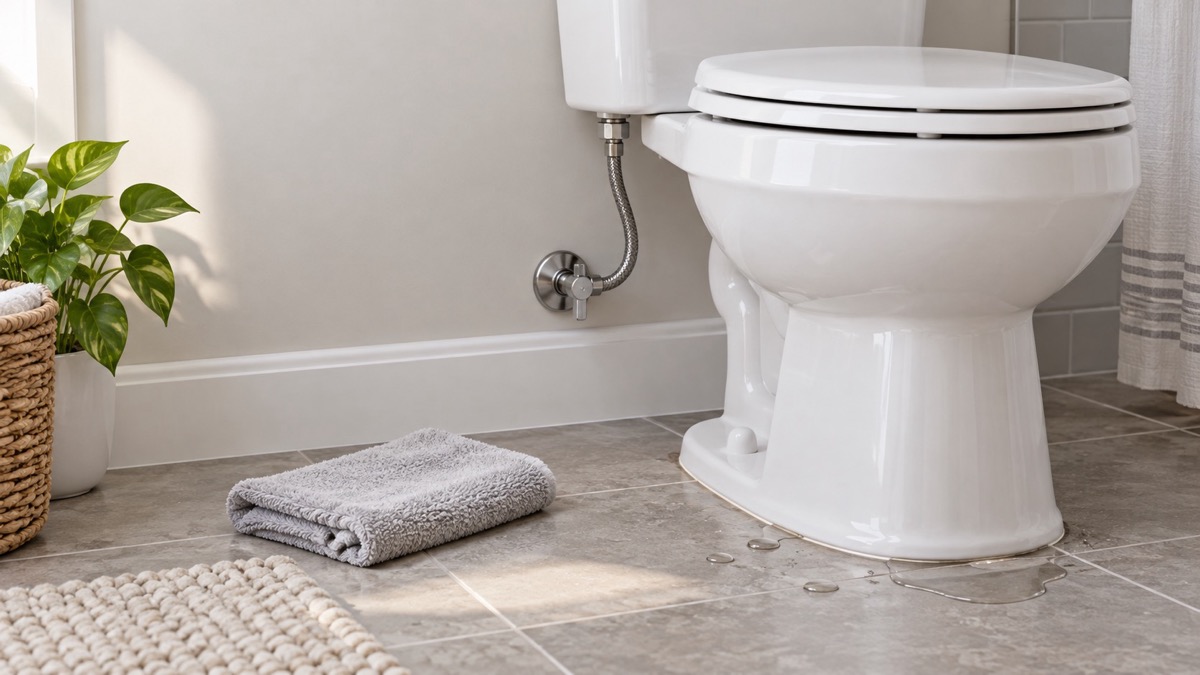 Illustration · not a completed project photo
Source-reviewed homeowner guide
Quick takeaways
- ✓A floor puddle is not a flange diagnosis.
- ✓Record when the leak appears and keep the fixture unused.
- ✓Separate plumbing repair from floor restoration.
- ✓Confirm credentials and the jobsite jurisdiction.
Stop use and observe where the water begins
If water keeps appearing, stop using the toilet until the source is identified. Close the accessible fixture shutoff only if it moves normally; do not force a seized valve. Dry the visible floor enough to see the next wet point and photograph the supply line, tank connections, bowl and base without dismantling the fixture. If wastewater is suspected, keep people away from the wet area and arrange appropriate cleanup.
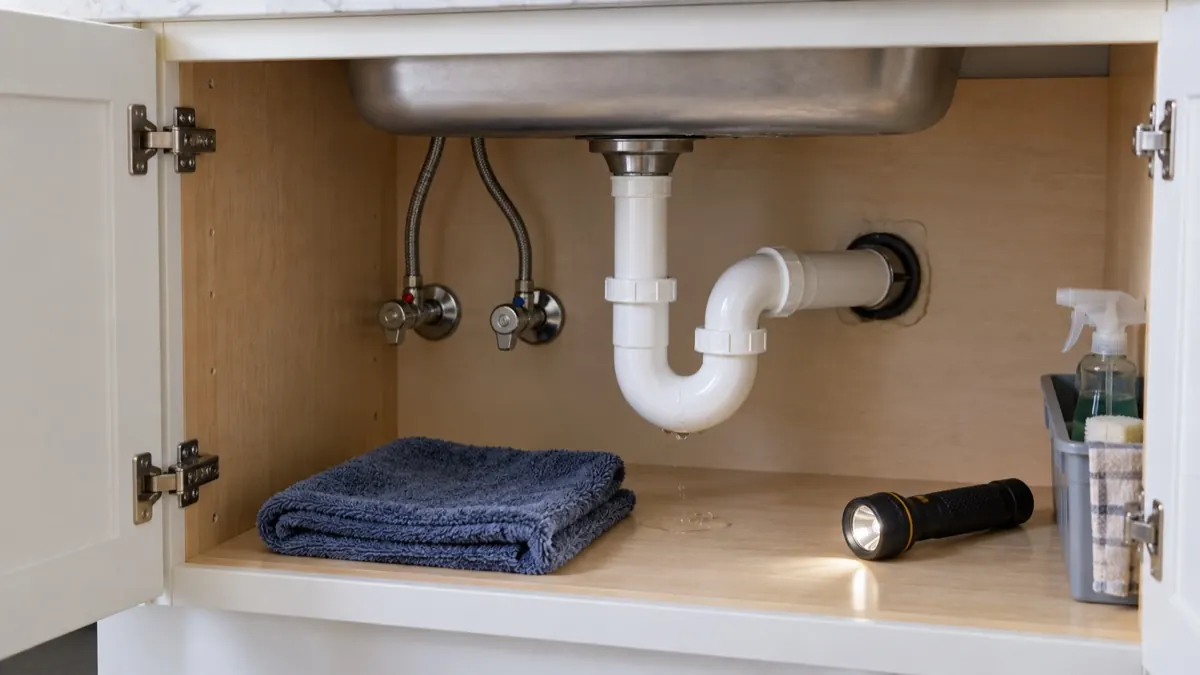
A puddle near the base is not proof that the floor seal failed. Water can run down from the tank, supply connection or condensation and collect at the same low spot; a leak appearing only after a flush raises different questions. Record timing, color or odor if noticeable, and whether the toilet moves. EPA WaterSense recommends investigating toilet problems and household leaks promptly, but its dye test for a silent tank-to-bowl leak does not diagnose a floor puddle.
- •Photo before and after careful drying
- •Leak timing: constant, after flush or after use
- •Supply and tank connections shown
- •Toilet movement and floor condition noted
Request diagnosis plus a conditional repair scope
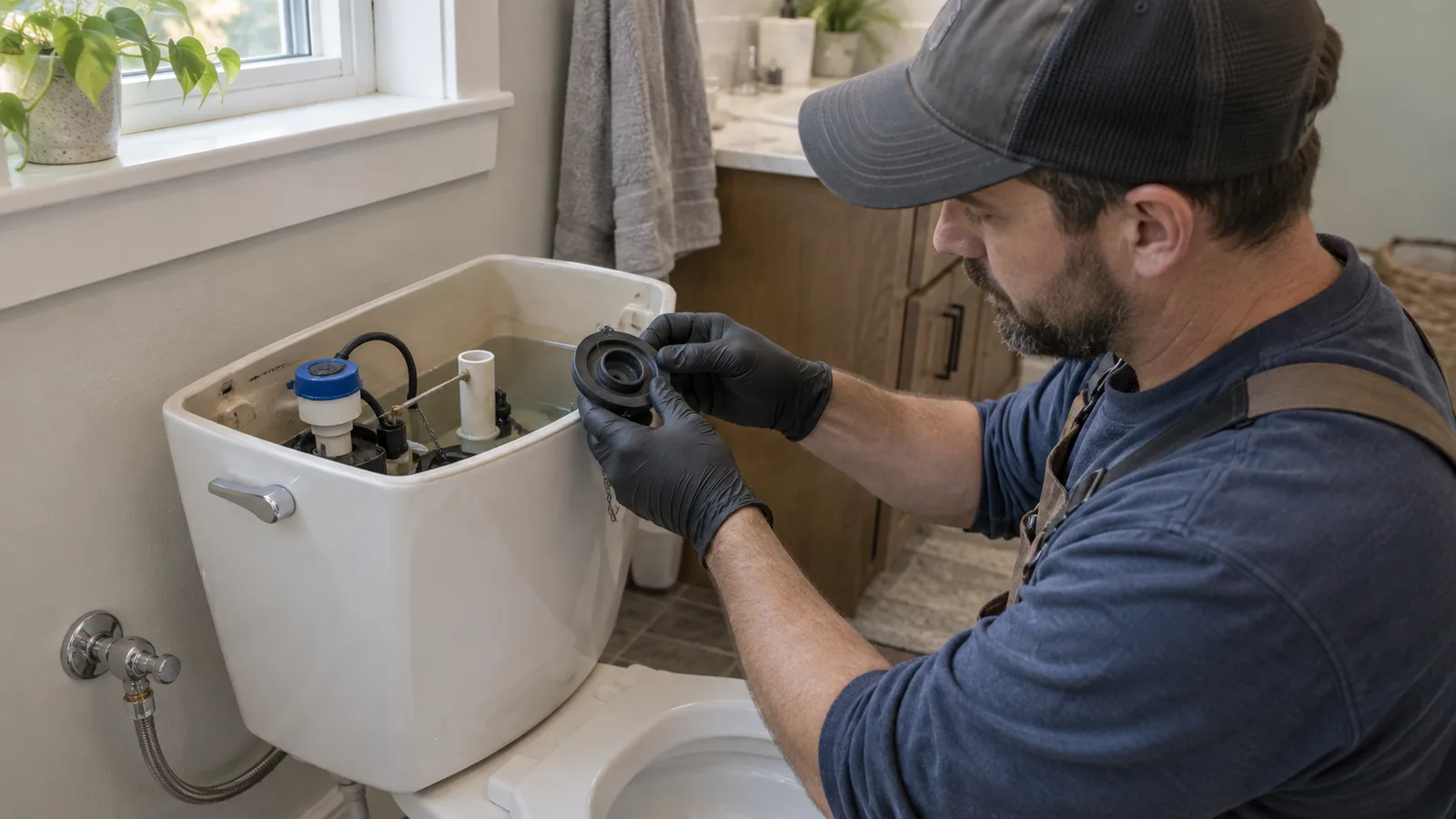
Ask the plumber to identify the source before replacing a wax ring or toilet. A supply repair, tank connection, bowl defect, loose mounting or damaged flange leads to different work. If the fixture must be lifted, have the written quote state who inspects the flange and surrounding floor, what happens if damaged subfloor is discovered and who reinstalls the fixture after structural or finish repair.
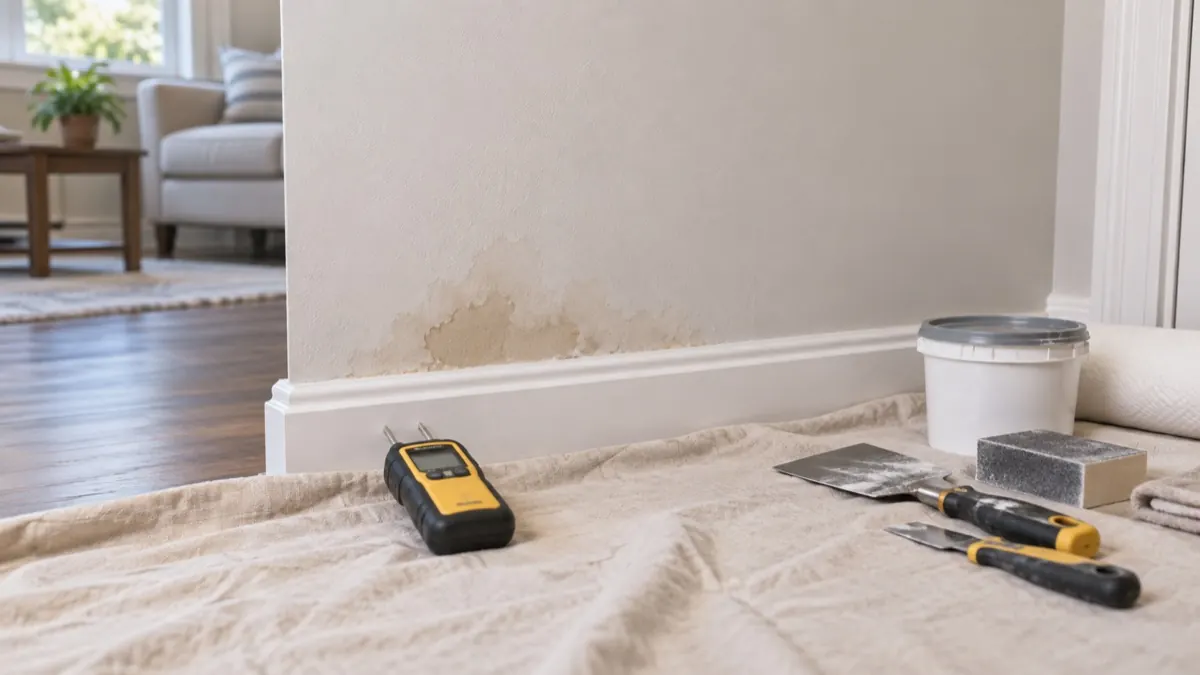
Keep the plumbing source repair separate from drying, subfloor replacement, tile and finish restoration. A new seal should not simply cover a soft floor. Photograph stains, swollen flooring and adjacent baseboards for the request, but avoid cutting or opening concealed materials yourself. If the water reached electrical equipment or a large contaminated area, stop ordinary use and seek the appropriate specialist.
Confirm the address and qualified work
Brush Prairie is a named Clark County community; the exact jobsite address determines the permitting jurisdiction. Clark County notes that additional approvals may apply when residential work involves plumbing or connection to utilities. Ask the relevant authority about a repair that extends into plumbing changes or damaged floor structure, rather than assuming that a simple fixture repair and a floor rebuild follow the same path.
Send KABLAY the area, private address, leak timing, shutoff status, photos and whether the bathroom remains usable. Ask for an availability check and a provider suited to the work. Verify applicable Washington L&I registration and trade credentials. This article does not establish the leak source, a fixed cost or an available emergency visit.
Plan the next step
Continue with a relevant local service, named request or supporting guide.
Homeowner questions
Does water at the base mean the wax ring is bad?+
Not necessarily. Supply, tank and other sources can drain to the base. Ask for source diagnosis before replacing a seal.
Can I keep using the toilet until a plumber arrives?+
If water keeps appearing or wastewater is suspected, stop using it and protect the wet area while arranging help.
Will a plumber also repair wet floor tile?+
Only if the written scope and provider cover that work. Keep leak repair, drying and floor restoration distinct.
Primary sources
Official requirements can change. Confirm the current rule for your address and project with the named authority.