Running Toilets in Ridgefield, WA: Find the Leak Before Replacing the Fixture
Separate a tank-to-bowl leak from water on the floor, use a simple dye check and compare a parts repair with a complete toilet replacement.
Source-reviewed homeowner guide
Quick takeaways
- ✓Separate tank leaks from water on the floor.
- ✓Document an internal leak with a dye check.
- ✓Match repair parts to the fixture model.
- ✓Include shutoff, flange and floor conditions in the scope.
Separate water inside the bowl from water outside the fixture
A toilet that briefly refills while nobody is using it may be losing water from the tank into the bowl. A continuous hiss can involve the fill valve or water entering the overflow. Water on the floor is a different problem: check the visible supply connection, shutoff, tank joint and the timing relative to flushing. Photograph the area before drying it. Do not assume that a new flapper will solve an exterior leak or that tightening every bolt is harmless to the ceramic.
For a home in Downtown Ridgefield, Discovery Ridge or near Pioneer Street, record the fixture model, approximate age and whether the symptom began after a repair or change in water service. Newly installed equipment also needs diagnosis; its age alone does not eliminate a loose connection or mismatched part. If water is actively escaping, use the accessible local shutoff if it operates safely. A stuck valve, cracked fixture, rocking base or contaminated backup is a reason to stop using the toilet and call a plumber.
Use a dye check to document a silent tank leak
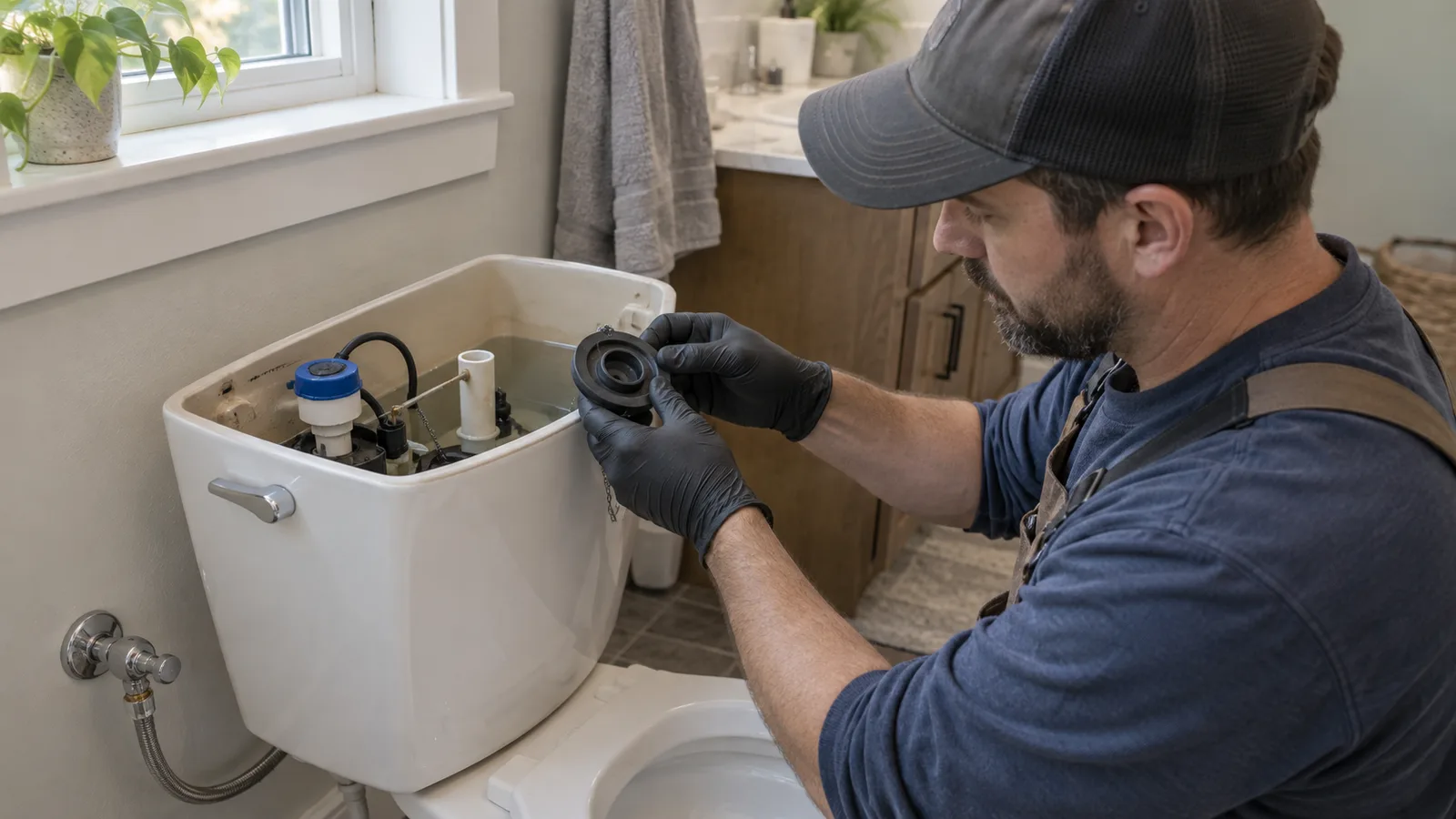
EPA WaterSense describes a simple test: add a few drops of food coloring to the tank, wait about ten minutes without flushing, and look for color in the bowl. Flush afterward to reduce staining. Color reaching the bowl indicates an internal leak but does not identify every failed component. Keep a photo and note whether the tank water level is at the overflow or whether the refill tube and flushing mechanism look displaced. Follow the fixture instructions and avoid adding cleaners or unapproved chemicals.
If the water bill has changed, record the meter reading during a period when no water is intentionally being used and identify other automatic equipment that may run. EPA provides a no-use meter check as one way to investigate household leaks. The meter can show that water is being consumed; it does not locate the source. A toilet repair should be followed by its own repeat check rather than a promise that all household water use will return to a particular number.
- •Fixture model and symptom timing recorded
- •Inside leak separated from exterior water
- •Dye result documented before flushing
- •Local shutoff condition described
- •Other water use considered in meter checks
Compare compatible parts with a full replacement
Ask the plumber to identify the actual failed seal, flush valve, fill valve, handle or connection and specify compatible parts. A universal-looking kit may not suit a dual-flush mechanism or proprietary tank. The scope should include adjustment to the manufacturer’s water-level setting, inspection of accessible connections, leak testing and disposal of replaced parts. Ask how mineral buildup, a damaged seat or a shutoff that will not close changes the quote. Diagnosis and approval should come before ordering a whole new fixture.
If replacement is justified, document the rough-in, available space, bowl shape, seat height, supply position and floor condition. Price removal, disposal, connection, the required seal, stable mounting and final testing. A rocking toilet may have a flange or floor problem beyond the fixture itself. Separate any subfloor opening, flooring restoration or concealed pipe work from the ordinary replacement. Confirm applicable plumbing credentials and local requirements for the actual scope; a listing for general handyman help does not establish plumbing qualifications.
Check several cycles and keep the parts record
At completion, inspect the supply connection and tank joint, watch the refill shut off, and confirm that the toilet remains stable. Have the provider test flushing and inspect for exterior water. Repeat the internal leak check as appropriate after the repair. Ask what observation period the service includes and how to report a return of intermittent refilling. A quick flush at handoff is useful, but a slow seal leak may reveal itself later.
Save the parts information, service date, diagnosis, photos and workmanship terms. That makes the next service more precise and helps avoid replacing the same mechanism repeatedly without finding the cause. A useful Ridgefield request says whether the leak is inside or outside, includes the model and dye result, and mentions the shutoff, floor condition and access. Compare the written scope and exclusions along with price. A small successful repair should end with a specific corrected fault and a documented check.
Plan the next step
Continue with a relevant local service, named request or supporting guide.
Homeowner questions
Why does the toilet refill when nobody uses it?+
Water may be leaking from the tank into the bowl. A dye check can document that path, and a plumber can identify the failed mechanism.
Does a positive dye test mean I need a new toilet?+
No. A compatible seal or valve repair may be sufficient if the fixture and other components are sound.
Should I tighten bolts when water appears on the floor?+
Do not tighten blindly. Identify the source first; excessive force can damage ceramic and may not fix a supply, seal or floor problem.
What if the toilet still runs after repair?+
Record the timing and repeat the agreed checks. Share the installed parts and service report with the plumber for follow-up diagnosis.
Primary sources
Official requirements can change. Confirm the current rule for your address and project with the named authority.