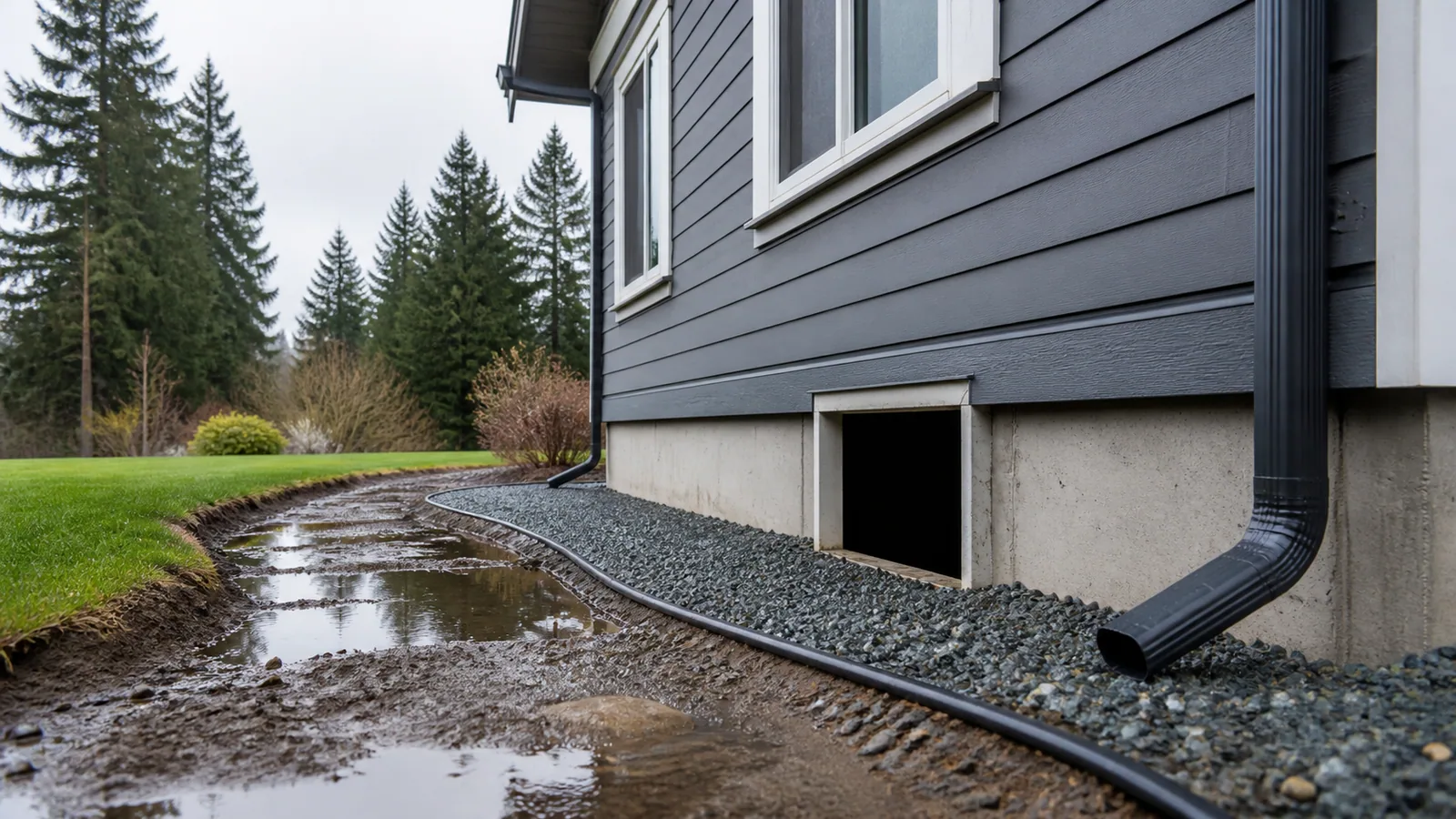
New-Home Drainage in Ridgefield: Rain Gardens, Ponds, and Yards
How to read drainage clues in a growing subdivision, identify HOA responsibilities, and describe standing water without guessing at a fix.
Source-reviewed homeowner guide
Quick takeaways
- ✓Find the plat and maintenance owner.
- ✓Document flow during and after rain.
- ✓Maintain approved features before redesigning them.
- ✓Do not redirect water to a neighboring lot.
A drainage feature may serve the whole neighborhood
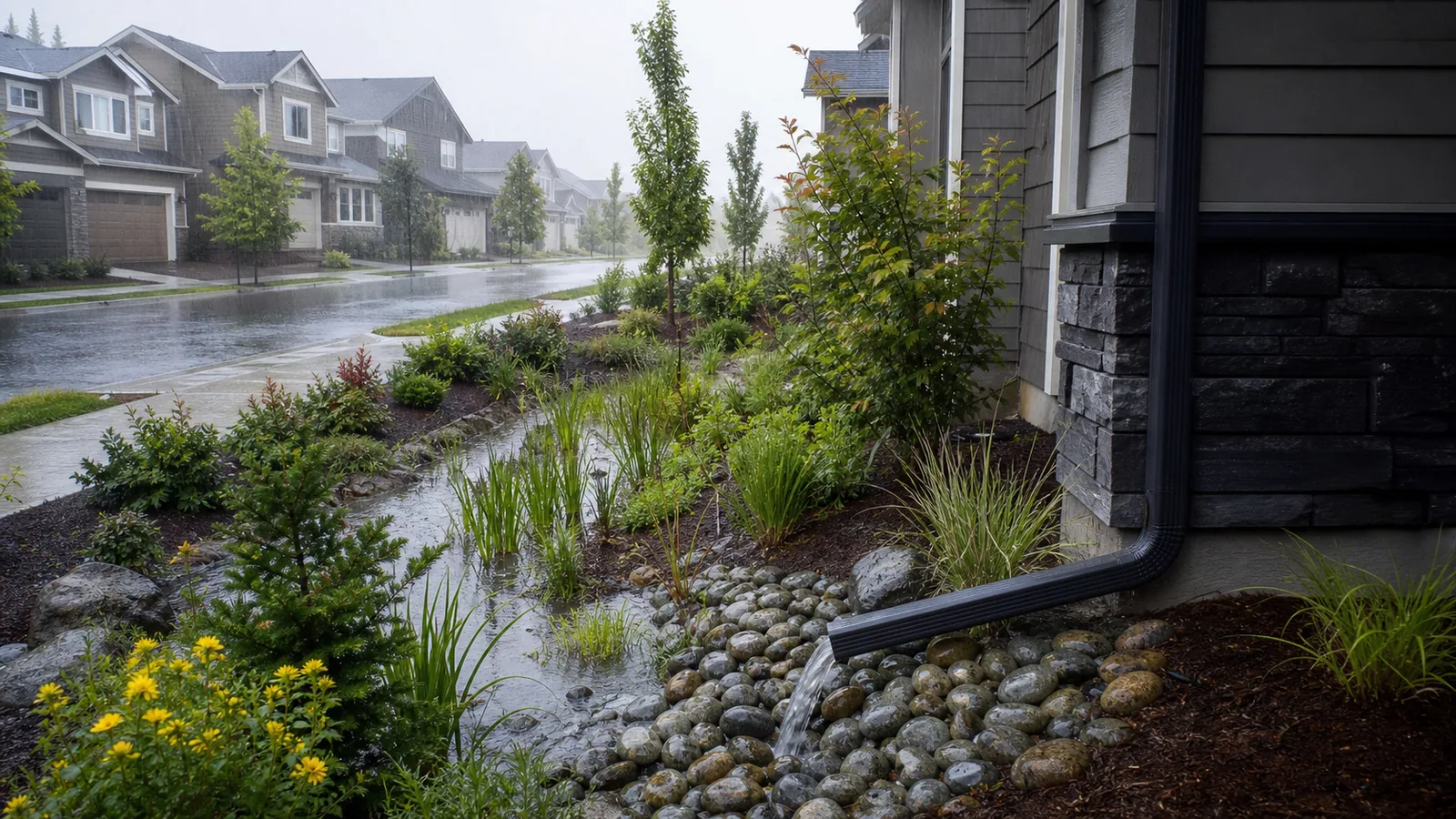
Ridgefield’s stormwater program notes that runoff moves from roofs, driveways, and streets toward local streams and wetlands. Newer subdivisions may use rain gardens, catch basins, swales, treatment vaults, or detention ponds as one connected system. The fenced pond or planted depression near a home is not unused land and should not be filled, regraded, or used for dumping yard material.
City guidance also says many private stormwater facilities are maintained by a property owner, developer, or HOA. Before hiring someone to alter a yard, find the recorded plat, HOA maintenance documents, and any drainage easement. A solution at one lot can push water to a neighbor or overload a shared feature.
Read the pattern after ordinary rain
Photograph the yard during rain and again 24 and 48 hours later. Note roof downspout outlets, curb drains, swales, catch basins, retaining walls, and the direction water crosses property lines. Record whether water is on the surface only or entering a crawlspace, garage, or wall. Ponding in the designed bottom of a facility is different from water against the foundation.
Across Pioneer, Union Ridge, Taverner Ridge, Canyon Ridge, and growth east of I-5, lot geometry varies. Use the legal address and actual grading rather than relying on a subdivision name. Do not enter a stormwater pond or open a vault.
Maintenance before redesign
Simple maintenance can restore performance: clear leaves from a privately maintained inlet, keep the intended flow path free, preserve approved vegetation, and confirm downspouts have not been disconnected. But excavation, added pipe, retaining work, or changing a rain garden can affect an approved system and may require HOA, city, or engineering review.
Ridgefield offers voluntary inspections for privately maintained facilities. That is a useful first contact when responsibility or function is unclear; it is not a substitute for diagnosing water already entering a structure.
A useful request for a drainage professional
Provide the address, subdivision or HOA, photos across several rain stages, plat or easement if available, and the room or crawlspace affected. Ask for observations, proposed flow path, discharge point, permit/HOA assumptions, and how the work avoids transferring water off-site. Separate immediate water control from a permanent engineered correction.
Homeowner questions
Is a subdivision pond the city’s responsibility?+
Not always. Ridgefield says private facilities may be maintained by an owner, developer, or HOA. Check recorded and HOA documents.
Can I fill a swale that stays wet?+
Do not alter it until its approved drainage function and easements are known. Filling it can redirect runoff and violate an approved plan.
How long should I document ponding?+
Photograph during rain and at consistent intervals afterward, such as 24 and 48 hours, while noting rainfall and any structural entry.
Does Ridgefield inspect private stormwater facilities?+
The city describes voluntary inspections for private facilities; contact its stormwater staff for current eligibility and scope.
Primary sources
Official requirements can change. Confirm the current rule for your address and project with the named authority.