Chain-Link Dog Fence in Woodland, WA: Mesh, Gates and Wet Ground
How to specify a durable chain-link enclosure for dogs, compare mesh and coatings, design escape-resistant gates and check Woodland fence rules before digging.
Source-reviewed homeowner guide
Quick takeaways
- ✓Design the enclosure around the dog’s actual escape behavior.
- ✓Specify mesh, gauge, framework, bottom restraint and gate hardware.
- ✓Woodland fence height and location can trigger permit review.
Design around the dog and the yard
Begin with the animal rather than a generic fence height. Record the dog’s size, jumping, climbing and digging behavior, whether more dogs may use the yard, and which doors connect to the enclosure. Walk the entire route after rain. Mark soft ground, low spots, slopes, retaining edges, tree roots, sheds and places where stored items could become steps. The secure line includes every gate and connection to a building, not only the mesh runs.
Decide whether the enclosure is a full property fence, a smaller exercise yard or a protected route from a door. A double-gate airlock can reduce escapes at a driveway or busy entrance. Keep a comfortable setback from equipment and drainage features that require service. If wildlife, children or a road are additional concerns, write them into the design because bottom details, visibility, latch position and gate swing may need to solve more than pet containment.
Specify the chain-link system instead of buying by height
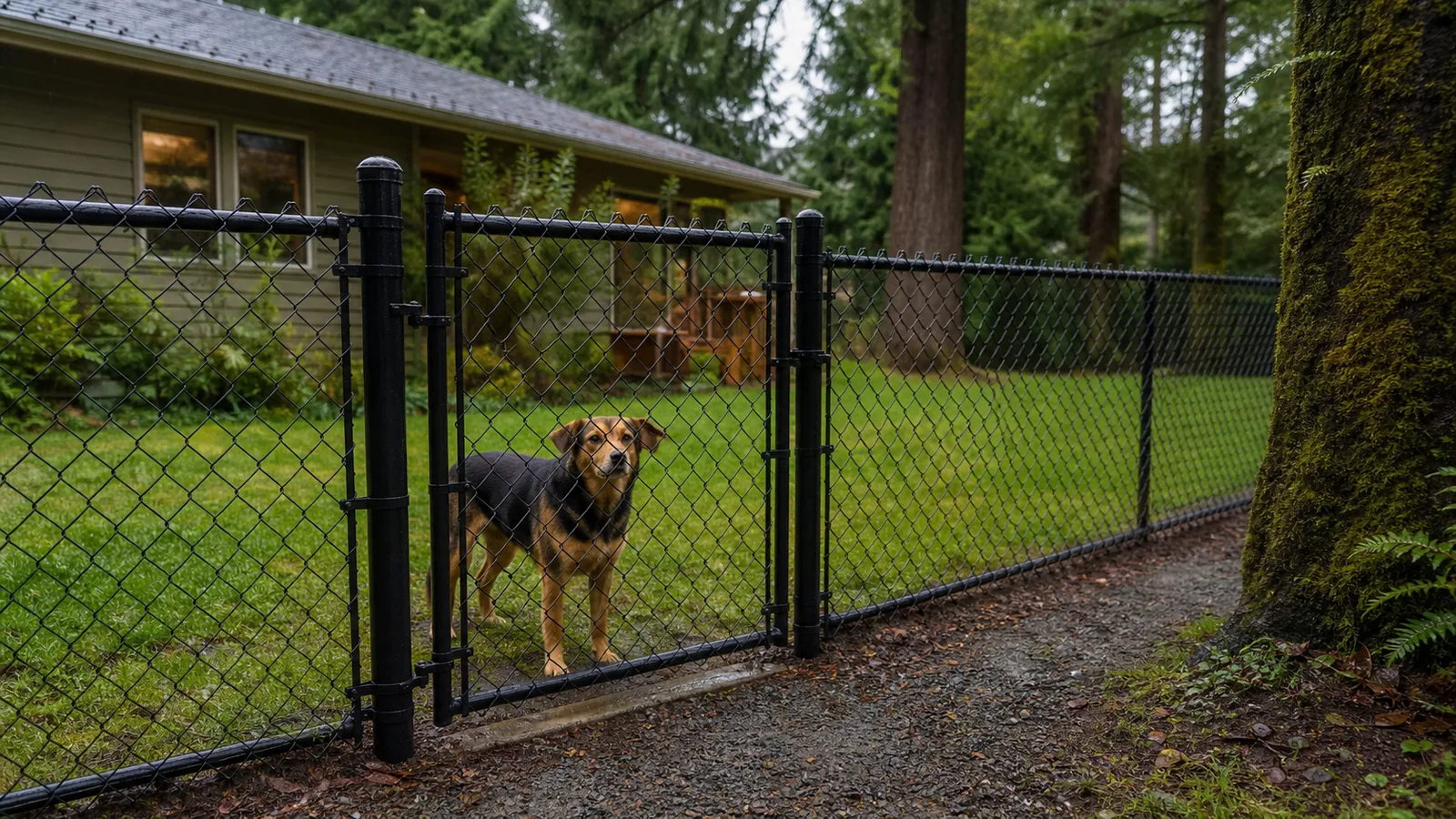
Comparable bids identify fabric height, mesh opening, wire gauge, galvanized or coated finish, posts, rails, fittings, ties, tension bands and footing method. Smaller mesh or a heavier wire may be appropriate for a determined dog, while privacy slats add wind load and should not be treated as a cosmetic afterthought. Ask the installer to state whether posts and framework are galvanized beneath any colored coating and how field cuts are protected.
The bottom edge needs a deliberate escape detail. Options can include a tension wire, bottom rail, close grade control or a separately designed buried barrier, depending on soil, drainage and the animal. Do not bury ordinary fabric without understanding corrosion and maintenance. On wet Woodland ground, correct drainage and stable post support matter more than simply adding concrete. Avoid a continuous hard curb that redirects runoff toward the house or a neighbor.
- •Dog behavior and every escape point documented
- •Mesh opening, gauge, coating and framework specified
- •Bottom tension or dig-control detail drawn
- •Privacy slat wind load included when applicable
- •Gate frames, hinges, latches and stops listed
Check Woodland location and permit rules
Woodland states that a fence over three feet requires a permit, and its fence brochure describes height and location limits, including front-yard and street-side conditions. Corner lots, driveways and alleys need special attention because a solid or slatted fence can obstruct visibility. Confirm the current rule for the actual parcel, height and configuration before ordering materials. A mailing address alone does not establish whether city or county jurisdiction applies.
Verify the property line from reliable records or a survey when uncertain; the old fence is not proof. Locate utilities before post holes, preserve access to meters and easements, and show gate swing and driveway sight areas on the plan. An HOA approval is separate from the city permit. If an existing fence is shared, document ownership, removal and temporary containment so a dog is not unexpectedly left without a secure yard during construction.
Inspect gates, tension and the wet-season handoff
A complete contract states footage, height, product system, posts, footings, terminal and corner assemblies, fabric tension, gates, demolition, disposal, locate, permit, restoration and exclusions. Verify the contractor’s Washington registration, bond and insurance through L&I. For acreage or long runs, price gate and terrain sections separately so a low total does not hide light framework, sparse posts or an undersized vehicle gate.
Before final payment, walk both sides with the dog safely elsewhere. Check sharp wire ends, loose ties, bottom gaps, fabric tension, post movement and every latch. Gates should swing freely, close against a stop and remain aligned without being lifted. Photograph the finished bottom edge and utilities. Recheck after the first prolonged rain and freeze-thaw cycle; correct early post movement, erosion or a developing dig gap before it becomes an escape route.
Plan the next step
Continue with a relevant local service, named request or supporting guide.
Homeowner questions
Is a taller chain-link fence always enough for a dog?+
No. Climbers, diggers, gates and nearby objects can defeat height alone.
Do privacy slats change the fence design?+
Yes. They increase wind exposure and can require a stronger framework and footing design.
Does a Woodland fence need a permit?+
The city says fences over three feet require a permit; confirm the current rule, location and jurisdiction for the parcel.
What should I check after the first wet season?+
Post movement, erosion, bottom gaps, tension, ties and gate alignment.
Primary sources
Official requirements can change. Confirm the current rule for your address and project with the named authority.