Storm-Damaged Fence Repair in Woodland, WA: Posts, Wet Soil and Permits
How Woodland homeowners can make a damaged fence safe, identify the real failure, follow local permit rules and compare a durable repair with replacement.
Source-reviewed homeowner guide
Quick takeaways
- ✓Stabilize the hazard and document damage before permanent work.
- ✓Woodland requires permits for fences over three feet and includes rebuilt fences.
- ✓A durable repair addresses soil, water, wind and post condition.
Make the area safe before moving the fence
After wind or saturated-soil movement, keep children and pets away from leaning panels, broken wire, sharp fasteners and a gate that can fall. Photograph the entire run, neighboring property, posts at grade and any nearby tree or standing water before temporary work. Do not pull a panel upright with a vehicle, attach it to a utility structure or enter floodwater to recover material. A temporary brace must not create a trip or traffic hazard.
If a tree or branch is involved, separate tree risk from fence work. If conductors, a meter, transformer or utility line may be affected, stay clear and contact the utility or emergency service. Record when the damage occurred and preserve wide and close photographs for the insurer. Emergency stabilization should be described separately from permanent repair so a quick brace does not become an undocumented final solution.
Find why the post failed
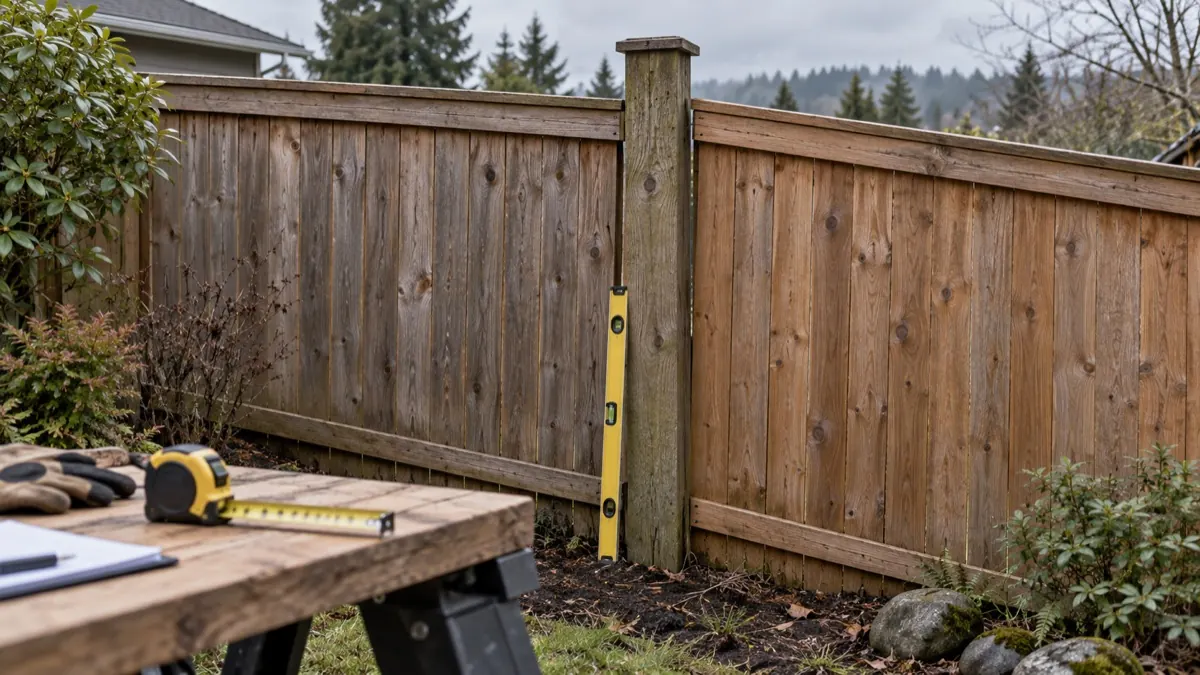
A leaning panel does not always mean the panel is defective. The post may be rotten at grade, split above concrete, loose inside an oversized hole, surrounded by cracked concrete or pushed by a root. Saturated or disturbed soil can reduce support, while a solid privacy panel transfers wind load to every post. Open and close nearby gates because sagging hardware can reveal movement before the fence visibly leans.
A repair proposal should state which posts, rails, panels and gates are reusable and which are not. Ask how damaged concrete will be removed, how the new post and footing suit soil and wind exposure, and how water will avoid collecting at the wood. Replacing one post can be sensible when adjacent materials remain sound. Repeated failures, widespread rot or an incompatible old system may make a planned run replacement more durable.
- •Wide photos, close damage photos and date of the storm
- •Post condition above, at and below grade
- •Standing water, drainage, roots and slope movement
- •Gate alignment and wind load from solid panels
- •Temporary stabilization separated from permanent scope
Woodland treats rebuilt fences as permit work
Woodland’s current permit chart says a fence over three feet requires a permit, and the city FAQ includes new or rebuilt fences among work requiring permits. The city brochure asks for a site plan showing property lines, proposed fence, structures, material, height, distances and access or utility easements. It also describes lower front-yard and street-side limits than typical rear and interior-side-yard fences. Confirm the current requirement before ordering a replacement.
A storm repair is not automatically exempt because the fence existed before the storm. Height, location, sight visibility and easements still matter, and a relocated section can introduce a boundary issue. The city says staff does not determine property lines. Use recorded information and a surveyor when necessary. Work in or near a flood-prone area may need additional review, so identify the parcel and jurisdiction before assuming the ordinary fence process is the only one.
Write a repair that can survive the next wet season
The estimate should list removal, disposal, post and footing dimensions, wood treatment or alternative material, rails, panels, fasteners, gate adjustment, finish, permit, inspection and landscape restoration. Require written unit prices for additional posts only when the method for confirming failure is clear. Do not let “reset posts” hide whether old concrete stays in place or whether the post is structurally replaced.
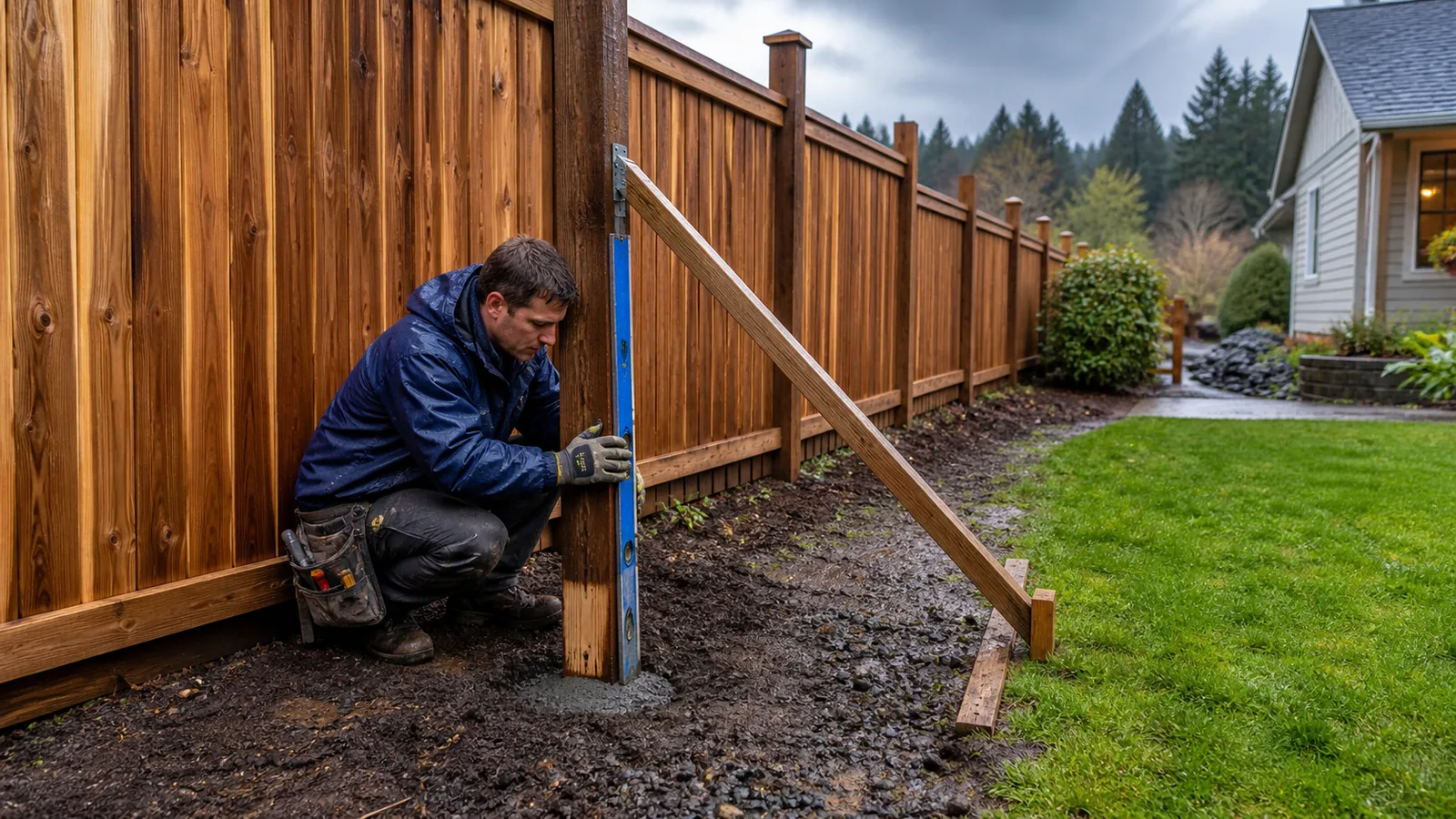
Verify Washington contractor registration, bond and insurance with L&I under the exact proposal name. Photograph the post work before backfill and keep the permit and final inspection when required. At completion, check alignment from both ends, post firmness, panel clearance above soil, sharp edges, gate swing and drainage around the repair. A durable result addresses the cause—rot, water, wind, hardware or soil—not just the visible lean.
Plan the next step
Continue with a relevant local service, named request or supporting guide.
Homeowner questions
Does a storm-damaged Woodland fence need a permit to be rebuilt?+
Woodland says new or rebuilt fences require permits under its published rules, with fences over three feet specifically listed. Confirm the exact scope with the city.
Can a leaning fence just be pulled upright?+
That can hide rot, broken concrete or weak soil. The post and footing should be diagnosed before a permanent method is chosen.
Who determines the property line in Woodland?+
City staff does not determine it. Use recorded survey information and a licensed surveyor when necessary.
What photographs help with a storm repair?+
Capture the full run, each failed post, grade and water, nearby trees, gates, adjoining property and close details before anything moves.
Primary sources
Official requirements can change. Confirm the current rule for your address and project with the named authority.