Circuit Breaker Keeps Tripping in Battle Ground, WA: Repair or a New Circuit?
Prepare an electrical troubleshooting request in Battle Ground with trip timing, appliance loads and circuit details, then compare repair and dedicated-circuit options.
Source-reviewed homeowner guide
Quick takeaways
- ✓Trip timing helps distinguish possible causes.
- ✓Request diagnosis before replacing the breaker.
- ✓Never treat a larger breaker as an overload fix.
- ✓Compare circuit repair, additions and panel work separately.
Record when the breaker trips without recreating the fault
A breaker that opens when two appliances run together presents a different investigation from one that trips with no known load. The cause could involve overload, a faulty appliance, damaged wiring or the protective device itself. Breakers with arc-fault or ground-fault protection may respond to conditions beyond a simple overload. Record what was operating, the time before the trip and the rooms affected. Do not repeatedly force the breaker back on to prove the pattern.
For a Battle Ground electrical troubleshooting visit, note whether the issue began after new equipment, a remodel or outdoor work. Describe the actual home layout in central Battle Ground, along West Main or near the SR 503 corridor rather than guessing from the neighborhood’s age. Burning odor, visible damage, arcing or an unusually hot device requires prompt attention. Stop using the affected equipment; if there is smoke or fire, leave the area and call emergency services.
Give the electrician useful circuit and appliance information
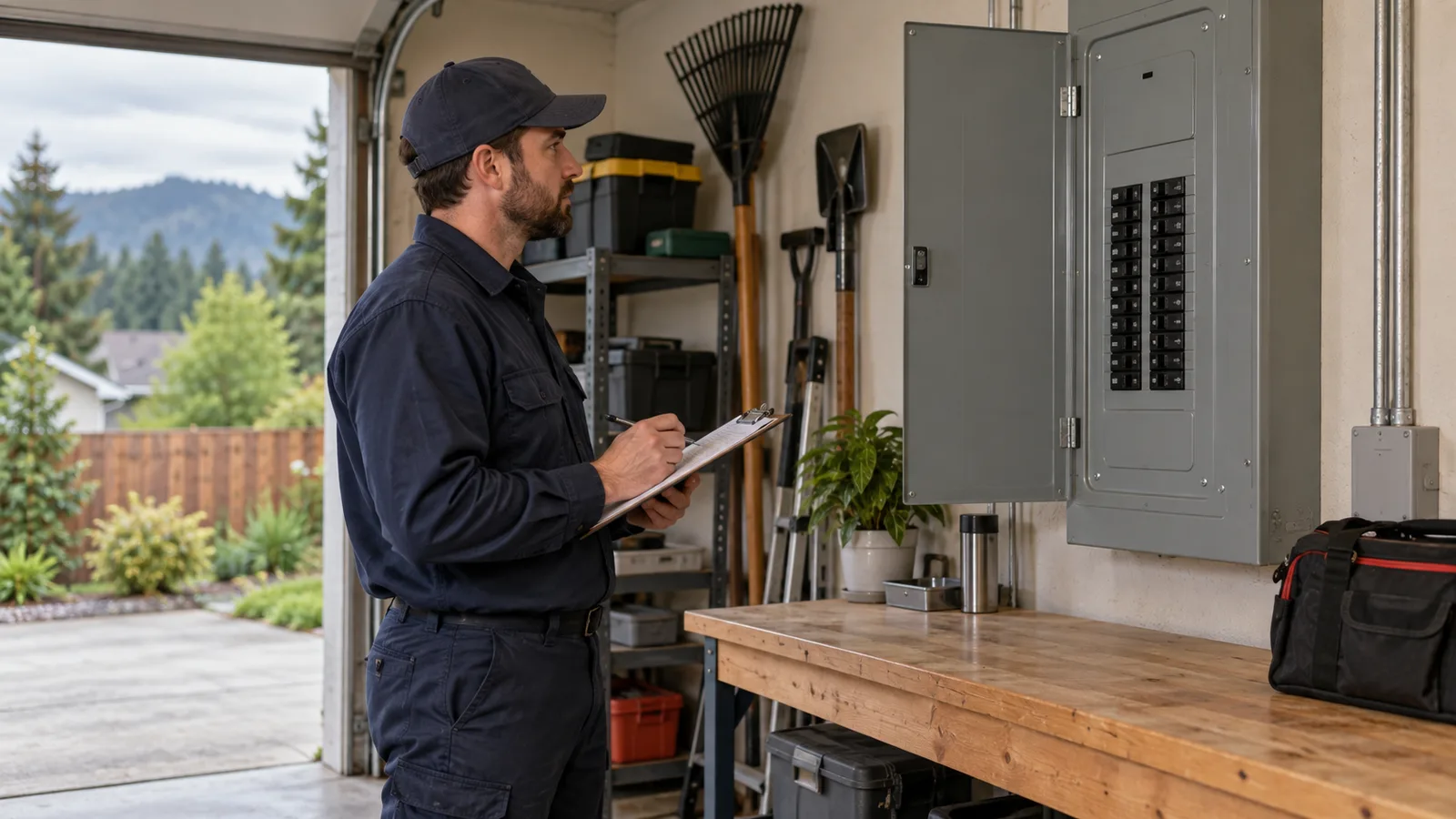
Photograph the panel’s visible label, the affected breaker and any diagnostic indicator from a safe position, leaving the protective cover in place. Copy the model and electrical rating of equipment involved, such as a freezer, microwave, portable heater or shop tool. Existing panel labels can be incomplete, so list the outlets that actually lost power. A floor-plan sketch often explains a shared circuit better than a statement that the garage breaker is bad.
The electrician can determine whether the issue follows a particular appliance, the fixed wiring or an excessive combination of loads. Request findings before approving a breaker swap. A replacement must be suitable for the panel and installation; a larger amperage number is not a repair for nuisance trips. Do not bypass protective functions or extend power from another room with improvised cord arrangements. Solving the symptom requires understanding the circuit’s capacity and condition.
- •Trip timing and active appliances listed
- •Affected rooms and outlets identified
- •Visible panel information photographed
- •Recent work and warning signs disclosed
- •Diagnostic findings requested before parts
Compare repair with a properly designed additional circuit
The written diagnosis should separate a defective appliance, a connection repair, a compatible breaker replacement and a new dedicated circuit. Ask what evidence supports the recommendation and which parts of the installation were checked. If ordinary planned use exceeds the existing circuit’s capacity, an additional circuit may be considered after assessment. A panel upgrade is a separate decision; neither a tripping breaker nor an empty breaker position by itself establishes that a service upgrade is needed.
For a new circuit, discuss the equipment rating, cable route, receptacle location, required protection and access through walls or the garage. Compare surface routing with concealed work, including any patching and painting. Ask the licensed electrical contractor about the applicable permit and inspection. Washington L&I provides the electrical licensing and permit framework; the contractor should identify responsibility for regulated work. Keep circuit additions separate from unrelated renovation items so each proposal describes the same outcome.
Check the handoff under the intended operating conditions
Ask for a written description of the fault found, the repair, any circuit changes and remaining concerns. The final check should address the equipment and operating combination that prompted the visit, where safe and appropriate. Obtain updated circuit identification and required inspection documentation. If the cause was an appliance defect, electrical work on the home may not repair that appliance. Follow the separate service recommendation rather than treating a breaker reset as confirmation of a completed repair.
Price comparisons should include diagnostic time, parts, access, restoration and any new circuit work. Ask how additional findings are authorized and whether a diagnostic charge is credited toward an approved repair. To request help through KABLAY in Battle Ground, include the city, photos, trip pattern, appliance ratings and access arrangements. Verify electrical credentials before booking. A concise symptom record helps the electrician bring appropriate diagnostic equipment and reduces an avoidable second visit for missing information.
Plan the next step
Continue with a relevant local service, named request or supporting guide.
Electrical repair services in Battle Ground →
Choose diagnosis, circuit work or panel services.
Request circuit and breaker troubleshooting →
Record the loads and timing before the visit.
Describe a diagnosed breaker replacement →
Use this scope when replacement has been established.
Plan safe backup power for Battle Ground outages →
Treat outage preparation as a separate electrical project.
Homeowner questions
Does a tripping breaker always need replacement?+
No. It may be operating correctly in response to a problem with loads, equipment or wiring. Diagnose the cause first.
Can a larger breaker stop nuisance trips?+
Do not increase the rating to suppress trips. The protective device must match the circuit, conductors and panel requirements assessed by an electrician.
Does this mean I need an electrical panel upgrade?+
Not automatically. Circuit condition, planned loads and service capacity need assessment before choosing repair, an added circuit or panel work.
What should I send before a Battle Ground diagnostic visit?+
Send the trip pattern, affected outlets, visible panel information, appliance ratings and any recent electrical or renovation work.
Primary sources
Official requirements can change. Confirm the current rule for your address and project with the named authority.