Smoke and CO Alarms in Battle Ground, WA: Test, Replace and Plan Coverage
Build an alarm inventory before heating season, distinguish a warning from a maintenance chirp, and specify compatible replacements and a documented final test.
Source-reviewed homeowner guide
Quick takeaways
- ✓Inventory locations, models, dates and power sources.
- ✓Treat emergency alarms as a reason to leave and call 911.
- ✓Confirm compatibility before replacing interconnected units.
- ✓Keep test records and plan battery-backup maintenance.
Make a room-by-room inventory before buying replacements
Start with a floor sketch showing bedrooms, sleeping areas, each level and existing alarms. Record the make, model, manufacture date, power source and whether devices are interconnected. A white disc on the ceiling is not enough information: it may be a smoke alarm, a combination unit or another device. Read the label and manual without opening wiring. Unknown age, a missing unit or a recent change to sleeping arrangements belongs on the service list.
For an Old Town home or a house near Meadow Glade, include any finished basement, added bedroom or separate sleeping area in the inventory. Describe the actual use of the rooms, not only the original listing. U.S. Fire Administration guidance calls for smoke coverage in bedrooms, outside sleeping areas and on every level. CPSC recommends CO coverage on each level and near separate sleeping areas. Confirm exact locations and any project-specific requirements with the installer and local authority, following the chosen product instructions.
Distinguish an emergency alarm from a maintenance signal
Learn each device’s sound and indicator pattern from its manual. An occasional chirp can signal a battery or end-of-life issue, but the pattern varies by model and should not be guessed from memory. If a smoke or CO alarm sounds as an emergency, get everyone outside and call 911 from a safe place. Do not spend the first minutes searching for a battery, looking for an odor or deciding whether one family member feels unwell. CO cannot be detected by smell.
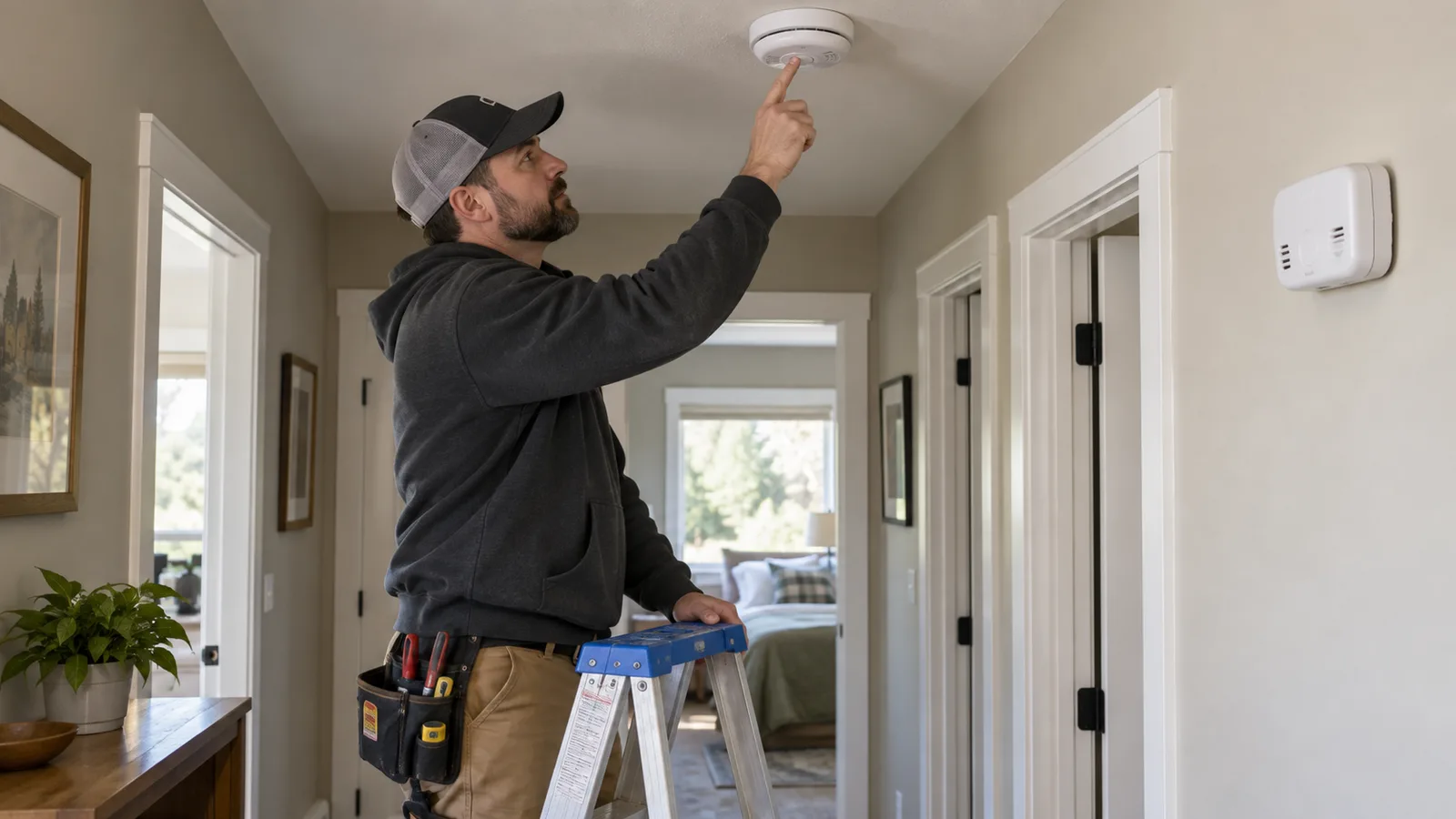
A maintenance visit should include testing according to the manufacturer, cleaning only as directed and recording devices that fail. USFA recommends monthly smoke-alarm tests and replacement of smoke alarms at ten years from manufacture; follow the specific replacement instructions for CO and combination devices. Replace serviceable batteries according to the manual and never pry open a sealed battery compartment. A disconnected unit leaves a gap in coverage even when other alarms in the house still work.
- •Rooms, levels and existing devices mapped
- •Model, manufacture date and power recorded
- •Emergency and maintenance signals understood
- •Failed or expired units listed
- •Replacement and test results documented
Specify compatible devices and the electrical responsibility
A replacement quote should identify the product, location, power supply, backup arrangements and interconnection method. Do not assume that alarms from different families will communicate because their plugs look alike. The installer should confirm listed compatibility and explain what must change if the existing network cannot support the selected device. For residents who cannot reliably hear an audible alarm, discuss suitable alerting equipment and the household escape plan during the survey.
USFA advises using qualified electricians for hardwired smoke alarms. Ask the electrical contractor to explain the actual installation scope and any applicable permit or inspection responsibility. Separate device replacement from new wiring, added locations, circuit troubleshooting and wall repairs. If the home has monitored security equipment or a larger fire-alarm system, identify who services that system before disconnecting anything. The service agreement should name which devices will be tested together and what records the homeowner receives.
Plan for outages and leave a usable maintenance record
Heating season can bring fuel-burning appliance use and power interruptions. CPSC points out that CO sources include such appliances and generators and recommends alarms with battery backup as appropriate. Alarms do not make indoor generator operation safe. Follow generator safety guidance and keep combustion equipment properly serviced. Include backup operation in the installer’s product-specific check rather than assuming that a mains-powered device remains useful when power is lost.
At completion, walk through the inventory with the provider, witness the agreed tests and confirm that interconnection behaves as specified. Save manuals, models, manufacture dates, installed locations, test results and electrical records where applicable. Schedule regular checks and tell everyone what each alarm means and where to meet outside. A good Battle Ground request includes the floor layout, existing devices, known failures, power source, access height and household alerting needs. That produces a clearer plan than asking for a box of new alarms without a coverage survey.
Plan the next step
Continue with a relevant local service, named request or supporting guide.
Compare Battle Ground electrical services →
Discuss hardwired alarms, circuit checks and installation responsibilities.
Describe an alarm power or circuit problem →
Add models, warning patterns and the affected locations.
Plan safe backup power in Battle Ground →
Review generator placement and electrical transfer planning.
Homeowner questions
Do CO alarms replace smoke alarms?+
No. They detect different hazards. A combination product must explicitly provide both functions and suit the intended location.
Can I mix interconnected brands?+
Only when the selected equipment explicitly supports that combination. Have the installer confirm compatibility from product documentation.
Does a new battery renew an expired alarm?+
No. Replace a unit that has reached its replacement date or fails the prescribed test, following the manufacturer’s instructions.
What should I do when the CO emergency alarm sounds?+
Get everyone outside and call 911 from a safe place. Do not rely on smell or stay inside to investigate the source.
Primary sources
Official requirements can change. Confirm the current rule for your address and project with the named authority.