Home Generators in Battle Ground, WA: Outage and Electrical Safety Guide
Choose critical loads, keep portable generators outside, avoid backfeeding, plan transfer equipment and verify Battle Ground electrical permits.
Source-reviewed homeowner guide
Quick takeaways
- ✓Size from critical loads
- ✓Keep portable generators outside 20 feet away
- ✓Never backfeed through a receptacle
- ✓Require an electrical permit and final inspection
Build an outage plan before choosing generator size
List the loads that protect life, water, heat and the home: refrigeration, selected lighting, communications, medical equipment, a well pump, sump pump, heating controls or another truly critical circuit. Record starting and running requirements from equipment labels and manuals. A whole-home promise without a load schedule can lead to oversizing, undersizing or a design that drops the wrong equipment when demand rises.
Battle Ground’s emergency-preparedness page directs residents to regional alerts and planning resources. Use those systems for the household communication plan, then decide how long essential loads need support. A property toward Meadow Glade or Brush Prairie may have a private well or outbuilding, while a Downtown Battle Ground home may not; verify the actual utility and equipment rather than assigning features by neighborhood.
Portable generators must stay outside and away from openings
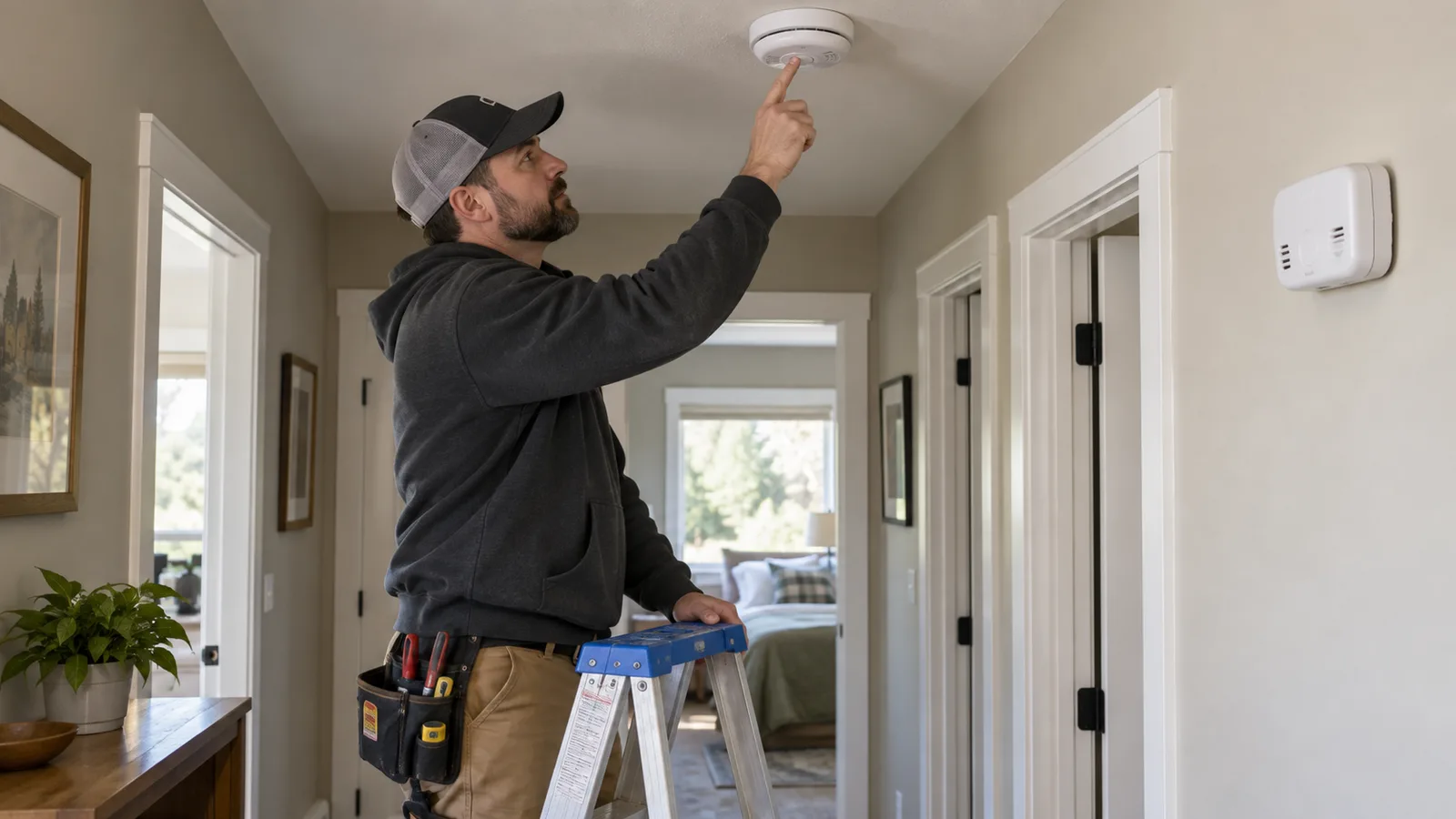
The U.S. Consumer Product Safety Commission warns never to run a portable generator in a home, garage, basement, crawlspace or shed, even with doors open. CPSC says to operate it outdoors at least 20 feet from the home, with exhaust directed away from doors, windows and vents. A porch or open garage is not a safe shortcut. Install and maintain carbon-monoxide alarms on every level and outside sleeping areas.
Plan the location in normal weather, not during the first outage. It needs an outdoor position that follows the manufacturer and CPSC guidance, keeps exhaust away from occupied buildings and prevents water from reaching the equipment without enclosing it. Store fuel as directed, outside living areas in approved containers, and let equipment cool before refueling. If a CO alarm sounds or anyone feels dizzy, weak or nauseated, move to fresh air and call emergency services.
- •Critical-load schedule and equipment starting requirements
- •Outdoor generator location at least 20 feet from openings
- •Working carbon-monoxide alarms and battery backup
- •Approved cords or permanent transfer equipment
- •Fuel, weather, maintenance and shutdown procedures
Never backfeed a home through a receptacle
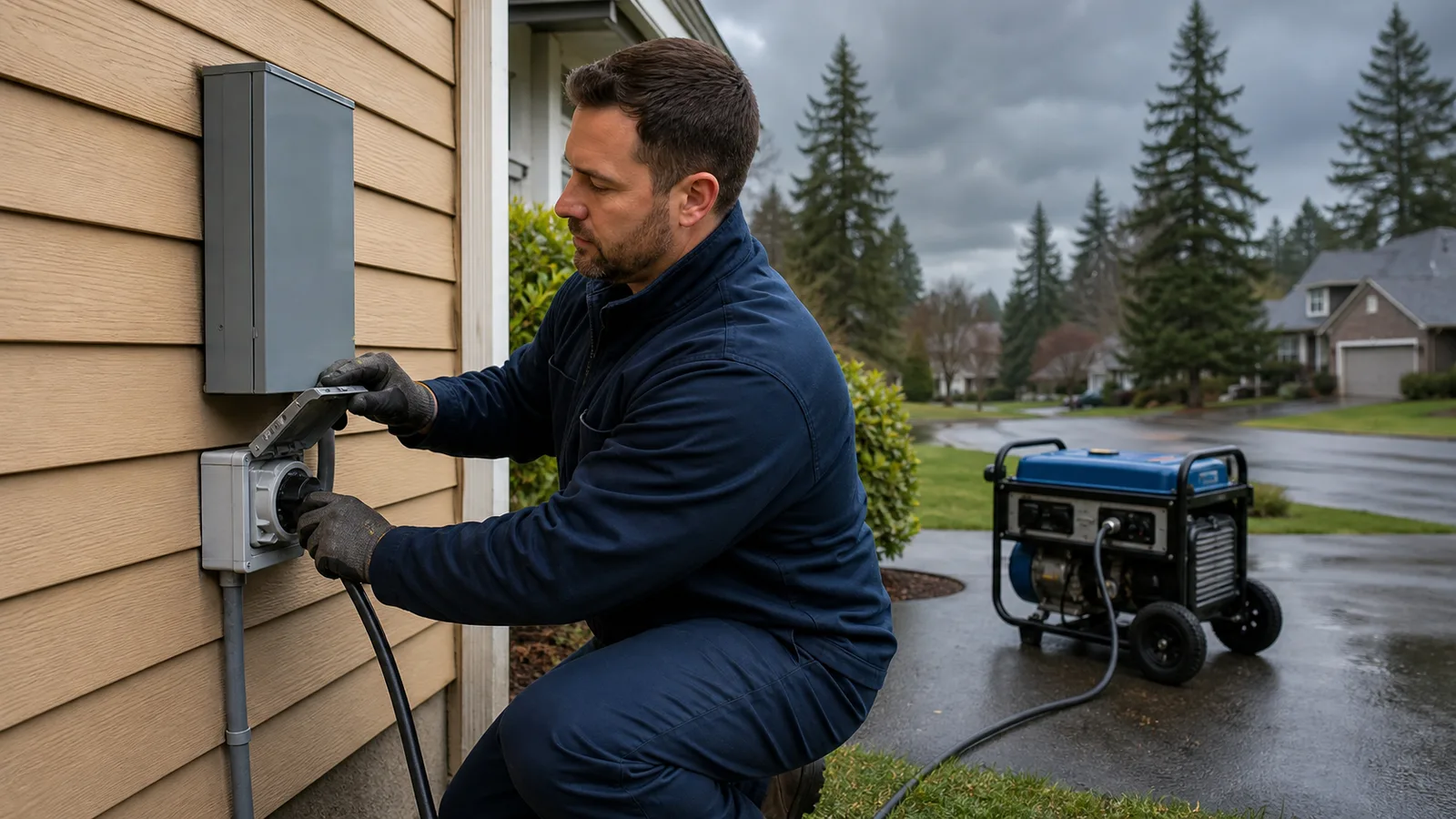
CPSC warns that plugging a generator into a wall outlet to power house wiring is extremely dangerous. Backfeeding can energize wiring unexpectedly, threaten utility workers and neighbors, and bypass normal protection. For limited portable use, connect only approved loads using outdoor-rated cords sized and arranged according to the generator instructions. Keep cords intact, grounded as required, dry and protected from crushing.
If selected home circuits will be powered, use professionally designed transfer equipment or an approved interlock arrangement for the specific panel and jurisdiction. The system must prevent the generator and utility from energizing the same conductors improperly. A label or verbal promise is not enough: require the exact listed equipment, panel compatibility, load arrangement, permit and inspection in the written electrical scope.
Use the correct electrical contractor and permit path
Battle Ground’s residential building information says electrical permits and inspections are handled through Washington L&I and notes that contractors working in city limits need the applicable city business endorsement and specialty credentials. L&I states that electrical work requires a permit and inspection in most cases and that a hired electrical contractor must purchase its own permit. Confirm current jurisdiction and utility coordination for the exact address.
Verify the electrical contracting business and the certifications applicable to the people doing the work. A general contractor registration does not replace an electrical contractor license. The quote should include service or panel changes, feeder, transfer equipment, inlet, grounding and bonding approach, generator connection, load management, utility coordination, inspection and labeling. If gas piping or a permanent fuel system is added, identify that separate regulated scope too.
Commission the system under a controlled checklist
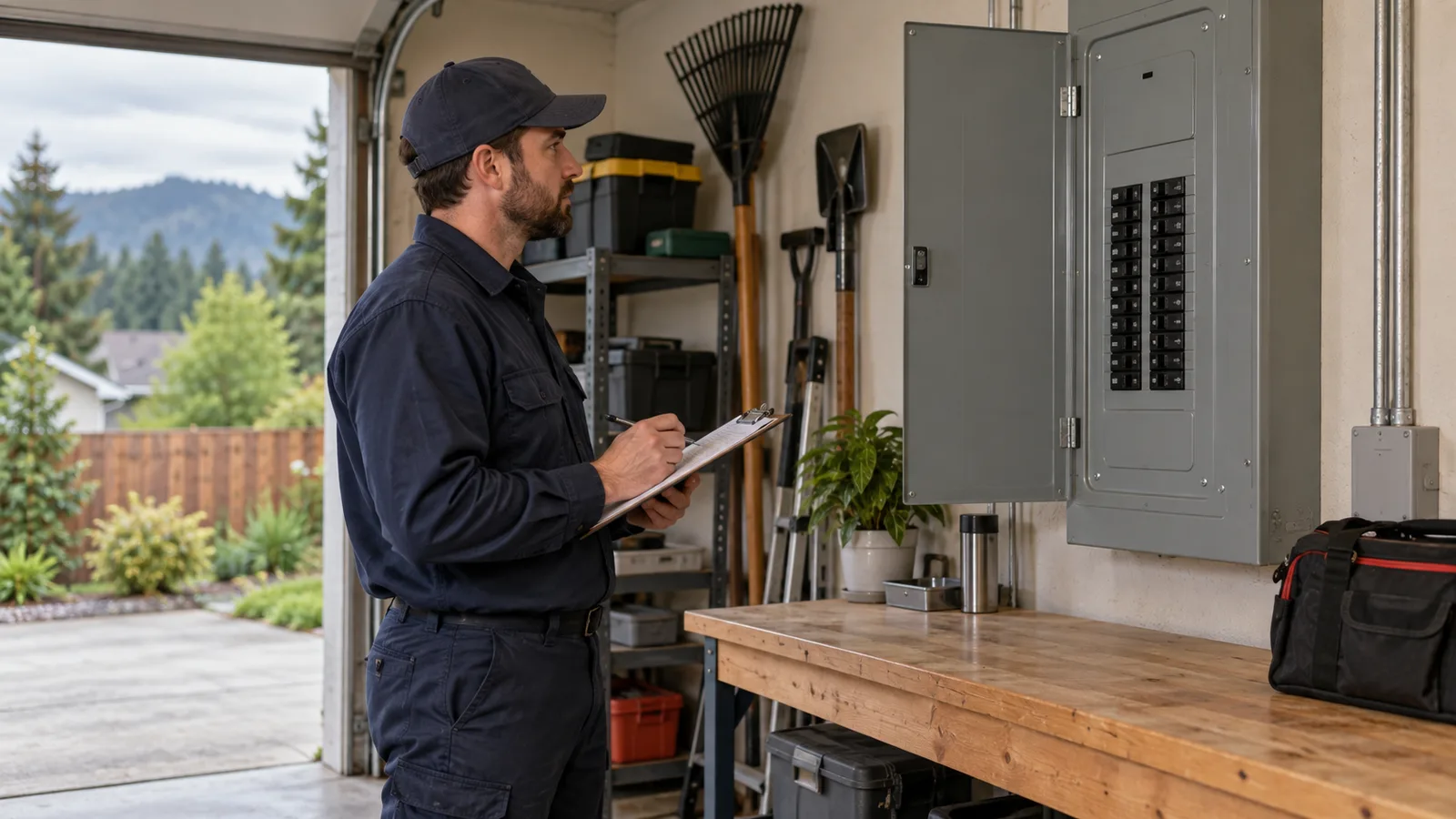
At completion, simulate operation according to the approved instructions with the electrician. Confirm which circuits receive power, which loads must not run together, how to transfer safely, how to shut down, and what happens when utility power returns. Test alarms and document maintenance. Keep the permit, final inspection, panel directory, one-line or load schedule, equipment manuals, warranty and contractor contact together.
Train every capable adult in the household without asking anyone to remove covers or troubleshoot energized parts. Post concise emergency steps near the equipment and keep flashlights available so setup is not done in darkness. KABLAY does not install or operate generators; it helps Battle Ground homeowners prepare a clear request for independent electrical professionals. Safety guidance from CPSC, L&I, the city and the equipment manufacturer controls the project.
Plan the next step
Continue with a relevant local service, named request or supporting guide.
Electricians in Battle Ground, WA →
Open local electrical services after defining critical loads.
Describe a generator transfer connection →
Use a named electrical task and include transfer and permit scope.
Verify a Washington electrical contractor →
Confirm the business, credential, permit and written bid.
Homeowner questions
Can I run a generator in an open Battle Ground garage?+
No. CPSC says never run a portable generator in a garage and recommends outdoor operation at least 20 feet from the home with exhaust away from openings.
Can I plug the generator into a wall outlet?+
No. That dangerous practice can backfeed wiring and endanger utility workers and neighbors. Use approved cords for individual loads or permitted transfer equipment.
Who obtains the electrical permit?+
When you hire an electrical contractor, Washington L&I says that contractor must purchase the permit for the work it performs.
How do I choose generator size?+
Create a critical-load schedule with running and starting requirements, then have the electrical professional design the connection and load management.
Primary sources
Official requirements can change. Confirm the current rule for your address and project with the named authority.