Crawlspace Moisture in Camas: Plumbing Leak or Drainage Problem?
A diagnosis-first guide for Prune Hill, Lacamas Lake, Grass Valley, and other Camas homes with damp soil, odors, or condensation.
Source-reviewed homeowner guide
Quick takeaways
- ✓Compare moisture timing with rain and fixture use.
- ✓Do not enter a hazardous crawlspace.
- ✓Hire for the identified source, not the visible symptom.
- ✓Require a lawful discharge path.
Use timing to separate likely sources
Camas has varied topography: low areas near downtown and Grass Valley, the Prune Hill ridge, and slopes and valleys around Lacamas Lake. That does not diagnose an individual house, but it makes the observed water path important. Moisture that appears only after rain suggests exterior runoff, a downspout, grade, foundation entry, or groundwater. Moisture that follows fixture use or continues through dry weather raises a plumbing or drain concern.
Condensation can look like a leak when warm humid air meets a cold pipe, duct, or framing surface. Record weather, fixture use, meter movement when all water is off, and the exact wet area before buying a pump or vapor product.
Inspect without disturbing hazards
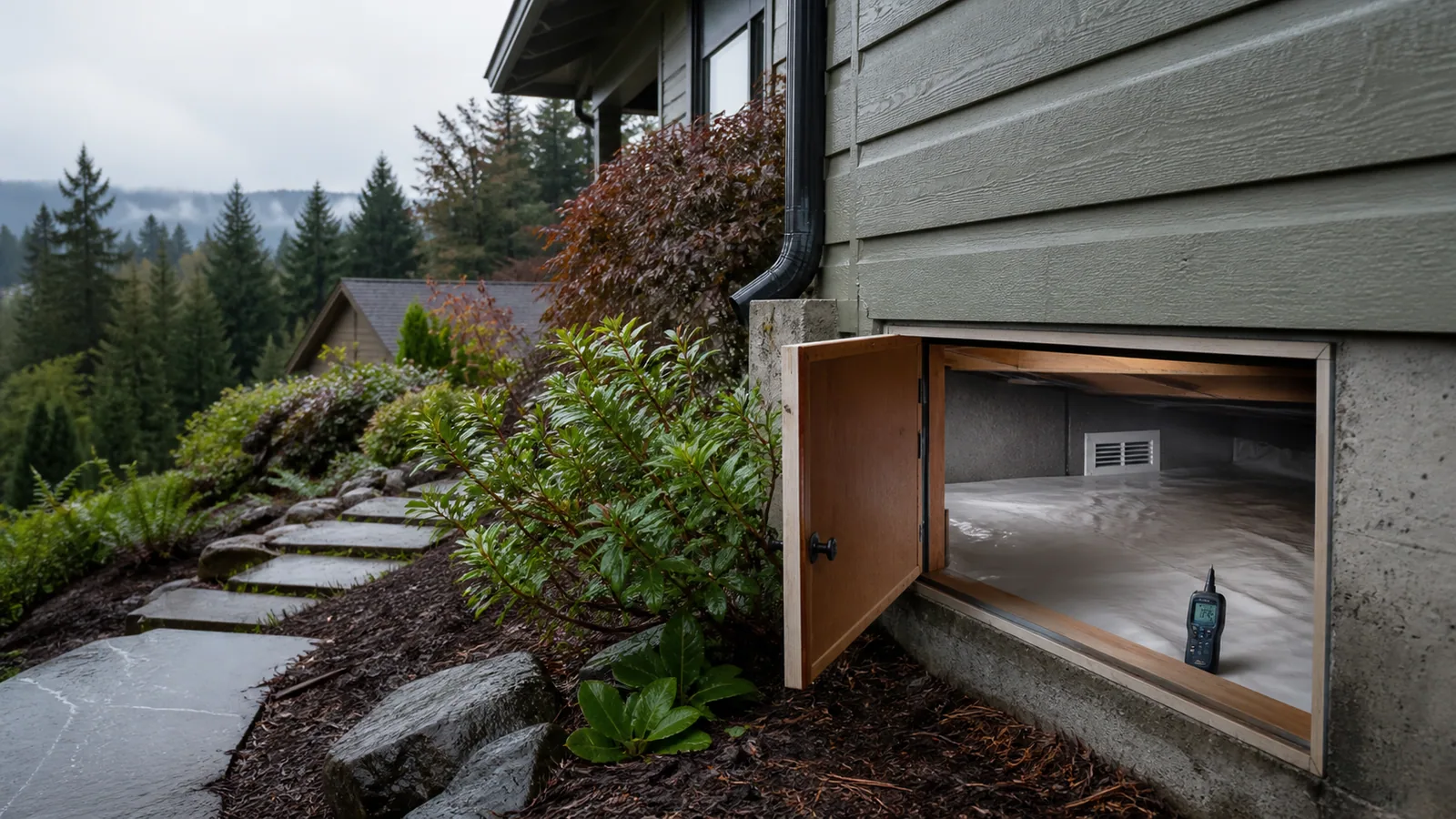
From the access, look for standing water, staining, damaged insulation, disconnected ducts, visible pipe drips, torn ground cover, and daylight at unintended openings. Do not crawl through sewage, exposed wiring, suspected asbestos debris, unstable supports, or deep water. Never connect a pump to an unknown discharge point.
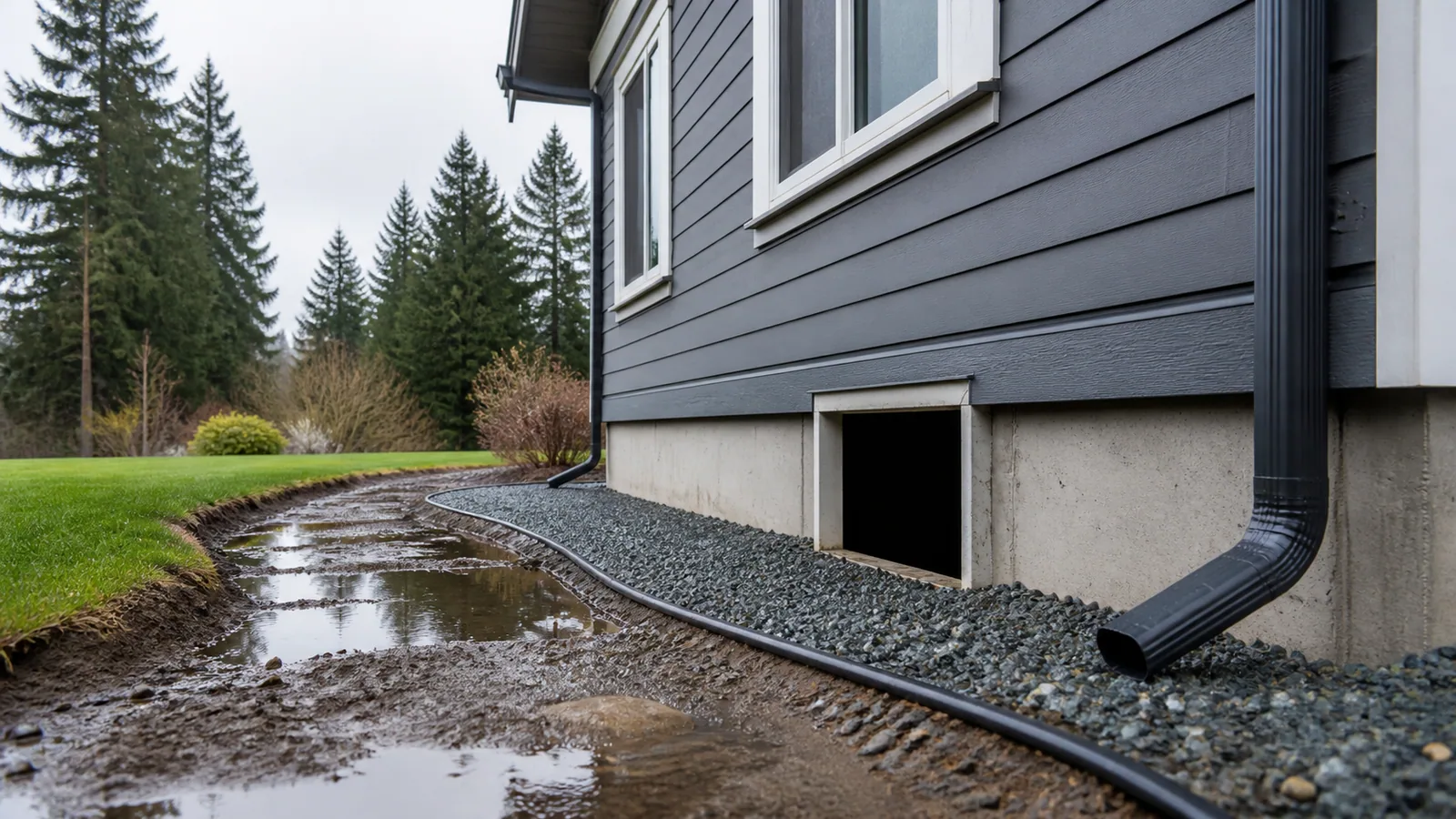
Outside, trace gutters and downspouts, inspect splash blocks or buried outlets, and note whether grade carries water toward the foundation. A blocked storm inlet or altered swale can be part of a larger property drainage issue.
Match the professional to the finding
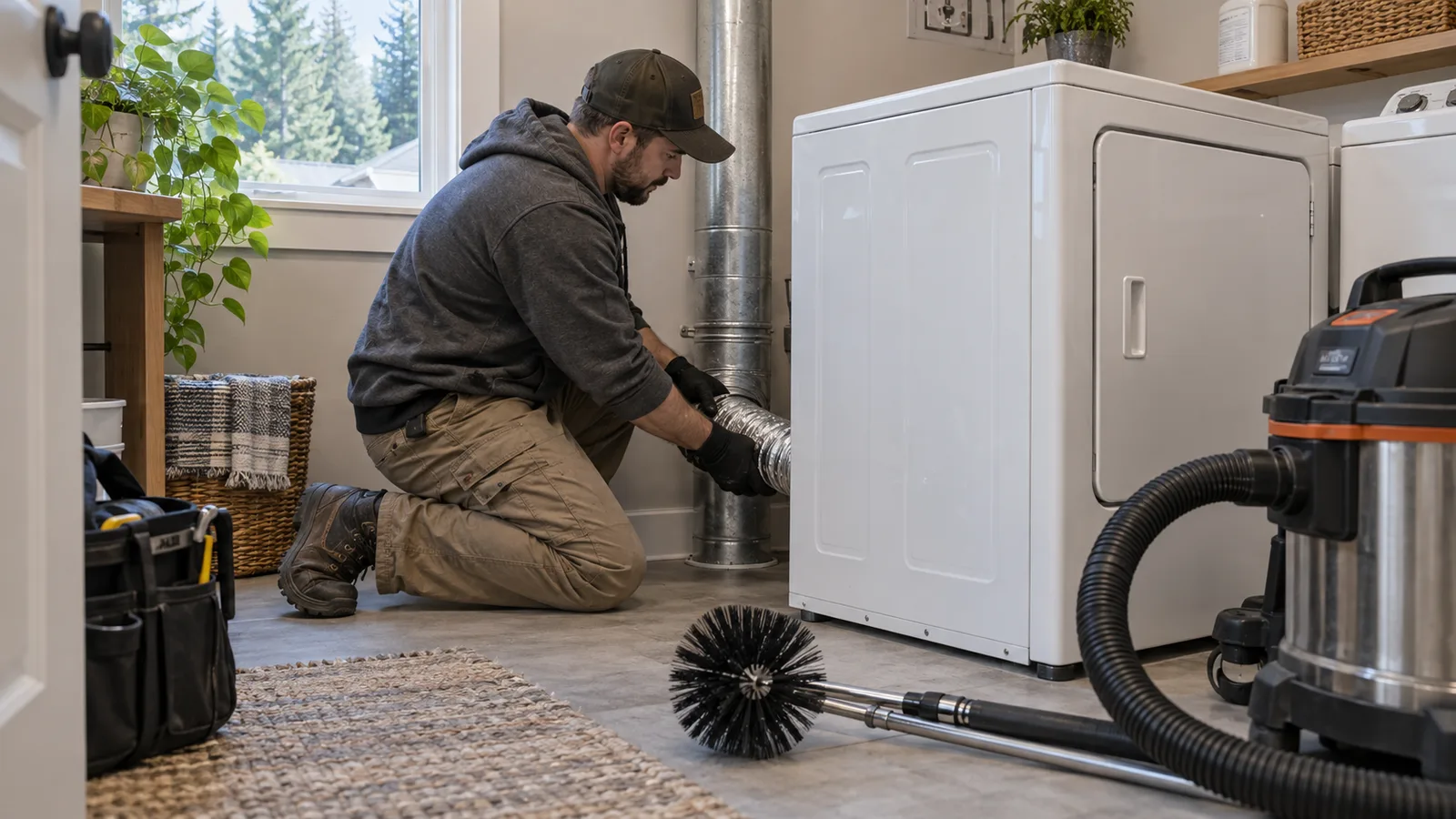
A plumber should investigate supply, drain, and fixture-related symptoms. A drainage or foundation professional evaluates runoff and foundation entry. HVAC or insulation expertise may be needed for duct condensation and enclosure performance. Mold cleanup without water control is incomplete; Clark County and Washington health guidance both emphasize correcting moisture first.
Ask each bidder to state the observed source, measurements or evidence, immediate control, permanent work, discharge path, permits, and exclusions. A generic promise to “seal the crawlspace” does not explain where the water will go.
What a durable plan contains
A durable plan may combine plumbing repair, gutter correction, approved drainage maintenance, ground cover repair, insulation or ventilation work, and drying. It should preserve termite inspection access and required building clearances. Photograph the finished work and keep pump, dehumidifier, or filter maintenance instructions with the house records.
Homeowner questions
Does crawlspace water always mean a broken pipe?+
No. It may be plumbing, runoff, groundwater, condensation, or more than one source. Timing and inspection narrow the cause.
Should I install a sump pump immediately?+
Not before confirming why water arrives and where pumping may legally discharge. A pump can mask or move a drainage problem.
Can mold treatment solve crawlspace odor?+
Only after moisture is controlled and affected materials are assessed. Surface treatment alone does not stop recurrence.
Who should inspect first?+
Start with the strongest evidence: a plumber for fixture-linked or dry-weather water; drainage/foundation help for rain-linked entry; qualified HVAC help for duct condensation.
Primary sources
Official requirements can change. Confirm the current rule for your address and project with the named authority.