Dryer Vent Cleaning in Camas, WA: Lint, Airflow and Service Scope
Identify the dryer type, trace the exhaust route and compare a full vent-cleaning visit with appliance repair before paying for another long drying cycle.
Source-reviewed homeowner guide
Quick takeaways
- ✓Identify vented versus ventless equipment first.
- ✓Include the full route and outdoor termination.
- ✓Separate duct cleaning from appliance and trade repairs.
- ✓Request a final operating check and service record.
Identify the appliance before describing the problem
A conventional vented dryer, a gas dryer and a ventless heat-pump dryer need different maintenance. Photograph the model label and read the manual before booking duct cleaning. A ventless model may have filters and a condensate system but no outdoor exhaust to sweep. For a vented model, record whether drying now takes extra cycles, the laundry room feels unusually humid, or the appliance reports an airflow warning. Those symptoms justify investigation; they do not prove that lint is the only cause.
In a Downtown Camas house, the laundry may have been relocated during a remodel; on Prune Hill or near Lacamas, the route may pass through another floor or terminate high above the yard. Describe the actual layout instead of guessing from the neighborhood. Include stacked equipment, cabinet clearances, the route you can see and the outdoor termination. If the dryer smells burned, shows scorching or behaves abnormally, stop using it and arrange qualified service rather than running a cycle to demonstrate the symptom.
Inspect the filter and visible route without dismantling systems
U.S. Fire Administration guidance emphasizes cleaning the lint filter and keeping the vent behind the dryer free from damage, crushing and restriction. Follow the appliance manual for the filter and accessible maintenance points. From outside, check whether the termination is visibly obstructed and whether its flap can open during normal operation. Do not reach into a running exhaust, climb to a roof cap or disconnect a gas line to make access easier.
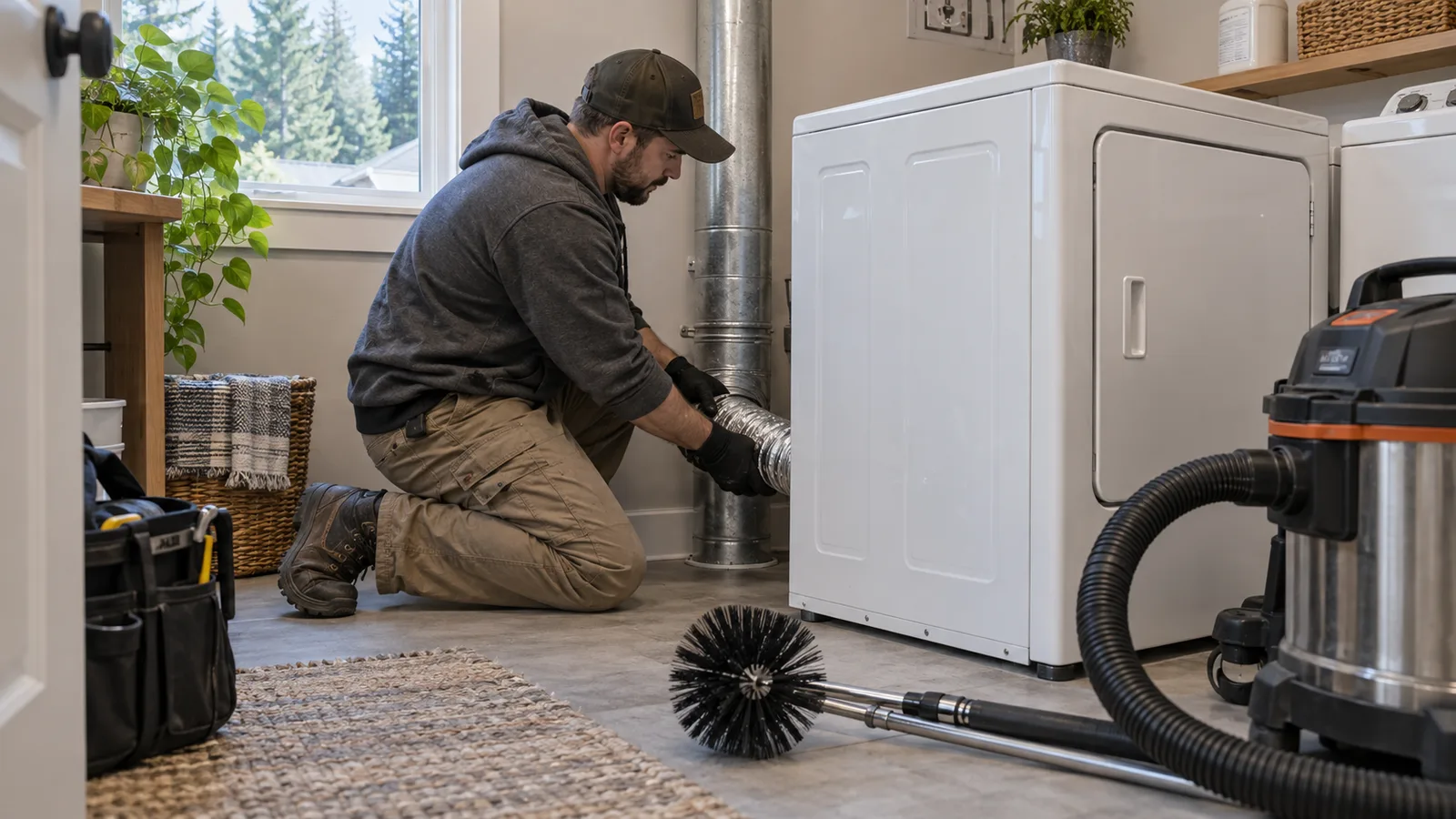
Photograph the connector behind the dryer if it is already accessible. A tight recess can crush that connector when the machine is pushed back. Ask the provider to assess the installed material, route, elbows and termination against the appliance instructions. An ordinary house-cleaning visit may remove surface lint but leave the full duct untouched. Confirm that the provider actually services dryer exhausts and explain any roof access, shared duct arrangement or building-manager approval before the visit.
- •Model and vented or ventless type confirmed
- •Outdoor termination located
- •Stacking and cabinet access described
- •Cleaning endpoints and route agreed
- •Gas, electrical and roof work assigned separately
Compare an end-to-end service with a brush-only visit
A useful proposal names how the appliance is safely isolated and moved, which duct sections are accessible, the cleaning method, protection of the room, collection of debris and inspection of the termination. Ask how inaccessible bends, damaged connectors, bird nesting or a separated duct will be handled. The quote should say whether replacement parts are included and how a hidden defect becomes an approved change. Do not accept a promise that every long drying cycle will disappear after one sweep.
Gas connections, circuit changes and a redesigned exhaust route belong to their relevant qualified scope. If cleaning leaves weak airflow, the next step may be investigating the duct layout or servicing the appliance. A fan fault, heater problem or unsuitable laundry load can produce similar complaints. Keep those possibilities distinct in the request. When a repair alters construction or regulated systems, confirm applicable credentials and permit responsibilities before work begins.
Ask for a documented operating check and maintenance plan
After reconnection, the provider should check the appliance and visible exhaust operation as the manufacturer directs, confirm that the machine position does not pinch the connector, and leave the area clean. Ask for before-and-after photos and a note describing the accessible route, defects and any airflow measurement method used. A photo of a pile of lint shows debris was collected; it does not show that the connector, hidden run and outdoor cap all work together.
Use the model instructions, household use and findings to set future service timing. Save the report and note any change in drying behavior with comparable loads. If the problem persists, share the record with an appliance technician instead of ordering the same service again. A complete Camas request includes the city, dryer model, power or fuel type, symptoms, route, termination height, access and permission to move equipment. That information makes bids easier to compare and reduces surprises on arrival.
Plan the next step
Continue with a relevant local service, named request or supporting guide.
Discuss cleaning services in Camas →
Ask specifically about dryer-exhaust experience and equipment.
Plan a Camas laundry-room remodel →
Coordinate a changed laundry layout with exhaust and trade work.
Review another household exhaust system →
See how a fan, duct and outdoor termination form one moisture-control path.
Homeowner questions
Does every dryer need exhaust-duct cleaning?+
No. Ventless equipment has different maintenance. Identify the model and follow its instructions before booking a duct service.
Does a long drying cycle prove the vent is blocked?+
No. A restriction is one possibility, alongside appliance faults and loading conditions. Describe the symptoms and request diagnosis.
Is wiping the lint filter a full vent service?+
No. The filter, connector, exhaust route and termination are separate points to assess and service as appropriate.
Can a cleaner disconnect my gas dryer?+
Confirm the relevant qualified responsibility before the visit. Gas connections should not be improvised as part of access or ordinary cleaning.
Primary sources
Official requirements can change. Confirm the current rule for your address and project with the named authority.