Bathroom Exhaust Fan in Vancouver, WA: Moisture, Duct and Electrical Plan
A practical plan for diagnosing weak bathroom ventilation, routing the duct outdoors, selecting a quieter fan and coordinating electrical and moisture repairs.
Source-reviewed homeowner guide
Quick takeaways
- ✓Verify that bathroom air reaches an outdoor termination.
- ✓Select the fan, duct route, controls and ceiling repair as one scope.
- ✓Fix leaks and wet materials instead of expecting ventilation to erase damage.
Confirm the moisture source before replacing the fan
Fogged mirrors alone do not identify the defect. Record how long condensation remains, whether paint peels, caulk darkens or drywall feels soft, and whether the problem appears only after showers or also during rain. Check for plumbing and exterior leaks before assuming ventilation is the sole cause. Photograph the ceiling, grille, window and attic or crawl access without disturbing suspected mold or unsafe electrical components.
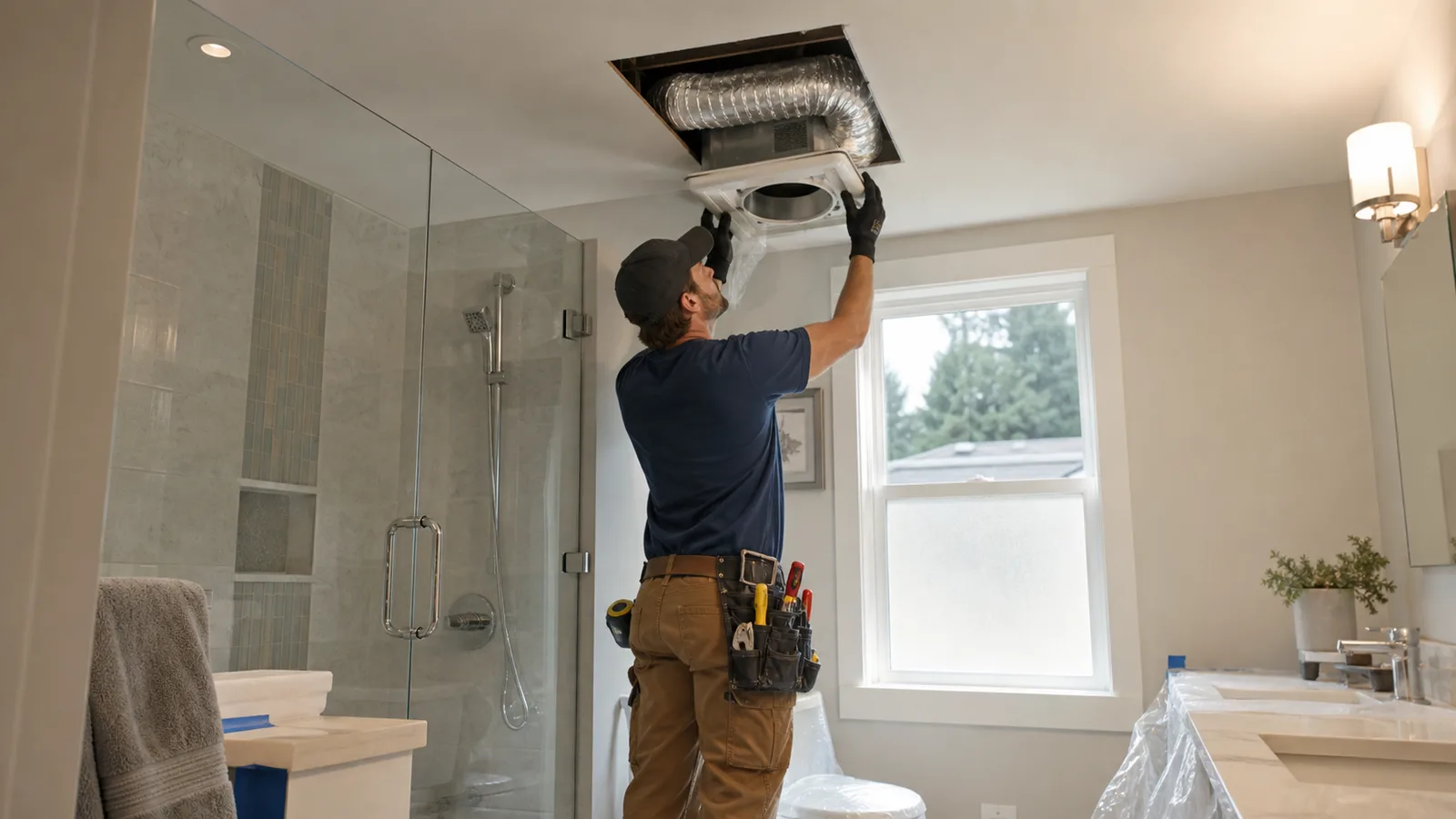
With the fan operating, note sound, vibration and whether air is pulled at the grille. A dirty grille, stuck damper, crushed duct, disconnected run or termination blocked by debris can reduce airflow even when the motor runs. Confirm where the duct ends. Moist bathroom air should discharge outdoors, not into an attic, soffit cavity or crawlspace where it can condense on framing and insulation.
Select airflow, sound and duct as one system
Ask the proposal to state fan model, rated airflow, sound level, controls, duct diameter, route, insulation, exterior termination and backdraft damper. A high catalog airflow does not guarantee performance through a long, narrow or sharply bent duct. Shorter smooth routing and compatible fittings reduce resistance. The installer should explain how the chosen unit performs with the actual route rather than sizing from room area alone.
Choose controls that match household habits: a timer, humidity-sensing control or combined light can improve use, but controls need correct wiring and an understandable override. A quiet fan is more likely to remain on long enough. Replacement dimensions also matter; enlarging a ceiling opening may expose old wiring, framing conflicts or damaged drywall. Define patching, texture matching and painting before work starts instead of leaving a finished ceiling with an improvised trim ring.
- •Leak source and moisture pattern documented
- •Outdoor duct termination physically confirmed
- •Fan airflow and sound rating identified
- •Duct size, route, insulation and damper specified
- •Controls, electrical permit and ceiling repair assigned
Coordinate electrical work and the exterior opening
Washington L&I explains that electrical work generally requires a permit and inspection unless a specific exemption applies. Ask who pulls the permit and whether the scope is a like-for-like replacement, new wiring, a new circuit or a control change. Use an appropriately licensed electrical contractor for regulated electrical work. Do not let an unqualified installer conceal splices above the ceiling or reuse damaged wiring simply because access is inconvenient.
The exterior termination is part of the project. Roof and wall penetrations need compatible flashing and weather detailing; a soffit outlet can allow moisture to return if placed poorly. Coordinate roofer, siding professional or electrician responsibilities in writing. The outlet should resist pests and rain without a fine screen that clogs quickly. Keep discharge away from an intake or operable opening as required by the applicable design and code review.
Commission the system and repair moisture damage correctly
At handoff, operate every switch and control, confirm exterior damper movement, listen for rattles and verify that the duct remains connected. Ask for measured airflow when available, or at minimum a documented functional check at the grille and termination. Record model, filter or cleaning instructions, timer setting, permit and inspection. The household should run the fan during bathing and long enough afterward to remove remaining moisture.
EPA guidance emphasizes controlling moisture and drying wet materials promptly. Ventilation does not make existing mold, a roof leak or saturated drywall disappear. Repair the water source, assess concealed damage, remove materials that cannot be cleaned and dry the assembly before patching. If stains or odor return, investigate rather than painting over them. Recheck the exterior damper and duct connection after the first cold wet period, when condensation problems are easiest to notice.
Plan the next step
Continue with a relevant local service, named request or supporting guide.
Compare Vancouver electrical services →
Review ventilation wiring, controls, circuits and permit-aware work.
Describe a bathroom fan installation →
Add room size, fan, controls, duct route, outlet and moisture signs.
Review Vancouver moisture and mold prevention →
Separate condensation, plumbing leaks and exterior water entry.
Homeowner questions
Can a running fan still have poor airflow?+
Yes. A dirty grille, stuck damper, restrictive or disconnected duct and blocked termination can all reduce airflow.
Can a bathroom fan vent into the attic?+
No. Moist air should terminate outdoors instead of being released into a building cavity.
Does replacement require an electrical permit?+
Electrical work generally requires a permit unless a specific exemption applies; confirm the exact replacement and wiring scope.
Will a new fan remove existing mold?+
No. Correct the moisture source and properly assess, clean, dry or replace affected materials.
Primary sources
Official requirements can change. Confirm the current rule for your address and project with the named authority.