Outdoor GFCI Outlet Repair in Vancouver, WA: Why Rain Trips the Power
Plan outdoor outlet troubleshooting in Vancouver: distinguish a wet connection from a failed device, document the affected circuit, and compare licensed electrical repair scopes.
Source-reviewed homeowner guide
Quick takeaways
- ✓Rain-related trips need diagnosis before replacement.
- ✓Map all affected outlets and connected equipment.
- ✓Check electrical licensing and permit responsibility.
- ✓Request protection checks and a clear repair record.
A rain-related trip is a symptom, not a replacement order
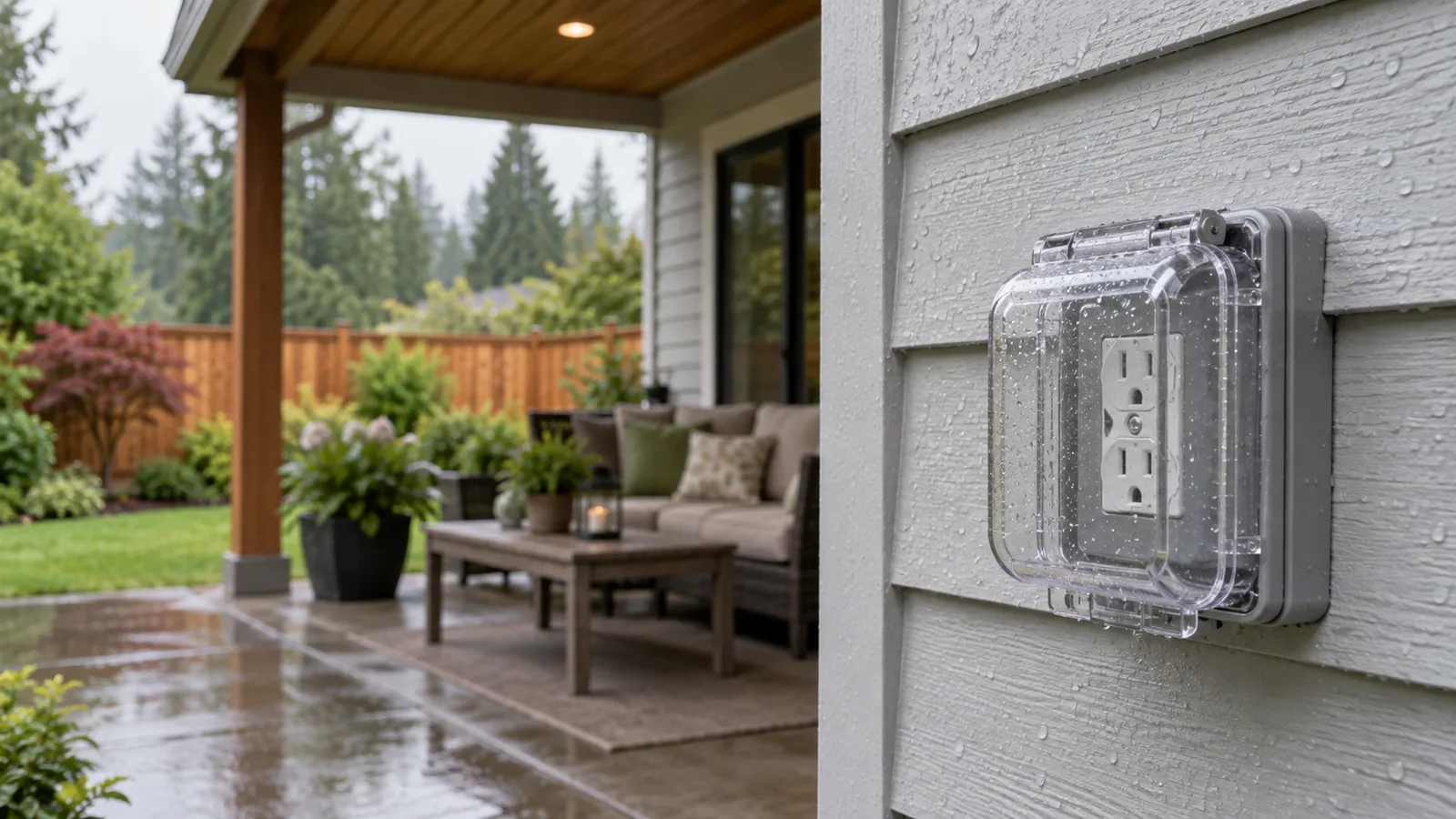
If patio lights stop working after rain, the problem may be in a connected appliance, a cord connection, the outlet enclosure or another part of the protected circuit. A ground-fault circuit interrupter, or GFCI, responds to current escaping its intended path. Its operation does not prove that the outlet itself has failed. Repeatedly resetting it or replacing it with an unprotected device can hide the condition that needs attention. Leave a repeatedly tripping circuit out of use until a qualified electrician evaluates it.
For a Vancouver service request, identify the actual outlet location: a covered porch in Arnada, an exposed garden wall in Cascade Park or a deck in Fisher’s Landing can present different access and weather exposure. Describe what changed before the first trip, including new lighting or irrigation work. Photograph the closed enclosure from a dry, safe position. Do not open a wet box, touch damaged equipment or intentionally recreate a fault with a hose.
Map what lost power before the appointment
Note which outdoor receptacles and connected devices stopped working and whether a nearby garage or bathroom outlet also lost power. One protective device can serve downstream outlets, so the reset button may not be at the location where the symptom appeared. Record the visible breaker label and device indicators without removing covers. Tell the electrician whether the trip happens immediately, during ordinary rain or only while a particular appliance is used. These observations narrow the visit without requiring homeowner electrical testing.
A cover that looks intact in a photograph may still be unsuitable for the outlet’s exposure or for use with a plug inserted. Ask the electrician to assess the receptacle, box, seals, cover and connected wiring as a system. Report loose mounting, a lid that cannot close and landscaping that directs water at the wall. Repairing the electrical enclosure and correcting a gutter discharge may require separate trades; replacing the GFCI alone does not correct water entering from above.
- •Outlet location and exposure photographed
- •Affected outlets and loads listed
- •Timing of trips recorded
- •Cover closure and visible damage described
- •Access and permit responsibility agreed
Separate troubleshooting, replacement and a new outlet
Request a diagnostic scope before approving replacement parts. The written proposal should distinguish a device repair, damaged enclosure replacement, investigation of downstream wiring and installation of an additional outlet. Ask how testing will identify the fault and how discoveries will be priced. Access behind siding, a buried run to the yard and restoration of finishes can change the quote. A diagnostic visit may establish the next repair rather than include every possible repair for one flat price.
Washington L&I requires electrical permits and inspections for regulated work, with specific exceptions. Ask the electrical contractor to identify the applicable requirement for the exact repair and obtain any required permit. Verify the electrical business license and the credentials of the person doing the work; ordinary contractor registration alone does not establish electrical qualifications. Confirm the inspection authority using the jobsite address, especially when a Vancouver mailing address is outside the city boundary.
Ask for a documented handoff before reconnecting equipment
At completion, request the cause found, parts installed, affected outlets and the result of the electrician’s protection and operating checks. Follow the device manufacturer’s instructions for routine testing. A new outlet faceplate is not proof that the downstream circuit has been evaluated. Keep any inspection record with the invoice, and ask what conditions require a return visit. A controlled service check also cannot guarantee that every future storm or connected appliance will behave the same way.
Before reconnecting patio equipment, confirm that its cords and connectors are suitable for the intended outdoor use and free of damage. Keep connections away from standing water and do not rely on a chain of power strips for a permanent garden installation. To request outdoor outlet repair through KABLAY, include Vancouver, the neighborhood, photos, the trip pattern, connected equipment and access details. Compare proposals by diagnostic coverage, materials, restoration and inspection responsibility rather than the device price alone.
Plan the next step
Continue with a relevant local service, named request or supporting guide.
Homeowner questions
Does a GFCI trip after rain mean the outlet is bad?+
Not necessarily. Moisture or damage in connected equipment, an enclosure or downstream wiring may be responsible. Request diagnosis before choosing replacement parts.
Why did several outdoor outlets stop working together?+
They may share an upstream GFCI or circuit. Record the affected locations so the electrician can trace their actual connections.
Can I replace the GFCI with an ordinary outlet to stop the trips?+
Do not remove required protection to suppress a symptom. Have a qualified electrician identify the cause and the protection required for the installation.
What changes the price of outdoor outlet repair in Vancouver?+
Diagnostic time, enclosure condition, access, damaged wiring, finish restoration and any required permit or inspection all affect the scope.
Primary sources
Official requirements can change. Confirm the current rule for your address and project with the named authority.