Gutters and Downspouts in Vancouver, WA: A Fall Maintenance Scope
Trace roof runoff from the gutter to its destination, separate leaf removal from drainage repairs, and prepare a complete wet-season maintenance request.
Source-reviewed homeowner guide
Quick takeaways
- ✓Map the outlet destination as well as the gutter.
- ✓Inspect safely from the ground during rain.
- ✓Price cleaning, repairs and buried drainage separately.
- ✓Keep photos and check the next wet-weather result.
Follow the whole water path before booking a cleaning
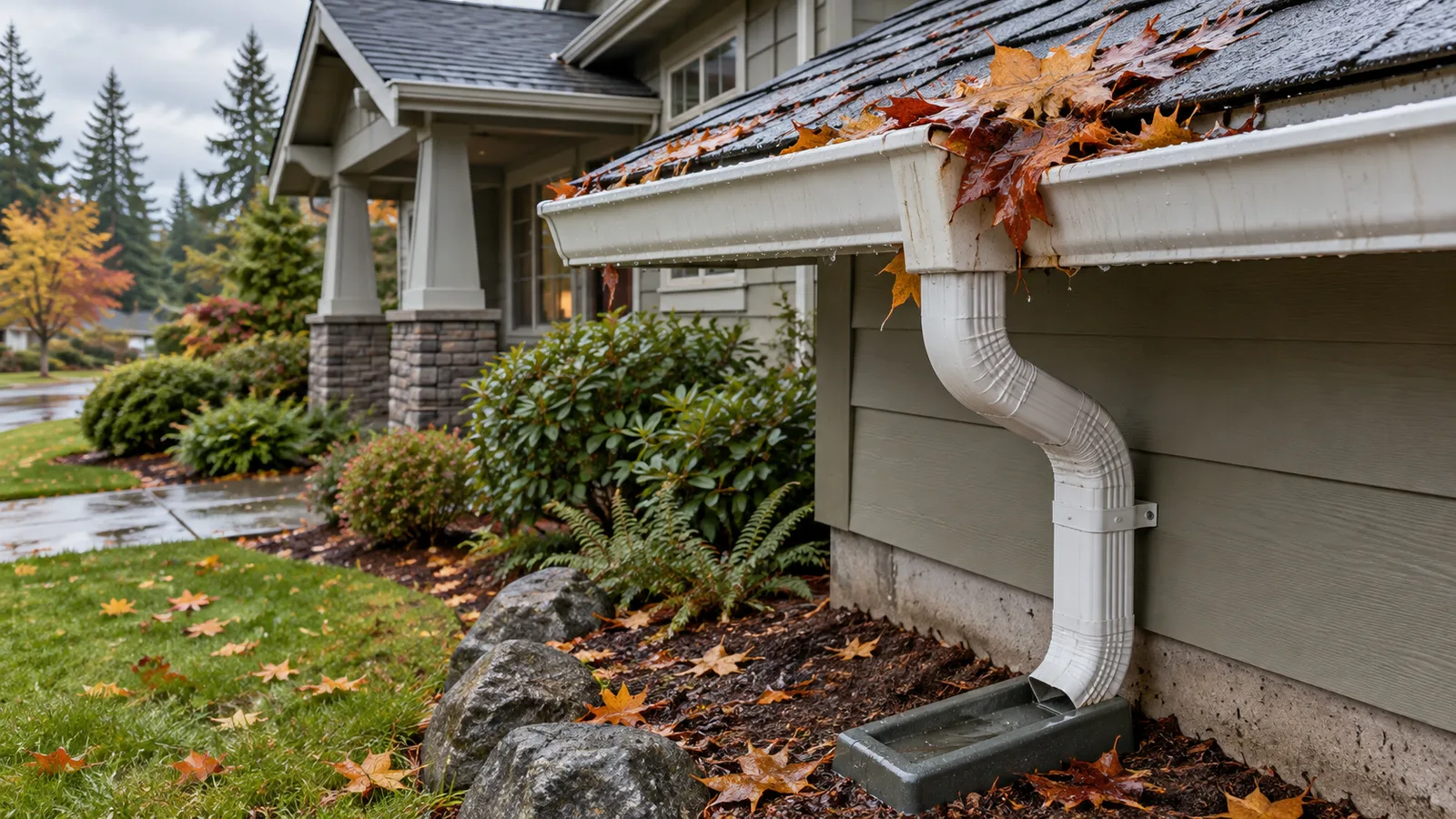
An overflowing gutter can mean a leaf blockage, a sagging run, a loose outlet or a downstream pipe that cannot accept water. Start with a simple sketch of the roof edges and every downspout. Mark whether each outlet reaches a splash block, an underground connection or another drainage feature. Photograph staining on siding, washed-out soil, disconnected elbows and water collecting near the foundation. A photo of leaves alone does not tell a service provider where the system stops working.
In Arnada and Shumway, note nearby mature trees and narrow side-yard access; in Cascade Park or East Vancouver, check whether the roof drainage connects to a shared neighborhood facility. These are questions about the property, not assumptions about its condition. The City of Vancouver identifies downspouts among common stormwater facilities and explains that private systems may be maintained by owners or an HOA. Confirm who controls the downstream system before authorizing changes.
Use a ground-level inspection to separate symptoms
During ordinary rain, watch from a sheltered position on the ground. Water spilling over one corner suggests a different investigation from an entire run overflowing. Water behind the gutter may involve its attachment or the roof edge, while a clear gutter feeding a backed-up underground connection points farther downstream. Record the location and timing. Stay away from storm debris, overhead wires and unstable surfaces; do not climb onto a wet roof to get a better video.
Ask the contractor how roof height, slope, porch covers, fences and landscaping affect safe access. The work order should identify debris removal, outlet clearing, bagging and disposal, inspection of accessible brackets and joints, and a controlled flow check where appropriate. A cleaning appointment does not automatically include resealing seams, correcting pitch, replacing rotten fascia or clearing buried pipes. Photograph defects discovered after the leaves are removed and agree on additional work before it starts.
- •Every gutter run and outlet mapped
- •Roof height and access photographed
- •Debris removal and disposal included
- •Visible damage separated from cleaning
- •Downstream drainage and ownership identified
Keep drainage changes within the approved system
Do not solve one wet corner by sending the outlet onto a sidewalk, a neighboring lot or a slope that is already eroding. If the existing connection backs up, request a separate drainage diagnosis and identify the intended discharge point. Ask the city or the applicable jurisdiction about changes to roof drainage, infiltration or connections. Clark County provides maintenance guidance for stormwater facilities; a mailing address in Vancouver does not by itself establish which authority controls the property.
For a shared or underground facility, ask the owner or HOA for its maintenance record and plan. Vancouver distinguishes a cleaning receipt from a specialist inspection report for underground systems. Nobody should enter a buried chamber as part of an ordinary gutter visit. An inaccessible outlet, recurring backup or damaged buried line needs a provider with the right equipment and experience, with investigation and repairs written as separate scope items.
Check the result during the next rain
At handoff, compare the before-and-after photos, confirm the agreed runs and outlets were serviced, and keep a list of remaining defects. A small flow test can help show a clear path, but it cannot prove how the entire site behaves during a storm. Observe the same corners during the next rain from the ground. If the gutter now drains but water still collects at the foundation, document that result rather than repeating the same cleaning without a new diagnosis.
Set the next visit around actual debris accumulation and the first wet-season observations. Send a future provider the city, roof height, access constraints, outlet map, photos and last service date. Ask for a written price distinguishing maintenance, repair and drainage investigation. Verify applicable contractor credentials for repair work and keep the report with the home records, especially when a private stormwater facility has its own inspection requirements.
Plan the next step
Continue with a relevant local service, named request or supporting guide.
Discuss small exterior repairs in Vancouver →
Confirm whether the provider handles the specific height, access and repair scope.
Trace Vancouver rain leaks and moisture →
Separate roof runoff, plumbing and condensation before restoring finishes.
Check the repair contractor before hiring →
Review credentials, written scope and project records.
Homeowner questions
Will gutter cleaning fix water at the foundation?+
It may help if debris is the cause, but outlet placement, buried drainage, grading or another water path can still need investigation.
Does the service include downspouts?+
Ask for that in writing, including which accessible sections are cleared and how the downstream connection is checked.
Can I redirect a downspout myself?+
First identify the approved destination and ownership. Changes to a drainage connection or infiltration feature should be checked with the applicable authority.
What should the contractor provide at completion?+
Before-and-after photos, the serviced runs and outlets, disposal confirmation, a list of defects and any separate inspection report required for a private facility.
Primary sources
Official requirements can change. Confirm the current rule for your address and project with the named authority.