Heat Pump Upgrade in Vancouver, WA: Electrical, Permit and Rebate Plan
A homeowner sequence for comparing heat-pump sizing, dedicated electrical work, condensate and current Clark Public Utilities program requirements.
Source-reviewed homeowner guide
Quick takeaways
- ✓Size the system from the house and loads, not the old nameplate.
- ✓Separate HVAC and electrical responsibilities in writing.
- ✓Verify current utility eligibility before ordering equipment.
Start with the house, not a rebate amount
Document the existing fuel, equipment model, duct condition, thermostat, comfort complaints and rooms that run hot or cold. Record insulation changes, window upgrades and additions because they affect load. A replacement based only on the old nameplate can repeat oversizing or ignore a changed building. Ask the HVAC proposal to show how equipment capacity was selected and what happens at colder outdoor temperatures.
Decide whether the scope is central ducted, ductless zones or a hybrid with backup heat. Identify outdoor-unit location, line-set route, service access, sound near bedrooms or neighbors, condensate disposal and wall restoration. The electrical contractor needs the exact equipment data, not a generic heat-pump description. Separate HVAC, electrical, permit, utility and finish responsibilities so neither contractor assumes the other is providing critical work.
Make electrical capacity a documented decision
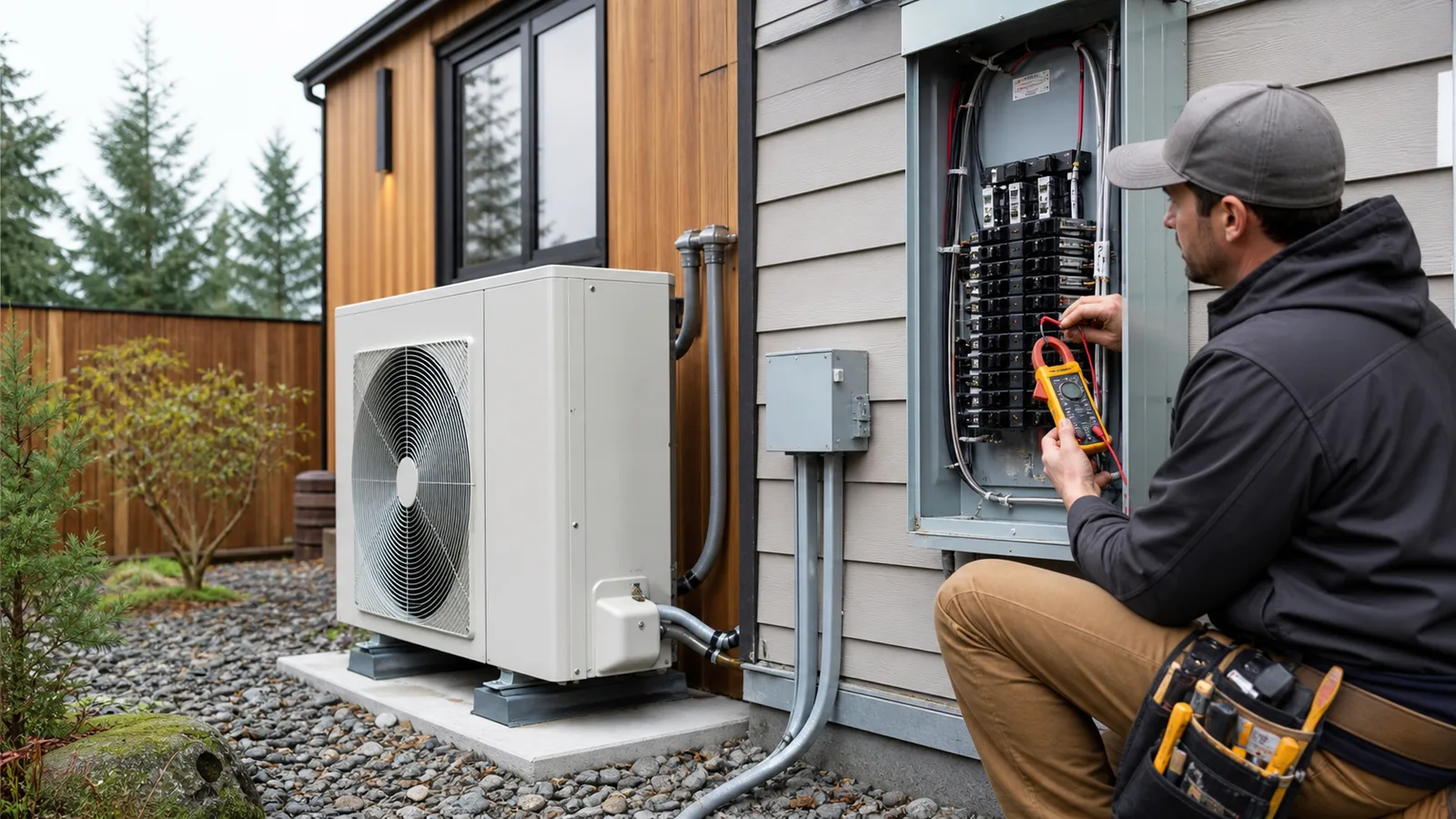
A heat pump and electric auxiliary heat can add meaningful load. The electrical review should cover service rating, panel condition, breaker spaces, conductor route, disconnect, outdoor exposure and equipment nameplate. Photograph the closed panel and directory safely; never remove an energized cover. Mention an EV charger, electric water heater, range, dryer, hot tub or planned remodel because simultaneous loads can affect the design.
If a panel or service upgrade is proposed, ask for the load calculation and alternatives in writing. A new dedicated circuit, disconnect or extended wiring normally requires electrical permitting and inspection in Washington. When an electrical contractor performs the work, that contractor obtains its permit. Confirm the authority for the address and coordinate inspection before walls or raceways conceal required work.
- •Existing heat source and equipment models
- •Room-by-room comfort and duct concerns
- •Load calculation and exact electrical nameplate
- •Outdoor location, condensate and service clearances
- •Permit, inspection and utility-program responsibilities
Check Clark Public Utilities before signing
Clark Public Utilities publishes heat-pump incentives for qualifying electrically heated homes and states that program requirements and amounts can change. Its current program includes equipment and contractor-network conditions. Confirm eligibility, approved system details, required paperwork and timing before equipment is ordered. Do not rely on an old rebate screenshot or subtract an expected incentive from the contract price as if payment were guaranteed.
Utility-program participation does not replace state licensing, permits or an independent comparison of bids. Ask whether the HVAC company participates in the relevant current network and who submits documents. Save the qualifying model information, invoice, commissioning record and any utility approval. If the home uses another serving utility or fuel, use that provider’s current program instead of assuming Clark Public Utilities terms apply.
Require commissioning and a usable handoff
The final scope should cover removal, equipment, pad or bracket, refrigerant lines, duct changes, filter access, condensate, controls, electrical circuit, disconnect, permits, inspections, startup and restoration. Request startup readings and confirmation that airflow and thermostat operation were checked. Clarify who fixes drywall, siding or paint and who returns if an inspection correction involves both trades.
Verify the contractor businesses and relevant licenses with Washington L&I. At handoff, test heating, cooling and backup operation; locate breakers, disconnect, filter and condensate point; and learn normal defrost sounds. Keep model and serial numbers, manuals, permit finals, load and startup records, warranties and rebate documents. Schedule filter and outdoor-unit maintenance rather than waiting for reduced comfort to reveal a neglected system.
Plan the next step
Continue with a relevant local service, named request or supporting guide.
Compare Vancouver electrical services →
Review circuits, panels, troubleshooting and permit-ready work.
Describe a heat-pump electrical circuit →
Add equipment data, route, panel and disconnect details.
Review Vancouver panel-capacity planning →
Use the same load-based approach for another major circuit.
Homeowner questions
Does every heat pump need a panel upgrade?+
No. The exact equipment and a documented electrical load review determine whether a circuit, load management or broader upgrade is needed.
Is a Clark Public Utilities rebate guaranteed?+
No. Eligibility, funding, equipment, contractor and timing requirements apply and can change.
Who obtains the electrical permit?+
The hired electrical contractor must obtain the permit for work it performs.
What records should I receive?+
Keep permits, inspection finals, load and startup records, equipment data, warranties, invoices and rebate documents.
Primary sources
Official requirements can change. Confirm the current rule for your address and project with the named authority.