EV Charger Installation in Vancouver, WA: Panel, Permit and Utility Guide
A Vancouver homeowner checklist for choosing charger power, checking panel capacity, coordinating permits and comparing complete electrical bids.
Source-reviewed homeowner guide
Quick takeaways
- ✓Match charging power to actual driving
- ✓Require a documented load review
- ✓The hired electrical contractor buys its permit
- ✓Check current utility programs before buying hardware
Start with the car, parking space and daily mileage
An EV-charger quote should begin with how the vehicle is actually used, not with the largest circuit that can be sold. Record the vehicle model, its onboard charging limit, miles normally driven each day and the hours the car stays parked. A modest overnight charge can be enough for one household, while two vehicles, a long commute or daytime turnover can justify a different design. The charger should also reach the charge port without a cord crossing a walkway or resting where a garage door can damage it.
Location affects the job. A garage in Cascade Park may offer a short route from the panel; a detached structure in Felida can require trenching and a feeder; a townhouse or condominium near Downtown Vancouver may involve an owners association and shared-property approval. Tell the electrician whether parking is indoors or outdoors, whether the wall is finished and how far the proposed charger is from the electrical panel. Those facts make competing estimates comparable.
A charger circuit is also a load calculation
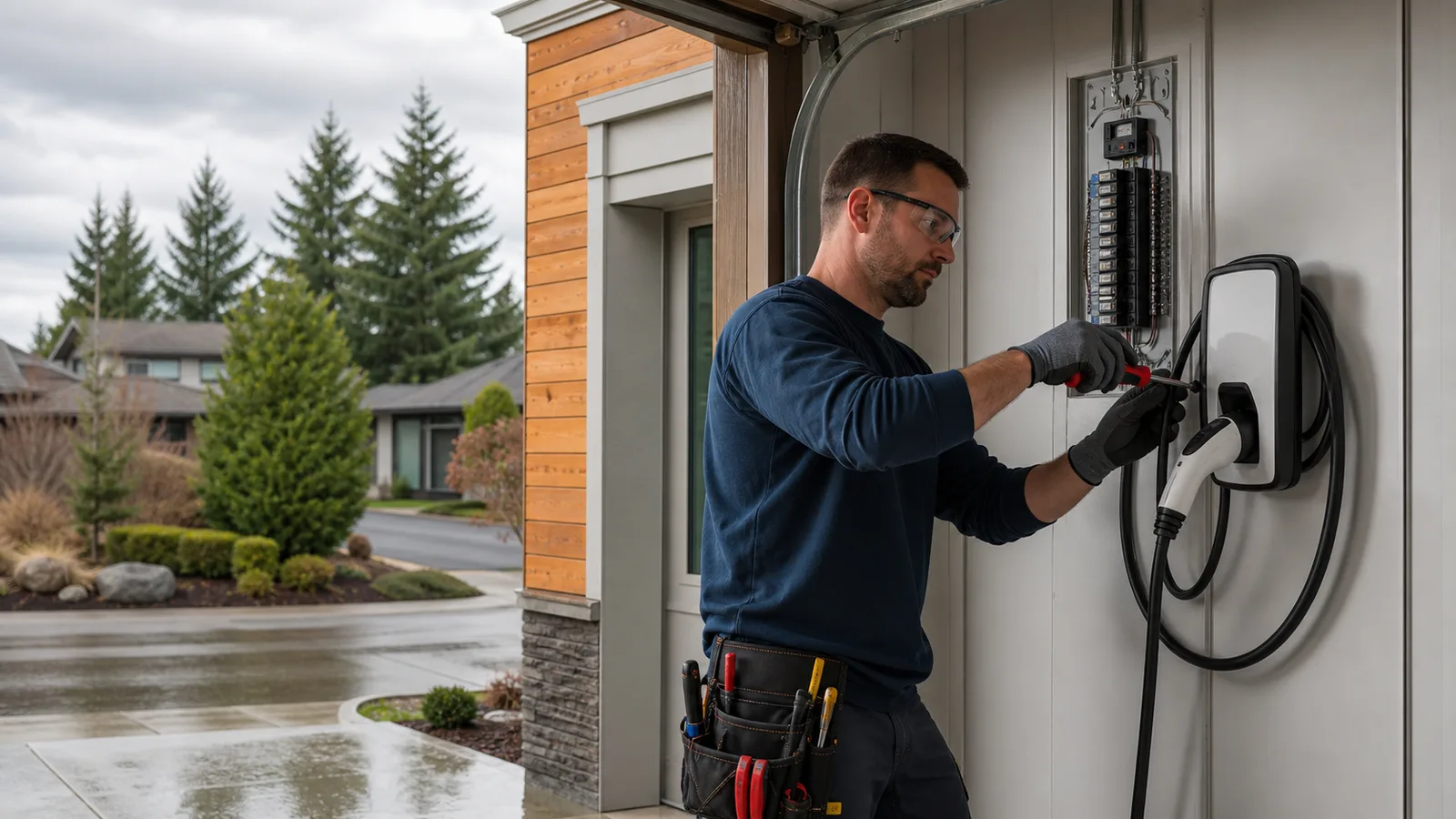
A photo of the panel label is useful, but the main-breaker number alone does not prove that capacity is available. A licensed electrical contractor should evaluate the service, existing loads, panel condition, breaker spaces, conductor route and the charger configuration. Ask the bid to distinguish a dedicated circuit from any panel replacement, service upgrade, load-management equipment, trenching, wall repair and utility work. That separation prevents a low headline number from becoming an open-ended project.
Do not remove the panel cover for photos or test equipment yourself. Photograph the closed panel, its directory, the meter area and the proposed cable path from a safe position. Mention electric heat, a heat pump, electric water heating, a range, dryer, hot tub, solar or a second charger because those loads can matter. If a contractor recommends a service upgrade, request the load calculation and a written explanation of alternatives rather than accepting the upgrade as an automatic requirement.
- •Vehicle model and maximum AC charging rate
- •Daily mileage and usual overnight parking window
- •Closed-panel photos, panel label and breaker directory
- •Approximate route length, finished walls and trenching needs
- •Outdoor exposure, bollard needs and Wi-Fi availability
Know who obtains the electrical permit
Washington L&I says electrical work generally requires a permit and inspection. When you hire an electrical contractor, that contractor must purchase the permit for the work performed; a homeowner permit is for an owner who is actually doing the installation. Vancouver lists electrical work among its residential trade permits, but the correct issuing and inspection authority depends on the address and jurisdiction. Confirm that point before signing, especially for an address near a city boundary.
The written scope should name the permit holder, inspection responsibility and any utility coordination. L&I also directs homeowners to verify the electrical contractor and the certifications applicable to the people doing the work. Keep the permit number and final inspection result with the home records. For a condo, rented home or property governed by an association, obtain written authorization before equipment is attached to common walls or power is routed through common space.
Coordinate with Clark Public Utilities before the install
Clark Public Utilities asks customers to alert the utility before installing EV-charging equipment and publishes local charging information and managed-charging incentives. Program eligibility, supported hardware and enrollment terms can change, so check the current utility page before purchasing a charger. Do not select hardware only because a rebate existed in an old advertisement; verify that the exact model and installation timing satisfy the current program.
Utility communication does not replace the electrical permit or contractor verification. It answers a different part of the project: service coordination, local programs and grid-facing requirements. Put charger hardware, electrical labor, permit, inspection, utility work, patching and commissioning on separate estimate lines. At handoff, test the charger with the vehicle, save network credentials, photograph labels and ask how to shut the circuit off safely if the unit reports a fault.
Compare bids by scope, not just total price
A useful EV-charger bid identifies charger model, mounting location, circuit rating, conductor and raceway route, panel work, outdoor protection, permit, inspection, utility coordination, wall restoration and exclusions. It should also state whether the charger is owner-supplied and who handles a defective unit. If trenching is involved, require utility-locate and restoration responsibilities in writing. If load management is proposed, ask what happens when other household loads are running.
Avoid contractors who ask you to buy their permit, will not provide an electrical-contractor credential, or promise that inspection is unnecessary without documenting the exemption. KABLAY is a marketplace, not the installer or permitting authority; the homeowner and selected professional agree directly on scope and payment. A complete request with panel photos, route measurements and parking details helps qualified Vancouver electricians respond without guessing.
Plan the next step
Continue with a relevant local service, named request or supporting guide.
Electricians in Vancouver, WA →
Compare local electrical services and prepare a city-specific request.
Describe a Level 2 EV charger installation →
Use a named service page instead of an unclear query-string task.
Washington contractor verification checklist →
Verify credentials, permit responsibility and written scope before work.
Homeowner questions
Do I need an electrical permit for a home EV charger in Vancouver?+
Electrical work generally requires a permit and inspection in Washington. Confirm the correct issuing authority for the exact address, and require the hired electrical contractor to obtain its permit.
Does every charger require a panel upgrade?+
No. The answer depends on a documented load calculation, existing service, panel condition, other loads, charger settings and possible load-management options.
Should I buy the charger before getting bids?+
Usually compare compatibility, utility-program eligibility, warranty responsibility and electrical scope first. An unsupported or oversized unit can limit options.
What photos help an electrician quote?+
Send the closed panel and directory, meter area, proposed mounting location, parking space and the full cable route. Never remove energized covers for a photo.
Primary sources
Official requirements can change. Confirm the current rule for your address and project with the named authority.