Deck and Fence Staining in Camas, WA: Prep for a Wet Climate
How Camas homeowners can inspect wood, choose a dry work window, compare prep methods and write a complete deck or fence staining scope.
Source-reviewed homeowner guide
Quick takeaways
- ✓Repair weak wood before coating
- ✓Use product-specific weather limits
- ✓Specify preparation and protection
- ✓Check lead-safe rules before disturbing old paint
Inspect structure and drainage before discussing color
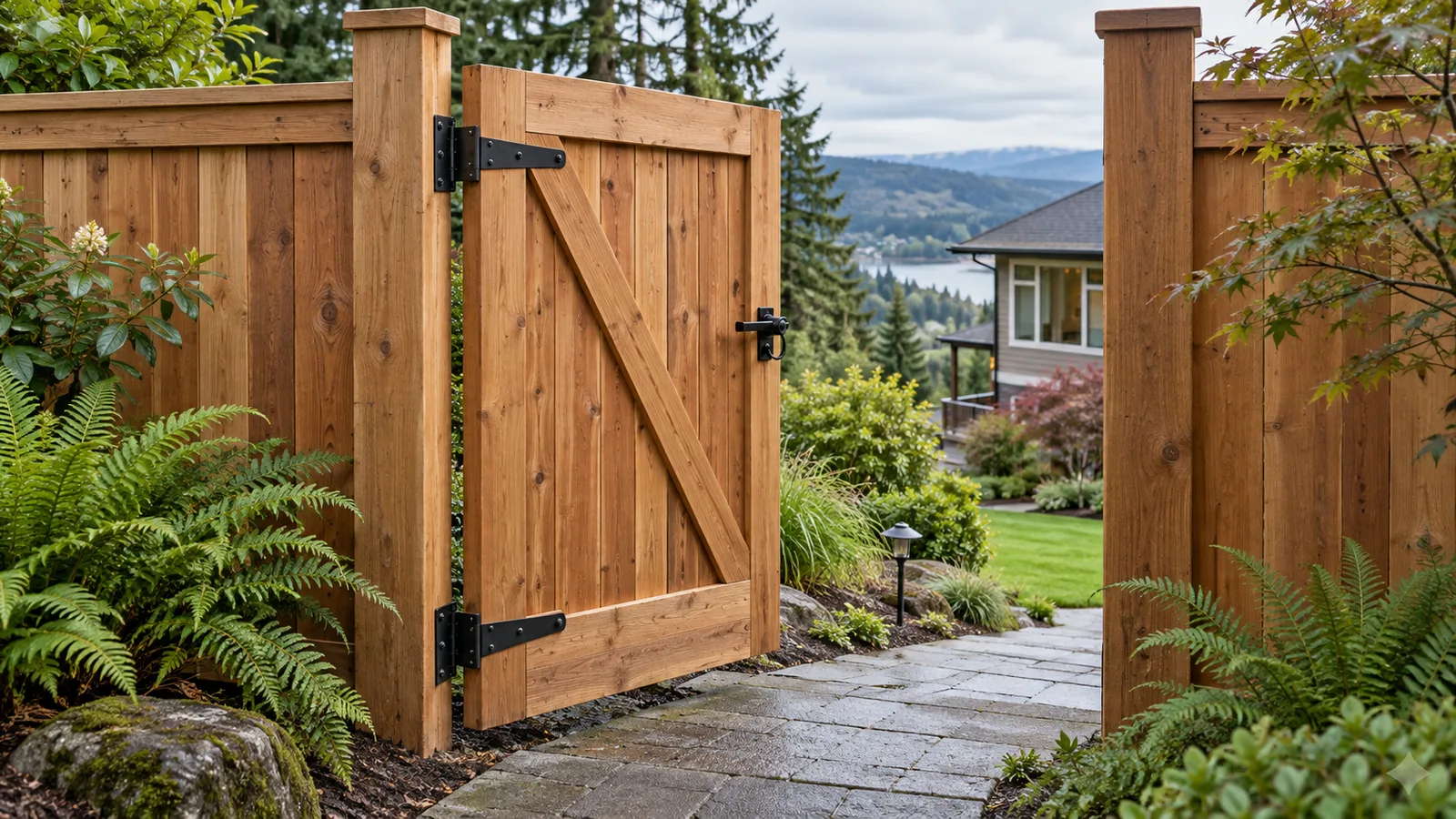
Stain cannot repair a loose railing, decayed post, failed ledger, soft stair tread or soil that stays against wood. Walk the deck and fence after a dry period and mark movement, splintering, dark areas, failed fasteners and boards that trap leaves. Properties on Prune Hill or near Green Mountain may have slopes and shaded exposures, while homes near Lacamas Shores can have different wind and vegetation. Those examples guide inspection but do not predict the condition of a specific property.
Check where downspouts discharge, whether sprinklers wet the boards and whether plants block drying. Fence posts usually fail at different locations than horizontal rails, and deck framing may look better from above than underneath. Ask a qualified contractor to separate structural repair from coating. Covering weak wood with an opaque product can make a photo look finished while leaving the underlying hazard and moisture path unchanged.
Moisture and weather control the schedule
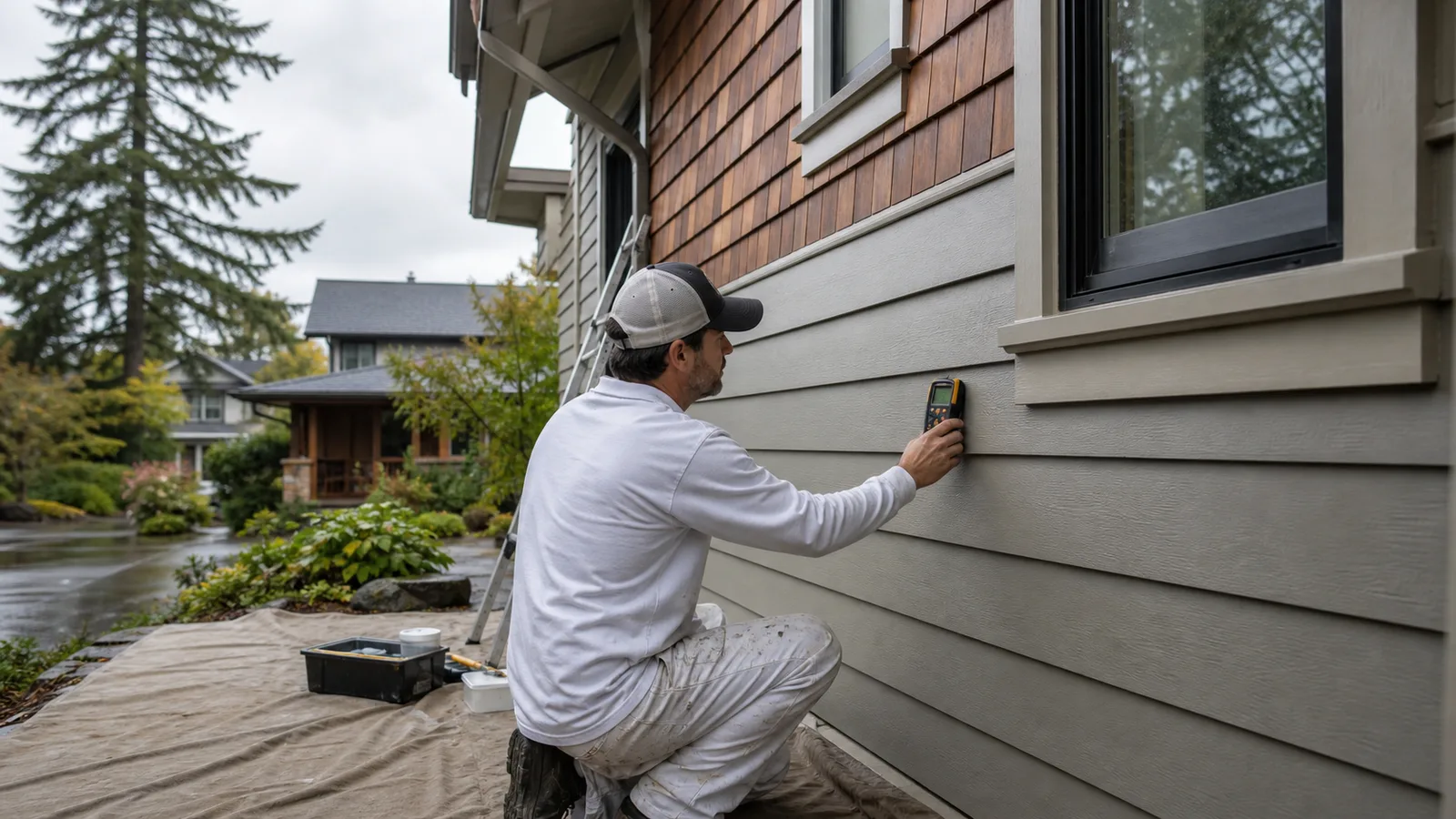
A calendar date is not proof that wood is ready. Recent rain, morning dew, shaded areas and cleaning water all affect drying. The coating manufacturer’s current instructions should govern surface moisture, air and surface temperature, rain-free time and recoat interval. Require the contractor to name the product before work begins and to document how readiness will be checked. “We always stain in summer” is not a substitute for site conditions and a product data sheet.
Build weather flexibility into the contract. Preparation can begin on one day while application waits for a suitable window, but exposed wood should not be left indefinitely in an unfinished state. Clarify who monitors forecasts, who authorizes a delay and what happens to moved furniture or blocked access. On shaded sides of a Camas home, different sections may become ready at different times; one moisture reading at the sunny gate does not describe the whole project.
- •Loose, soft or split boards and unstable rails
- •Ground contact, leaf traps, sprinklers and downspouts
- •Existing coating type and areas of complete failure
- •Product instructions for moisture, temperature and rain
- •Plants, vehicles, pets and neighbor-side access
Preparation is a specification, not one word
The USDA Forest Products Laboratory’s exterior-wood checklist emphasizes that substrate and residual finish affect coating performance. A good scope states how dirt, mildew-like staining, failed film and gray fibers will be addressed; what pressure, detergent, scraping or sanding limits apply; and how the surface will be rinsed and dried. Aggressive washing can damage soft wood or drive water deep into it, while coating over loose fibers shortens the useful result.
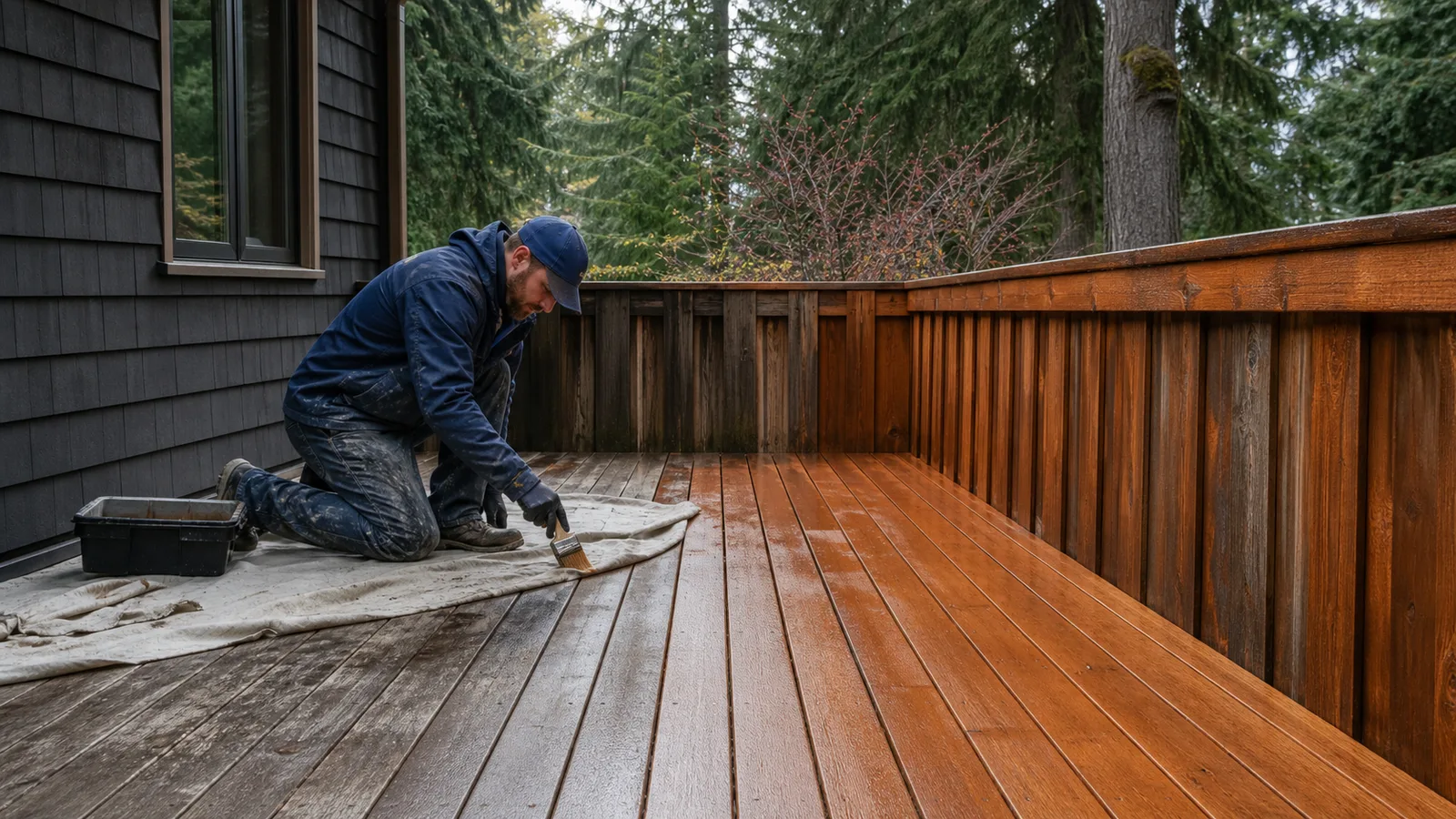
Ask for a small test area when changing from a film-forming finish to a penetrating stain or when the existing product is unknown. Color samples should be viewed on the actual prepared wood because species, age and prior coatings change appearance. Protect siding, concrete, roofs, windows, metal hardware and neighboring property from overspray or runoff. The bid should include cleanup and lawful handling of removed coating debris.
Check permit and lead-safe boundaries
Camas says deck permits depend on attachment, height and other conditions, while fence work has restrictions that should be checked under the city code. Routine coating may be different from rebuilding a deck, changing a guard or replacing a fence, so do not let a staining quote quietly grow into unreviewed construction. If repair expands, pause and ask the City of Camas whether the new scope requires a permit or inspection.
For pre-1978 housing, EPA warns that renovation, repair and painting that disturbs painted surfaces can create hazardous lead dust and may require a lead-safe certified firm. That matters when old painted railings, porches or exterior trim are scraped or sanded. Determine building age and coating history before abrasive preparation. Lead-safe work is about containment, dust control and cleanup, not simply choosing a new low-odor stain.
Write the finish system and handoff in full
A complete proposal lists measured surfaces, preparation, repairs, product manufacturer and line, color, number or target application rate, one or both fence sides, board ends, railings, stairs, undersides, masking, landscaping protection and cleanup. It states which surfaces are excluded and how weather delays are handled. For a fence shared visually with a neighbor, settle access and overspray protection before the crew arrives.
At handoff, inspect uniform coverage, missed edges, stuck gates, hardware and cleanup after the product has had its specified drying time. Save the product label, color formula and leftover-material instructions. Verify the applicable Washington contractor registration for paid construction or painting scope. KABLAY does not manufacture coatings or guarantee a contractor’s work; it helps homeowners compare a written, site-specific scope instead of a one-line “pressure wash and stain” offer.
Plan the next step
Continue with a relevant local service, named request or supporting guide.
Homeowner questions
How soon after washing can a Camas deck be stained?+
There is no universal number. Follow the selected product’s moisture, temperature and rain-free requirements and verify conditions across shaded and sunny areas.
Should a contractor coat over soft or decayed boards?+
No. Structural and decay repairs should be identified first; a finish does not restore lost strength.
Is pressure washing always required?+
No. Preparation depends on wood, existing finish and condition. Excess pressure can damage fibers and add moisture.
Why does the year 1978 matter?+
EPA lead-safe requirements can apply when paid renovation, repair or painting disturbs painted surfaces in pre-1978 housing.
Primary sources
Official requirements can change. Confirm the current rule for your address and project with the named authority.