Exterior Painting in Camas, WA: Wet-Weather Preparation Guide
How to diagnose peeling paint, separate leak repair from coating work, plan lead-safe preparation and compare an exterior painting specification.
Source-reviewed homeowner guide
Quick takeaways
- ✓Repair water entry and substrate before paint.
- ✓Use measurable moisture and weather limits.
- ✓Specify preparation, primer, coats and repair boundaries.
Diagnose why the old coating failed
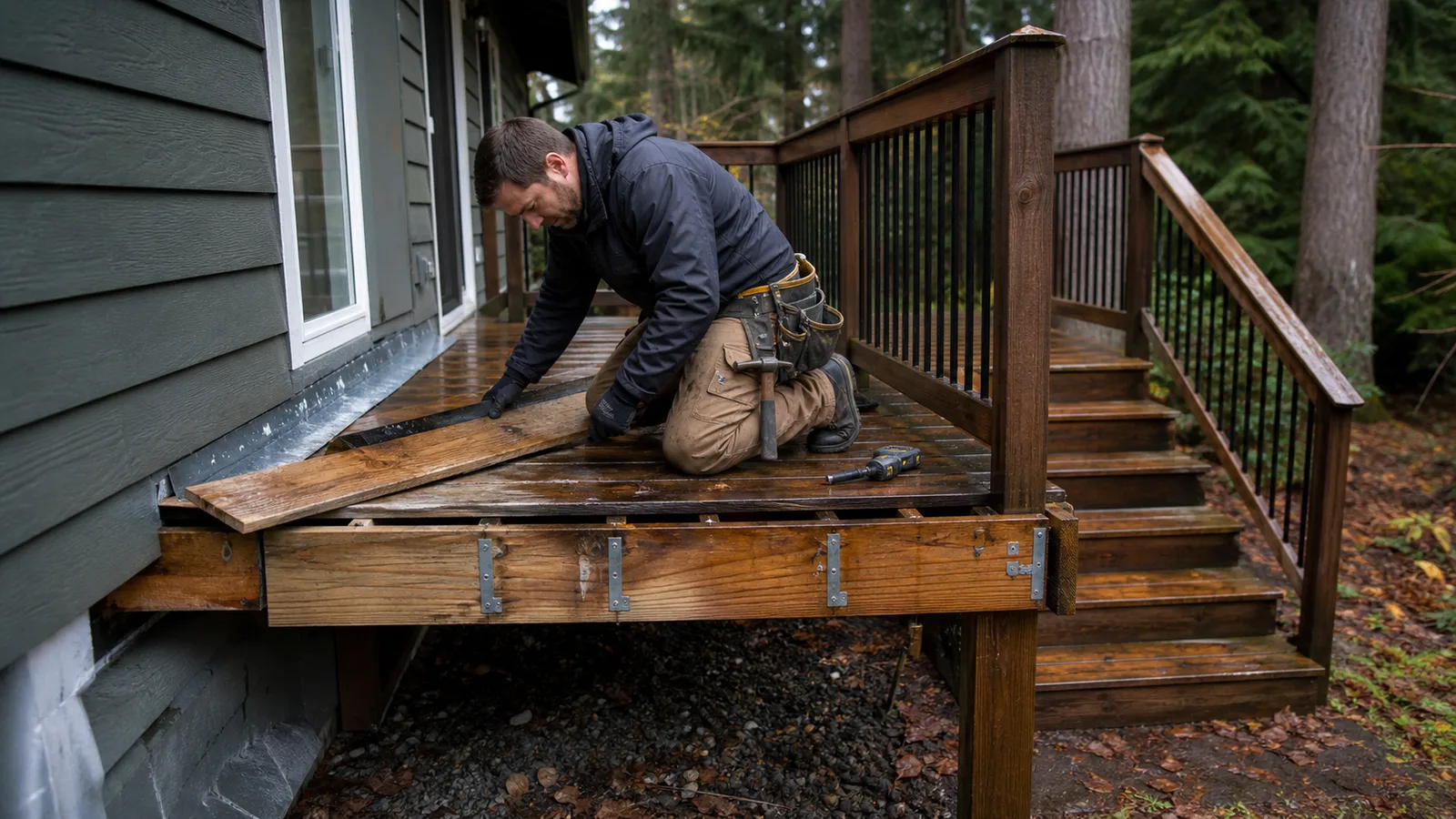
Peeling near a window, roof edge or deck connection may reflect failed flashing, caulk, gutter overflow or trapped moisture rather than bad paint alone. Walk the house after rain and record staining, soft siding, open joints, algae, failed sealant and splashback. Fix active water entry and damaged substrate before coating. Paint is a finish, not a repair for rotten wood or a leaking wall assembly.
Identify siding and trim materials and approximate coating age. Older homes can require lead-safe practices when painted surfaces are disturbed. Do not authorize aggressive sanding or pressure washing without a containment and substrate plan. Test suspicious soft areas instead of burying them under filler. A good proposal distinguishes cleaning, scraping, repairs, priming, caulking and finish coats by surface.
Plan a dry surface, not merely a dry forecast
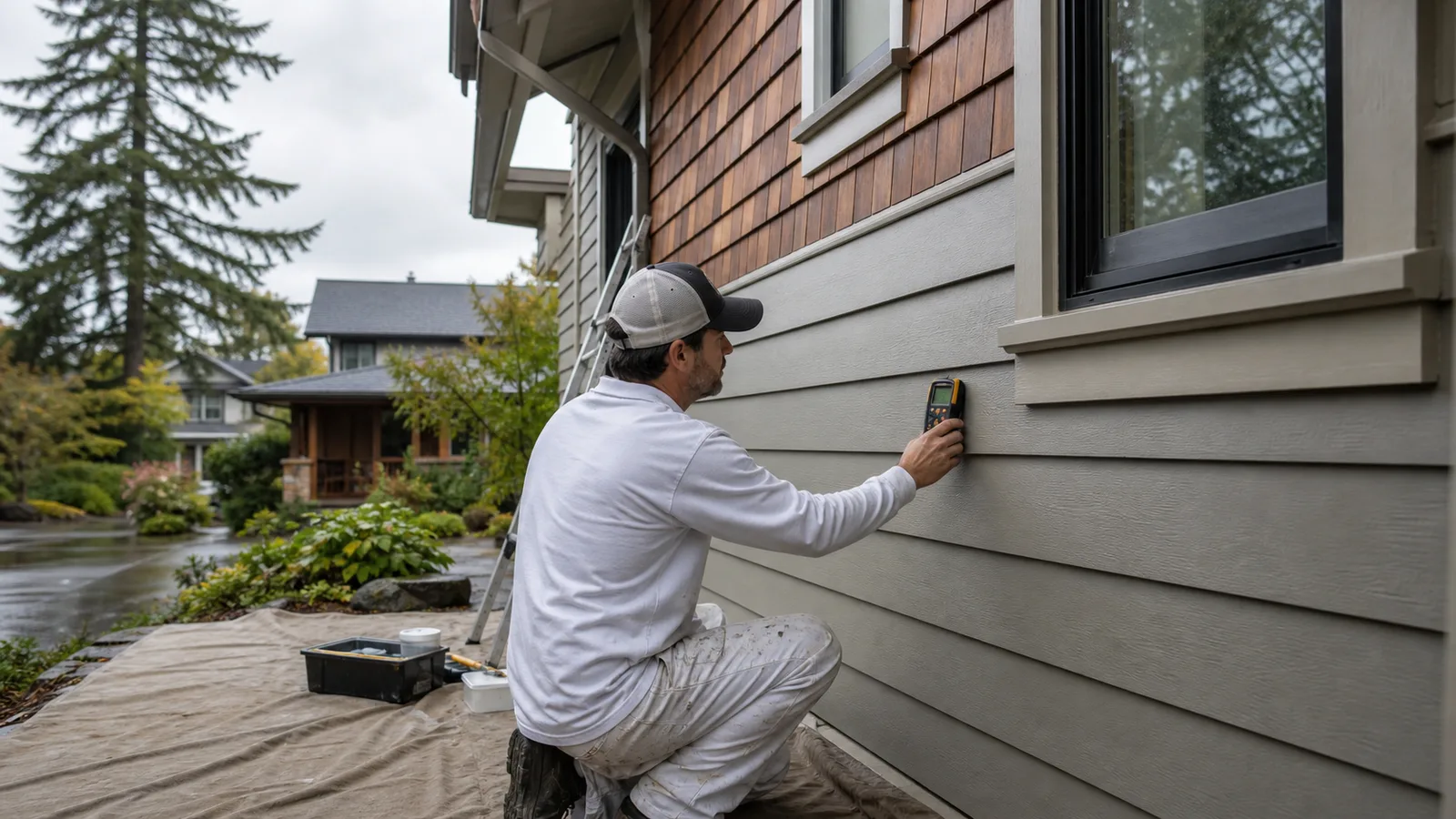
A rain-free afternoon does not prove siding is ready. Shade, morning dew, recent washing and moisture behind joints can keep wood wet. Ask how the contractor checks surface condition and follows the coating manufacturer’s temperature, moisture and recoat limits. Work should stop when weather makes adhesion or curing unreliable rather than moving forward simply to preserve the calendar.
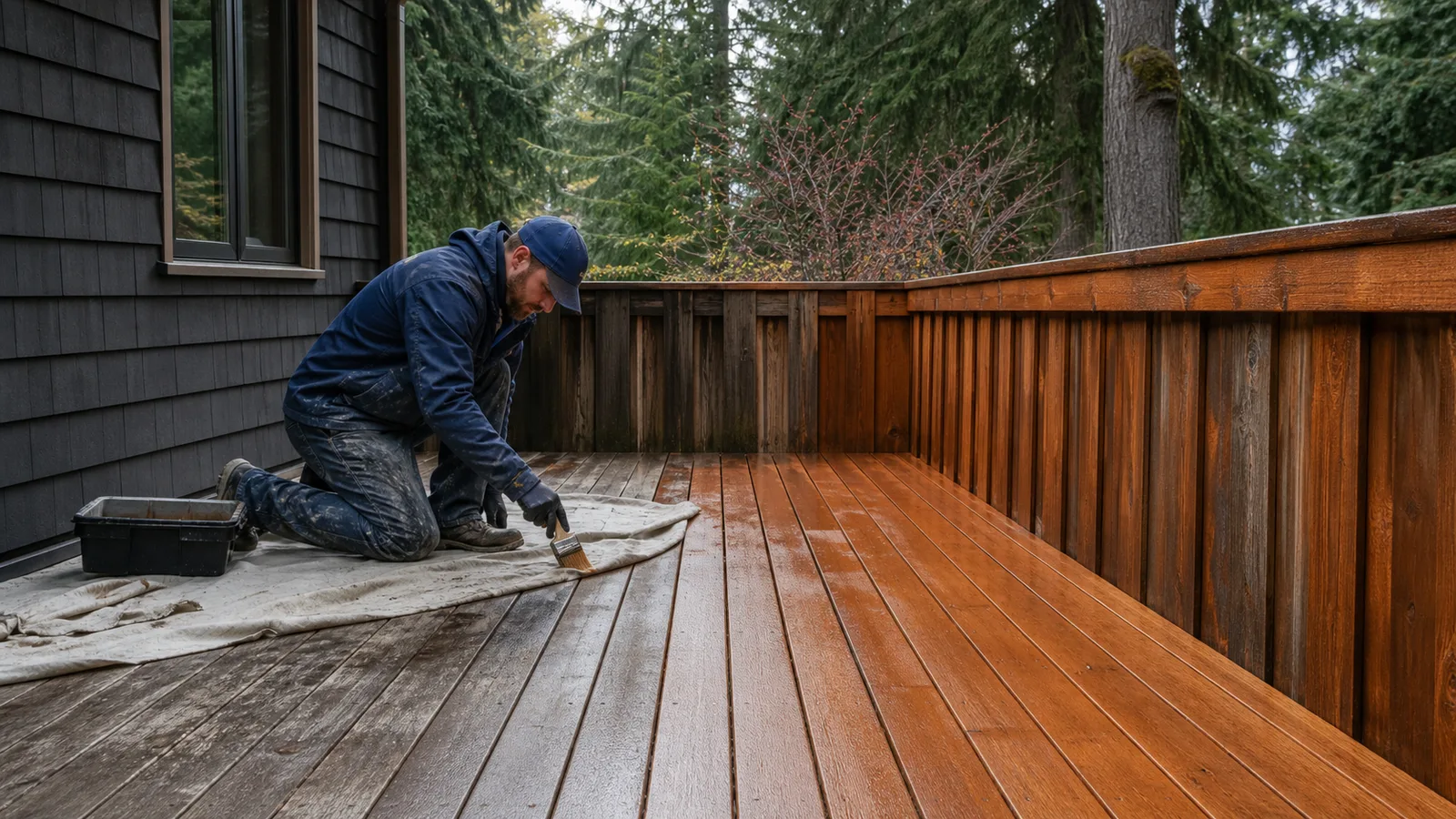
Protect plants, roofs, concrete, windows and neighboring property without wrapping wet walls so tightly that they cannot dry. Cleaning water and debris need controlled collection. USDA wood-finishing guidance emphasizes surface preparation and matching finish to wood exposure. End grain, horizontal ledges and cut repairs often need special attention because they absorb and hold water differently from broad vertical siding.
- •Active leaks and rotten substrate separated from painting
- •Siding, trim and existing coating identified
- •Lead-safe responsibilities confirmed when applicable
- •Surface moisture and weather limits written
- •Prep, primer, coats and repairs itemized
Confirm permit and repair boundaries
Camas lists painting as typical finish work, but associated siding replacement, structural repair, scaffolding impacts, right-of-way use or other alterations can change the project. Ask Community Development when the scope extends beyond coating. A painter should not quietly replace significant damaged construction without clarifying permits, trade registration and responsibility for the underlying defect.
For pre-1978 housing, EPA’s Renovation, Repair and Painting rules can apply when paid work disturbs lead-based paint above applicable thresholds. Verify the firm and process instead of accepting “lead-free paint” as a substitute for safe disturbance practices. Keep test results, notices and cleanup records. Occupants, pets and neighbors need a clear access and containment plan.
Compare a coating system, not a gallon count
The bid should list washing method, containment, scraping, sanding, spot or full priming, caulk locations, minor repair limits, product lines, sheen, number of coats, application method, weather rules, color changes and excluded carpentry. Ask how much repair is included before a change order. Samples should be viewed on the actual elevation in sun and shade.
Verify contractor registration and insurance. During work, document hidden damage before repair and product labels before cans leave. At completion, inspect edges, joints, coverage, overspray, windows, fixtures and cleanup in daylight. Keep colors, batch information, warranty and repair photos. Recheck vulnerable north-facing and weather-facing elevations after the next wet season rather than waiting for widespread peeling.
Plan the next step
Continue with a relevant local service, named request or supporting guide.
Homeowner questions
Can exterior paint stop a siding leak?+
No. Diagnose and repair flashing, joints, substrate and drainage before relying on a coating.
Is a dry day enough after washing?+
Not always. Surface and underlying moisture plus manufacturer limits determine readiness.
Why does pre-1978 paint matter?+
Paid disturbance can trigger EPA lead-safe requirements.
Should carpentry be included in the paint bid?+
Define a clear included limit and written unit or change-order method.
Primary sources
Official requirements can change. Confirm the current rule for your address and project with the named authority.