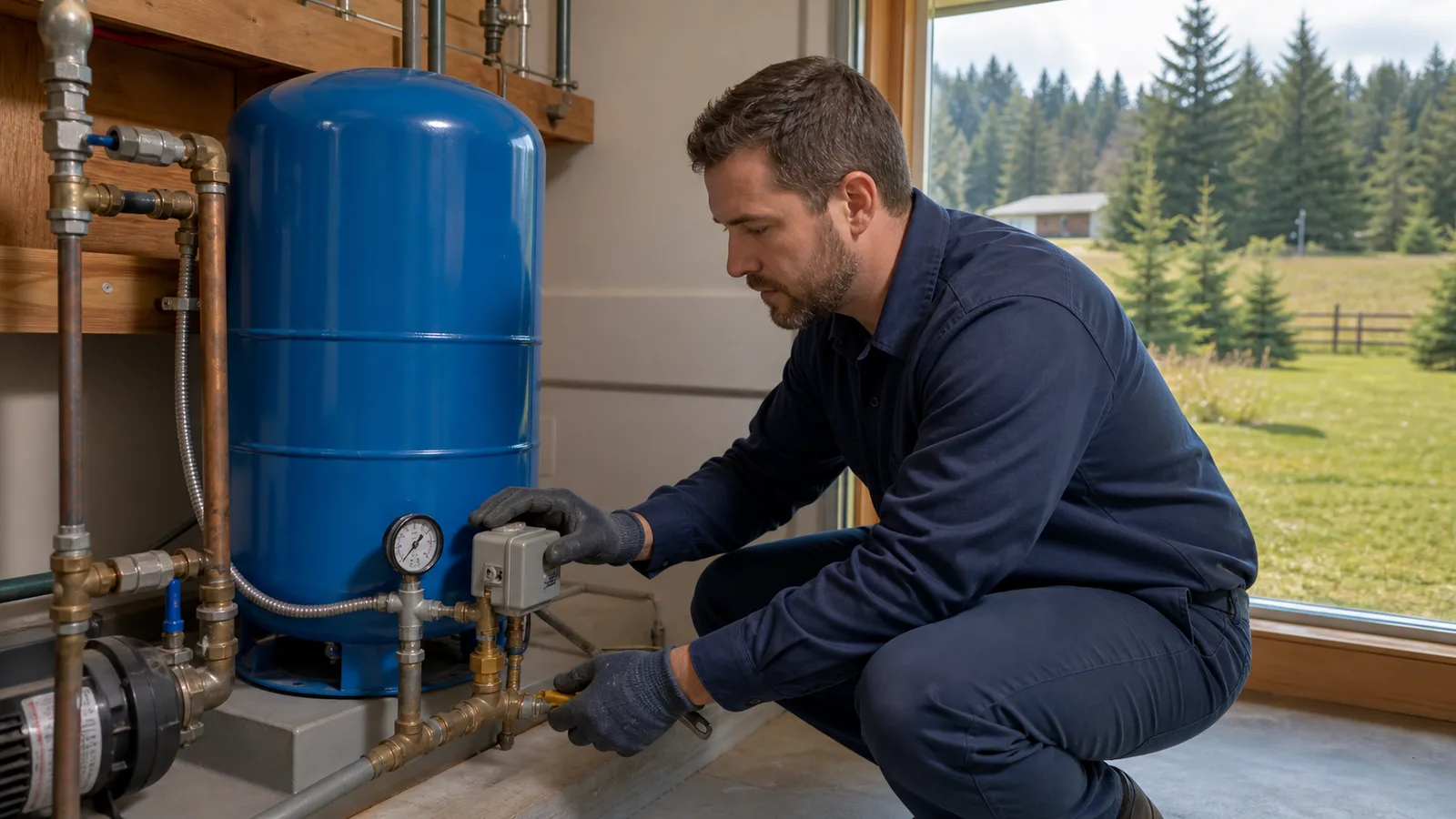
Septic Alarm in La Center, WA: Pump, Float and Service Guide
What to do when a septic alarm sounds, which water use to reduce, what not to open, and how to hire a Clark County-certified septic professional.
Source-reviewed homeowner guide
Quick takeaways
- ✓Reduce water use and never enter a septic tank.
- ✓An alarm can indicate pump, float, circuit or hydraulic problems.
- ✓Use Clark County-certified septic providers and keep the written report.
Reduce flow and identify the alarm safely
When a septic high-water alarm activates, reduce household water use immediately: postpone laundry, dishwasher cycles, baths and long showers. Silence the audible buzzer only as the manufacturer instructs while leaving the warning light visible. Check whether a power outage, tripped known circuit or extreme recent water use coincides with the alarm, but do not repeatedly reset equipment or enter a tank.
Keep children and pets away from lids and electrical panels. Never open or enter a septic tank; toxic gases, collapse and drowning hazards can be fatal. Record alarm time, rainfall, power history, water use, odor, surfacing sewage and any slow drains. If sewage is backing into the home or surfacing where people can contact it, restrict the area and request prompt professional help.
An alarm has several possible causes
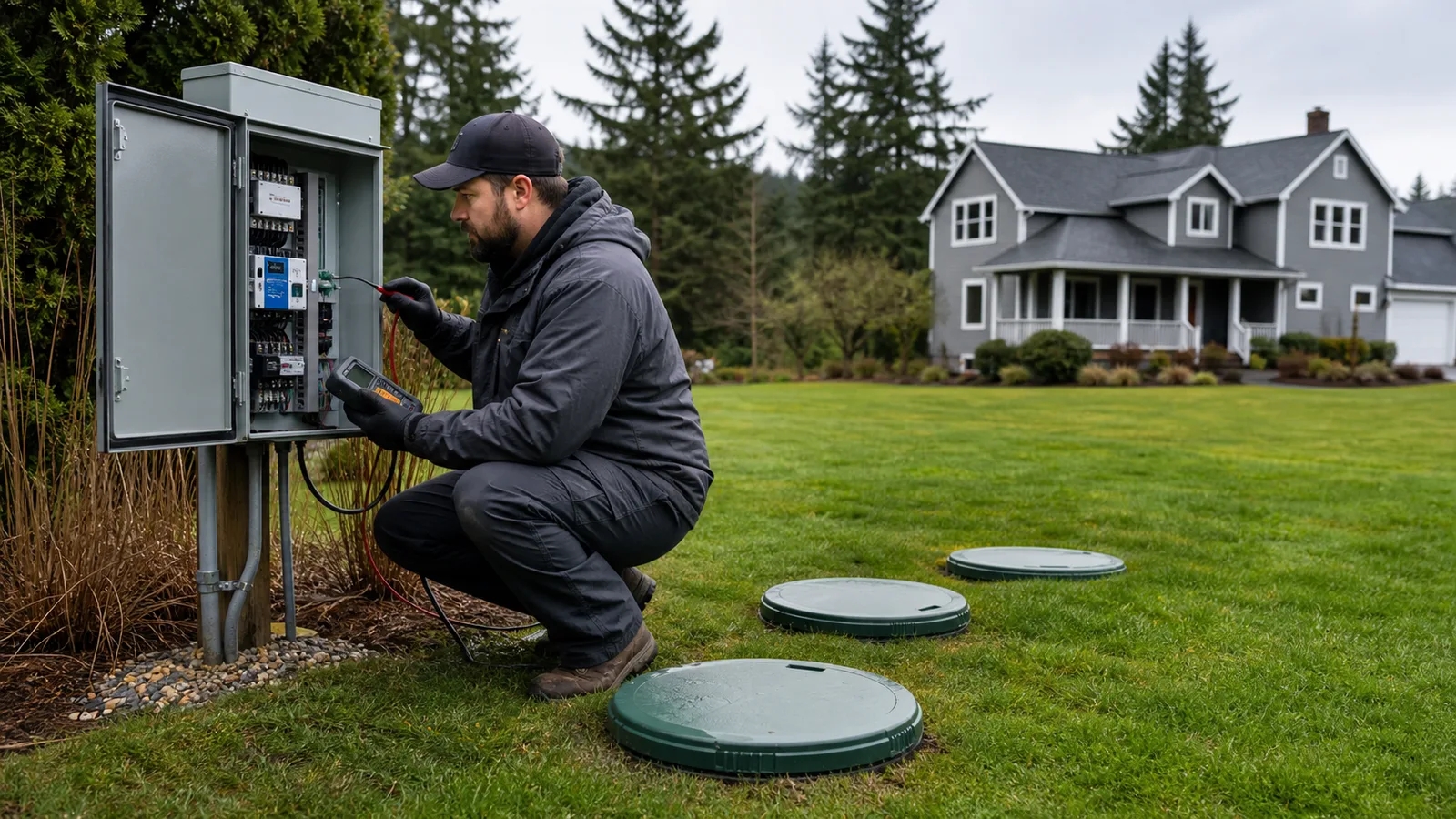
Washington Department of Health explains that a high level in a pump chamber can result from a faulty pump, float or circuit, excessive water use or other causes. The alarm is a symptom, not a diagnosis. A service professional may need to inspect controls, floats, pump output, discharge components and system condition. Do not assume pumping the tank alone repairs an electrical or mechanical fault.
Heavy rain or drainage directed over the septic area can burden or damage a system. Keep roof drains, vehicle traffic, new structures, fill and soil compaction away from the tank, treatment area and reserve area. Note any recent landscaping or construction. A plumber can address house piping, but Clark County requires people offering septic pumping, inspection, maintenance, repair or installation to hold the applicable county certification.
- •Reduce laundry, showers, baths and dishwasher use
- •Leave warning light visible after silencing buzzer
- •Record rain, outage, water use and backup symptoms
- •Keep people, vehicles and roof drainage off system area
- •Use a Clark County-certified septic provider
Use local records and maintenance intervals
Clark County Public Health maintains septic-system information and lists certified providers. It describes inspection frequencies that vary by system type, with alternative or pressure systems often requiring more frequent attention than simple gravity systems. Locate the approved design, prior reports, pump records and control-panel information before service. The system type determines what a meaningful inspection contains.
A La Center mailing address may be inside the city or in unincorporated Clark County, but septic oversight is a public-health matter rather than a generic marketplace credential. Confirm the responsible authority and provider certification. Electrical work beyond septic certification can also require appropriately licensed electrical work and permitting. Ask the service company to state which part it performs and which trade is separate.
Close the alarm call with a written diagnosis
The service record should identify system type, observed level, alarm and float operation, pump test, electrical findings, discharge condition, immediate action, recommended repair and whether pumping was performed. Avoid vague invoices that say only “reset alarm.” If replacement is proposed, request equipment specification, permit or health review responsibility, startup test and effect on the existing approved design.
Keep the report with county maintenance records and update emergency contact information near—but not inside—the panel. After repair, restore normal water use gradually and confirm the alarm remains normal. Inspect the area after heavy rain without opening lids. Continued odors, surfacing effluent, slow drains or repeat alarms require follow-up; do not silence a recurring warning and treat it as routine.
Plan the next step
Continue with a relevant local service, named request or supporting guide.
Homeowner questions
Can I keep showering after a septic alarm?+
Reduce water use until the cause is evaluated; reserve storage can be limited.
Should I open the tank to check the pump?+
No. Septic tanks present toxic gas, collapse and drowning hazards.
Can any plumber repair a septic pump?+
Clark County requires applicable certification for people offering septic inspection, maintenance, repair, pumping or installation.
Does pumping always solve the alarm?+
No. Float, pump, circuit, discharge or excessive-flow problems can remain.
Primary sources
Official requirements can change. Confirm the current rule for your address and project with the named authority.