Low Well-Water Pressure near La Center, WA: Diagnose Before Replacing Parts
Separate a clogged fixture, pressure-tank problem, pump issue, leak and water-quality concern before hiring plumbing or electrical help.
Source-reviewed homeowner guide
Quick takeaways
- ✓Identify the water-system type first
- ✓Record pressure patterns safely
- ✓Use a certified lab for water quality
- ✓Require diagnostic evidence before replacing a pump
First identify which water system serves the property
A La Center mailing address can describe a city-water connection, an individual private well or a small shared system. Do not diagnose all three the same way. Find the well log or utility bill, pump and pressure-tank records, treatment equipment manuals and any shared-system contact. Note whether the symptom affects the whole property, one building, one bathroom, only hot water or only one fixture. That first split can keep a simple aerator problem from becoming an unnecessary pump quote.
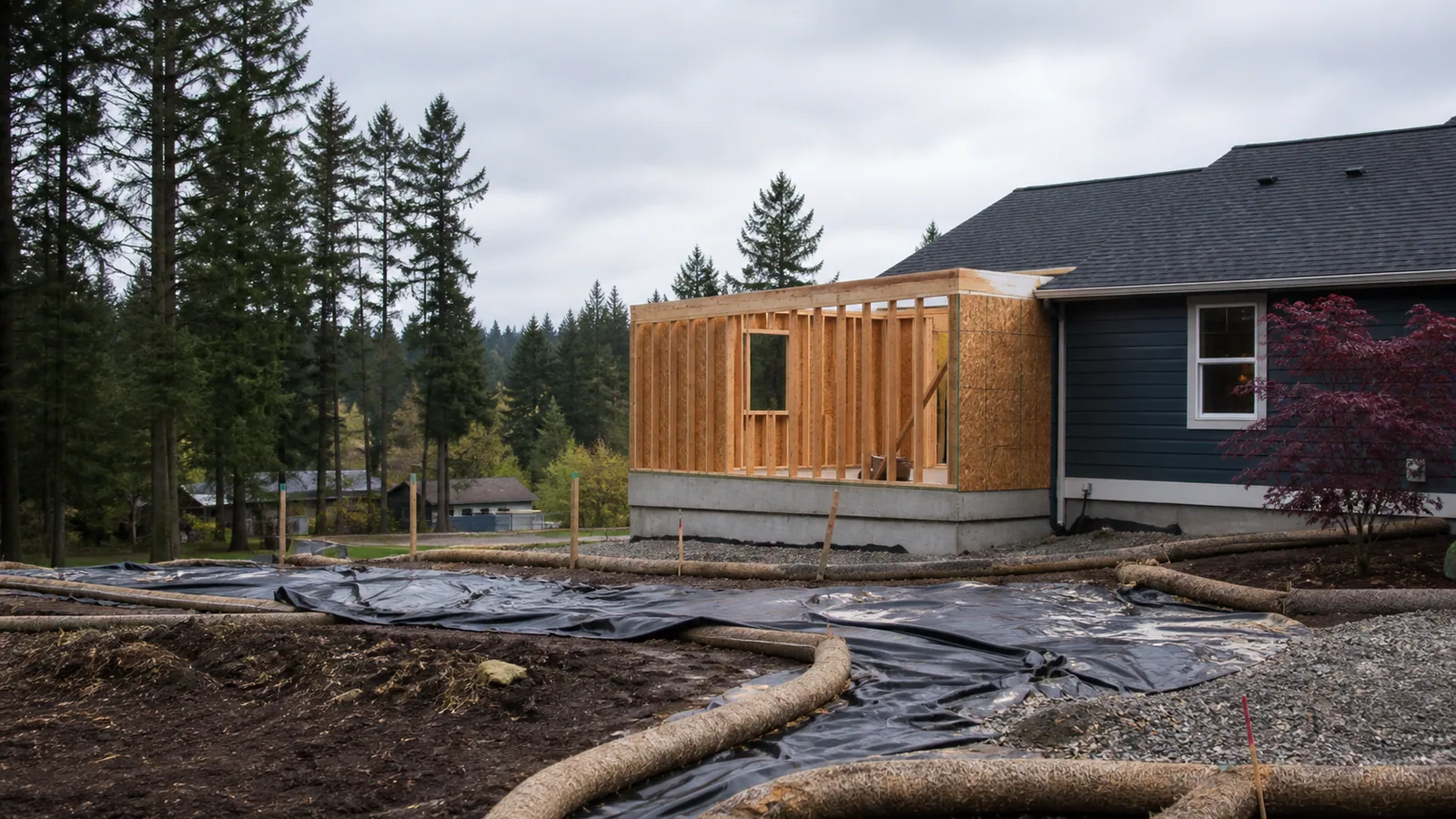
Rural properties around Lockwood Creek, Timmen Landing or Paradise Point can include long service runs, detached shops, irrigation and multiple pressure zones, but the address alone does not prove any particular equipment. Tell the professional about every building and high-demand use. If the home is on a shared well, do not change common controls without the operator or association. If it is city water, ask the utility about known service work before altering private equipment.
Record the pattern without opening energized equipment
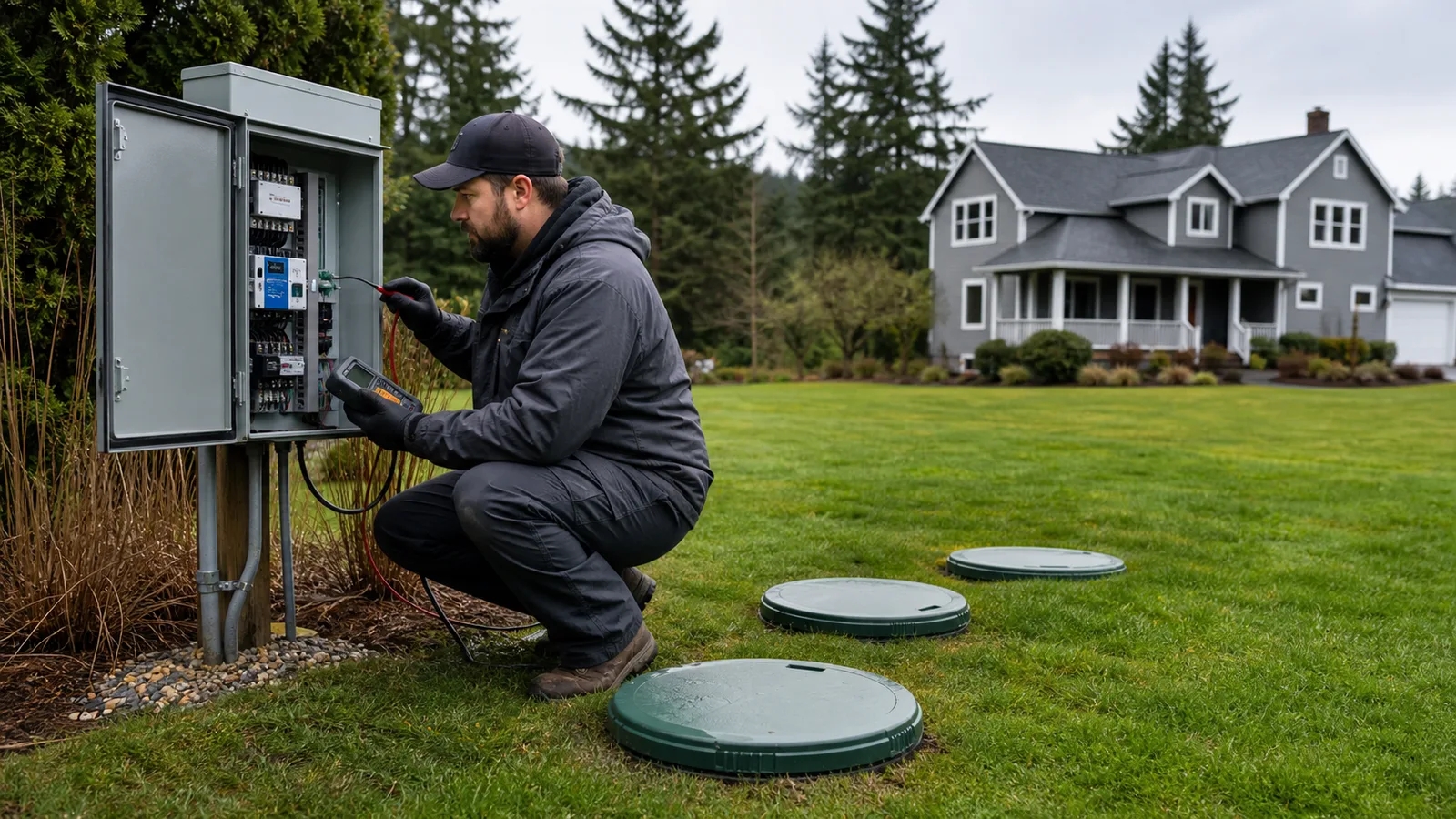
Write down when pressure falls: at every faucet, only when two fixtures run, during irrigation, after a power interruption, after filter service or only on hot water. Observe whether the pump cycles rapidly, runs for an unusually long time or fails to start, but do not remove electrical covers. Photograph visible gauge readings, filter housings, tank labels, controller displays and any leaks from a safe position. Include the time and which fixtures were running.
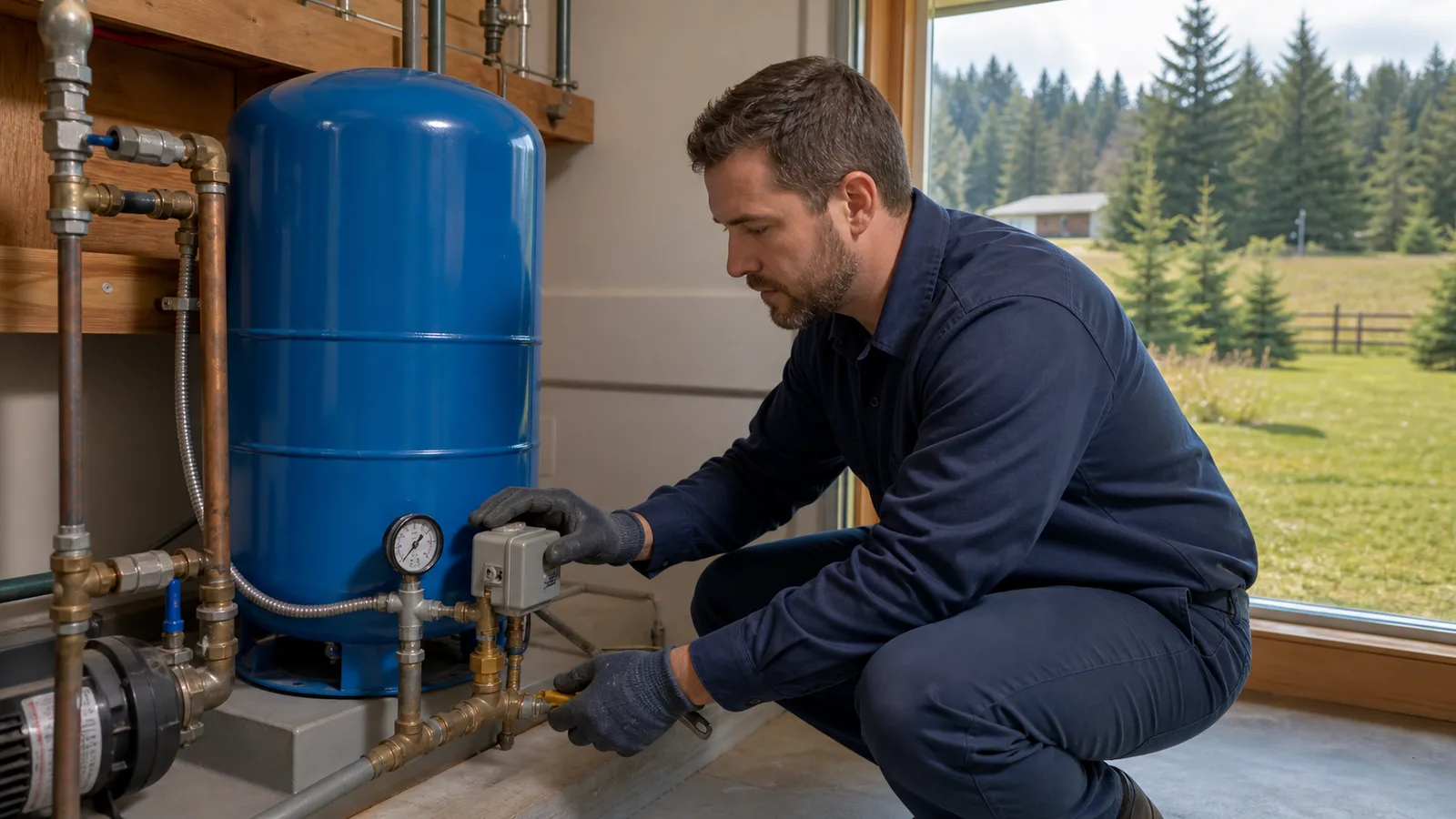
A clogged cartridge, partially closed valve or plugged fixture can create a local symptom. Rapid cycling may point toward tank, control, leak or pump-system investigation, while no water after an outage adds an electrical and well-safety dimension. These are triage clues, not a remote diagnosis. Stop if wiring is wet, a tank is damaged, equipment is overheating or a pipe is spraying. Use the appropriate licensed plumbing or electrical contractor for regulated work.
- •Private well, shared system or municipal water
- •Whole house, hot side, one room or one fixture
- •Gauge reading with no flow and with controlled demand
- •Pump cycling, noises, controller messages and recent outage
- •Filters, softeners, irrigation, detached buildings and visible leaks
Do not confuse pressure with water quality
Clear, strong-flowing water can still contain contaminants, and low pressure does not prove contamination. Washington Department of Health says private-well owners are responsible for testing and recommends annual testing for coliform bacteria and nitrate, with arsenic testing at least twice during ownership in different seasons. Clark County requires new and replacement individual wells to be tested for coliform, arsenic and nitrate through a Washington-certified laboratory.
Use a laboratory for water-quality decisions rather than a taste, smell or hardware-store pressure test. Test after flooding, certain repairs or a meaningful change as directed by health guidance. If a storm or outage has affected a private well, Washington DOH warns that loss of power can create backflow and treatment failures and recommends inspection and appropriate testing. A plumber can repair piping; laboratory results answer a different question.
Price diagnosis before authorizing a pump replacement
Ask the service call to document pressure behavior, tank and controls, pump electrical supply, visible leakage, filters and the relationship between draw and recovery. If a pump replacement is recommended, request the evidence, model, depth or installation information available, electrical scope, well contractor involvement, permits, testing, disposal and warranty. A quote that says only “new pump” does not explain whether the pressure tank, control, wiring or piping is also being changed.
La Center’s building department says permits are required for many alterations and publishes its current permit portal and code information. Plumbing, electrical and well work can involve different authorities and credentials, so confirm the exact scope before ordering equipment. Washington L&I distinguishes licensed plumbing contractors and electrical contractors from general construction registration. A general contractor registration alone does not authorize regulated plumbing or electrical work.
Create a handoff record for future troubleshooting
After repair, save baseline gauge readings, switch settings recorded by the professional, tank and pump model numbers, filter dates, permit and inspection results, laboratory reports and a diagram of shutoffs. Ask what normal cycling should look like and which change requires service. Label circuits and valves without changing factory or professional settings. If the property is sold, a clear file is more useful than a box of unidentified filters and invoices.
KABLAY does not test water, operate a well or perform the repair. It helps owners describe the symptom to independent professionals. A strong La Center request separates plumbing, electrical, well-service and laboratory questions, includes safe photos and asks for a diagnostic finding before a major replacement. That structure reduces category leakage and makes the quote about the actual system rather than a generic city template.
Plan the next step
Continue with a relevant local service, named request or supporting guide.
Plumbing services in La Center, WA →
Open the city-specific plumbing category after identifying the system.
Describe a water-pressure diagnosis →
Use a named task and include well, tank and fixture behavior.
La Center water-heater permit guide →
Coordinate plumbing, electrical and permit responsibilities.
Homeowner questions
Does low pressure mean my La Center well is contaminated?+
No. Pressure and water quality are separate questions. Diagnose the equipment and use a certified laboratory for contamination testing.
How often should private-well water be tested?+
Washington DOH recommends annual coliform and nitrate testing and at least two arsenic tests during ownership in different seasons, plus event-driven testing.
Can a general contractor replace well plumbing or wiring?+
Regulated plumbing and electrical work require the applicable Washington contractor licenses and certified tradespeople, not only a general construction registration.
What should I send with a low-pressure request?+
Send system type, affected fixtures, timing, safe gauge and label photos, recent outages or filter work, detached buildings and visible leaks.
Primary sources
Official requirements can change. Confirm the current rule for your address and project with the named authority.