Tree Roots and Sewer Backups in Vancouver, WA: What to Check
Symptoms, safe first steps, camera-inspection questions, and how to separate a private lateral problem from the public system.
Source-reviewed homeowner guide
Quick takeaways
- ✓Stop using water during an active backup.
- ✓Do not mix drain chemicals.
- ✓Ask for distance and defect details from the camera.
- ✓Confirm utility boundary and permit responsibility.
Roots are usually evidence of a pipe defect
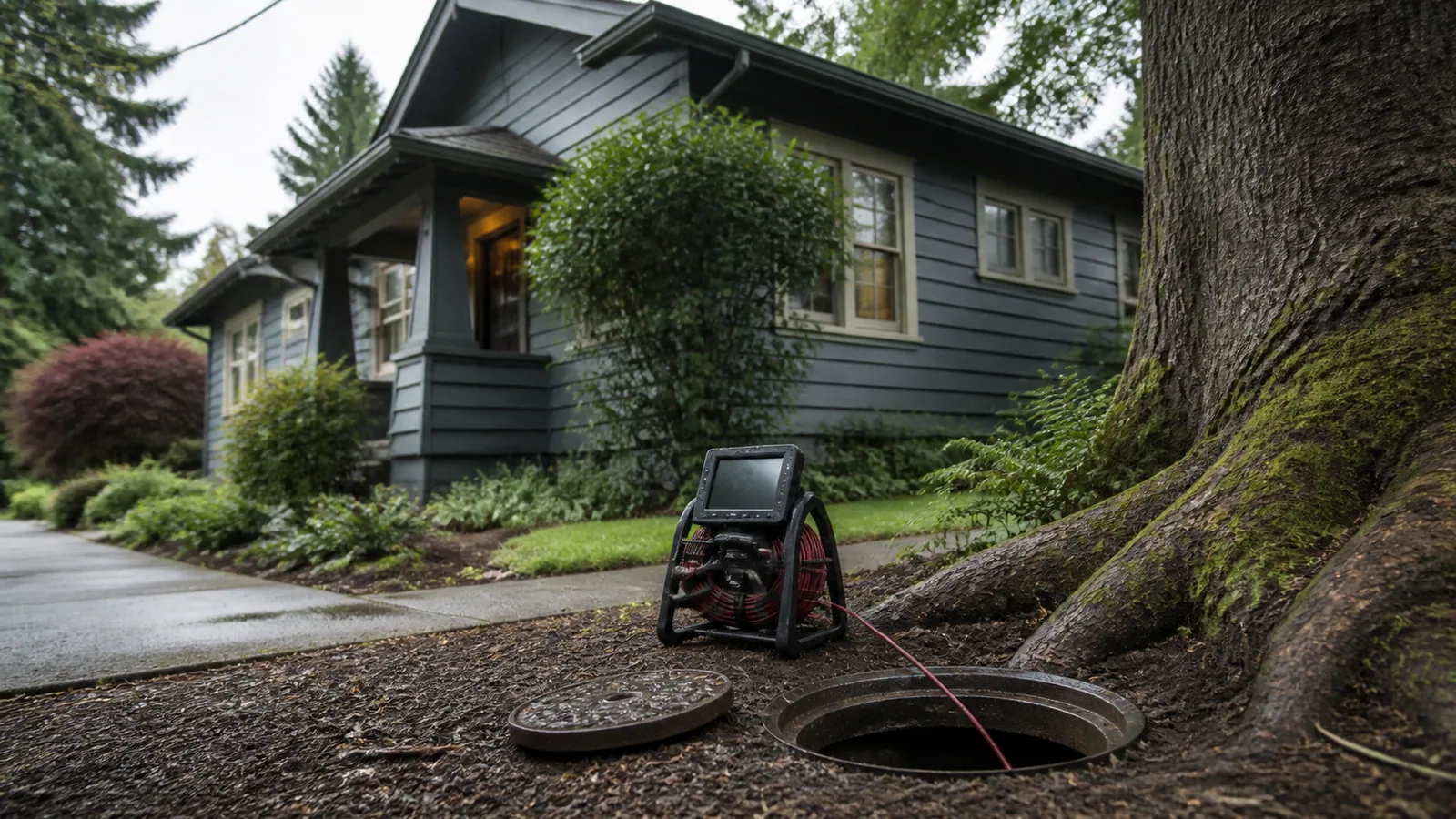
Vancouver Urban Forestry explains that roots generally enter sewer pipes where fractures or leaks already provide moisture and access; roots do not simply break a sound pipe on contact. Mature-tree neighborhoods can make root intrusion a useful diagnostic clue, but age, pipe material, joint condition, settlement, and previous repairs still determine the right fix.
A single slow sink is usually a local fixture or branch issue. Several low fixtures gurgling together, a floor drain rising when another fixture runs, or repeated main-line clearing points toward a larger drain or private lateral problem. Stop adding water when a backup is active.
What to document before the visit
List which fixtures are affected, the order symptoms appeared, recent rain, prior cleanout dates, and where the exterior cleanout is located. Keep children and pets away from wastewater. Do not mix chemical drain products; tell the plumber what was already used because incompatible cleaners can create hazards.
Ask whether the proposed work is a diagnostic clearing, a camera inspection, or a permanent repair. A useful camera report records the distance to the defect and identifies roots, offset joints, a belly, collapse, or buildup instead of describing every dark image as a broken pipe.
Private lateral or utility issue?
Vancouver operates a large wastewater collection system, while the homeowner is typically responsible for private plumbing and the service lateral as defined by local rules. The exact boundary and access conditions must be confirmed for the address. If neighbors are backing up at the same time or a public manhole is overflowing, contact the utility rather than sending anyone into the street.
Work that cuts pavement or changes the public right-of-way requires city coordination and an authorized contractor. Do not assume that a general plumbing quote includes excavation permits, traffic control, restoration, or utility locating.
Choosing between maintenance and replacement
Periodic professional cleaning may manage limited root intrusion, while repeated severe intrusion, collapse, or an offset line may justify repair or replacement. Request the video, marked defect location, method options, restoration plan, permit responsibility, and written exclusions. A trenchless method is not automatically best if access, grade, pipe condition, or connections make it unsuitable.
Homeowner questions
Do tree roots always mean the sewer line must be replaced?+
No. The decision depends on the pipe defect, severity, recurrence, grade, access, and whether cleaning can provide reliable service.
Should I keep running water to test a backup?+
No. Stop adding water when wastewater is rising. A plumber can test the line under controlled conditions.
What should a sewer camera report include?+
Ask for video, distance from an access point, identified defect type, marked location, and limits such as standing water that blocked the view.
Who handles a street-side sewer problem?+
Responsibility depends on the verified property and utility boundary. Contact the utility for simultaneous neighborhood backups or public-system overflow.
Primary sources
Official requirements can change. Confirm the current rule for your address and project with the named authority.