Garage Workshop Outlets in Woodland, WA: Plan Circuits Before Adding Tools
Plan garage outlet installation in Woodland with tool ratings, simultaneous loads, attached-versus-detached access, circuit protection and a complete electrical estimate.
Source-reviewed homeowner guide
Quick takeaways
- ✓More outlets do not create more circuit capacity.
- ✓List simultaneous loads and future equipment.
- ✓Compare routing, circuit additions and supply changes.
- ✓Include excavation, restoration and inspection records.
List the equipment that will operate together
Adding receptacles to a garage does not automatically add electrical capacity. Start with the tools and equipment you intend to use: a saw, dust collector, compressor, freezer, charger or other loads. Photograph each nameplate and read the manufacturer’s connection requirements. Tell the electrician which items run together and which are occasional. The same bench can need a very different circuit arrangement depending on simultaneous use and equipment ratings.
Describe whether the Woodland workspace is an attached garage, a detached shop or a small outbuilding. Along Lewis River Road, in East Woodland or near Green Mountain Road, the mailing address alone does not settle jurisdiction or site conditions. Note existing power, distance from the main panel, access and any planned expansion. Keep welding equipment, vehicle charging and electric heat visible in the planning list even if they will be installed later; they should not appear as surprise loads after the design is complete.
Lay out outlets around the actual work area
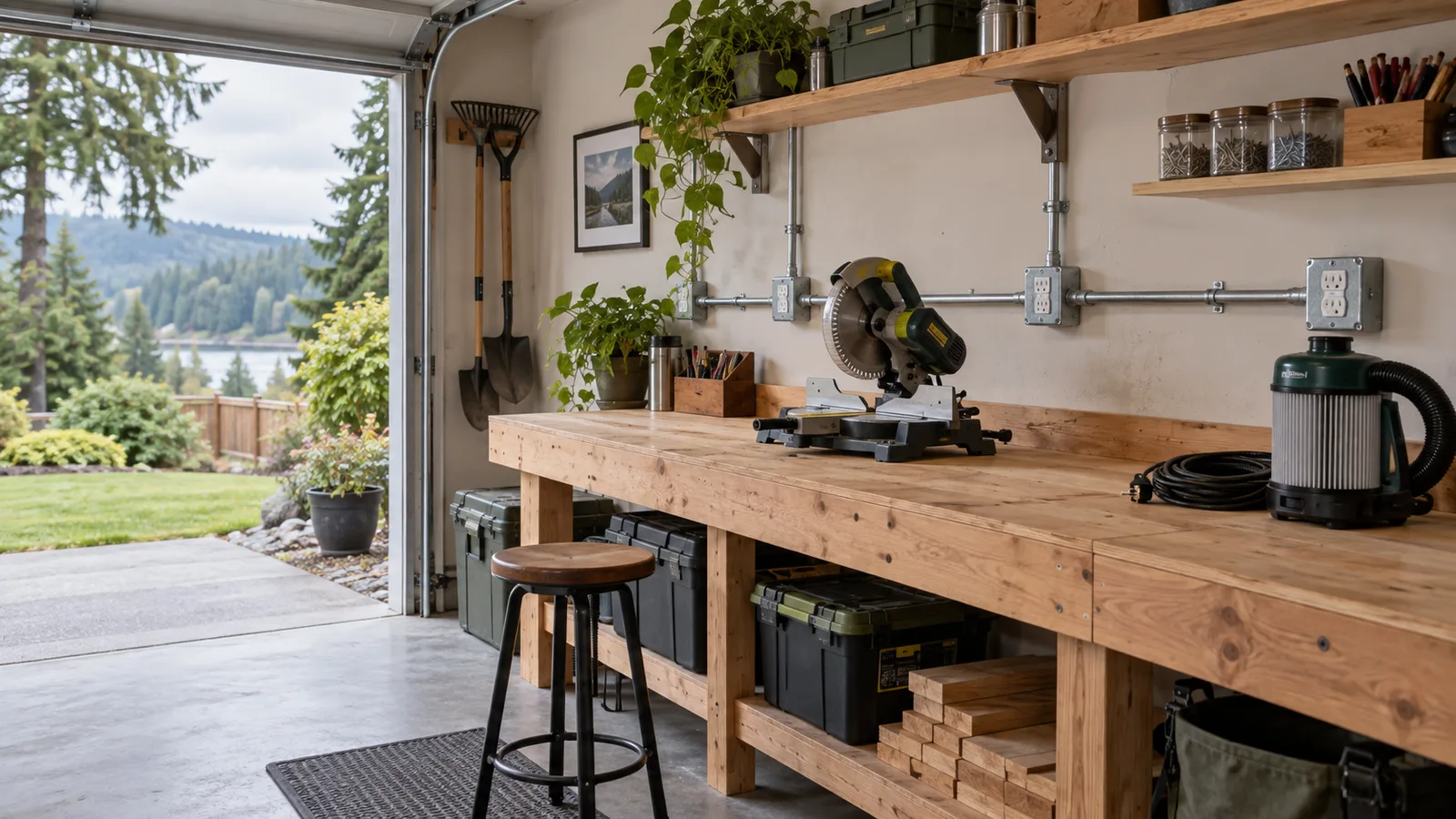
Sketch the bench, cabinets, garage-door tracks, parking spaces and tool positions. Show where cords would run during normal use and where plugs need clearance. Ask the electrician to place receptacles for the equipment and required protections, rather than simply adding evenly spaced boxes. For a fixed machine, its installation instructions may affect the connection type and location. A portable power strip cannot supply capacity that the branch circuit does not have.
Compare accessible surface-mounted routing with concealed cable work. Surface conduit may suit a workshop, while concealed work may involve opening and restoring finishes. Ask how boxes will be protected from vehicle or storage damage and how lighting will remain usable during planned work. If a detached shop needs a trench, arrange public utility locating and review private facilities separately before excavation. Include trenching, routing and surface restoration in the same site plan so responsibilities are clear.
- •Equipment nameplates and instructions collected
- •Simultaneous and future loads listed
- •Bench, tool and parking layout drawn
- •Attached or detached building identified
- •Routing, locates and restoration included
Assess existing supply before assuming a subpanel is needed
Ask for an assessment of the existing panel, circuit condition and available capacity. Empty breaker spaces do not establish the electrical capacity of the service, and a lack of nearby outlets does not automatically require a new subpanel. The electrician should compare an appropriate added branch circuit, changes to the existing supply and a subpanel only where the planned loads justify it. A detached building introduces additional design questions that cannot be resolved from a photo of the workbench.
The proposal should state the circuits, connection ratings, receptacles, protective devices, route and any panel changes. Washington electrical work is subject to the applicable licensing, permit and inspection requirements; ask the contractor to identify them for the actual address and scope. A Woodland project can involve Clark or Cowlitz County context, so use the parcel information rather than assuming every Woodland address has the same building authority. Electrical and building reviews should be coordinated when work affects the structure.
Compare a usable workshop, including completion records
Compare estimates on the same equipment list and layout. Separate electrical installation, trenching, difficult cable access, wall repair, painting and utility coordination where relevant. Ask what is excluded and how additional work is approved. Do not compare a quote for several outlet boxes with a quote that supplies new circuits and restores the wall as though they deliver the same workshop. Material specifications and permit responsibility belong in writing alongside the price.
At handoff, ask for circuit labels, the protection and operating checks performed, required inspection results and instructions for equipment connections. Review the intended work arrangement with the electrician before putting tools into service. Keep the layout and equipment list for future additions. To request garage outlet installation through KABLAY in Woodland, send the city, parcel context, panel photos with covers intact, tool ratings and the bench sketch. Verify electrical credentials and choose a scope that supports the intended use.
Plan the next step
Continue with a relevant local service, named request or supporting guide.
Electrical installation services in Woodland →
Choose the electrical scope for the workspace.
Plan new garage outlets and connections →
Attach tool ratings and the workbench layout.
Check Woodland parcel and remodeling constraints →
Review site conditions when the project affects the building.
Verify Washington contractor and trade credentials →
Confirm the credentials appropriate to electrical work.
Homeowner questions
Can I add outlets to the existing garage circuit?+
An electrician must assess its capacity, condition, planned loads and required protection. Additional receptacles alone do not increase available power.
Does a garage workshop always need a subpanel?+
No. The equipment, existing supply, routing and building arrangement determine whether added circuits or a subpanel are appropriate.
What information helps price workshop wiring in Woodland?+
Provide tool ratings, simultaneous use, the layout, panel information, building type, cable distance and access or trenching constraints.
Will 811 mark the existing private line to a detached shop?+
Do not assume it will. Private facilities need separate locating consideration alongside the public utility locate process.
Primary sources
Official requirements can change. Confirm the current rule for your address and project with the named authority.