Sump Pumps and Flood Readiness in Woodland, WA: Homeowner Checklist
A Woodland checklist for floodplain review, sump-pump maintenance, discharge, backup power, sewage risk and documented repair scopes.
Source-reviewed homeowner guide
Quick takeaways
- ✓Check parcel flood status first
- ✓Treat a sump pump as one measure
- ✓Test float, check valve and discharge
- ✓Use permitted electrical backup equipment
Start with the parcel’s mapped flood context
The City of Woodland says large portions of the city are in a floodplain and directs owners to FEMA map panels and Community Development for project review. Floodplain status is parcel-specific; a neighborhood name, elevation app or previous dry season is not a determination. Before changing drainage, adding fill, relocating equipment or remodeling lower space, ask the city whether floodplain, shoreline or elevation-certificate requirements apply.
Woodland’s published FAQs say certain permit applications in affected areas can require floodplain review, including some mechanical work and water-heater work. That does not mean every pump service needs the same review. It means homeowners should identify the exact address and scope before assuming a maintenance visit and a permanent flood-mitigation project are interchangeable. Keep the map panel and any elevation certificate with the home file.
A sump pump is one component, not a flood guarantee
A sump system can collect seepage or drainage water and move it to an approved discharge point. It cannot make a home immune to river flooding, overloaded drainage, sewer backup, foundation failure or a discharge line under water. FEMA’s homeowner guidance treats sump pumps as one possible measure among grading, backflow protection, utility elevation, flood-resistant materials and larger retrofit decisions. Match the measure to the water path.
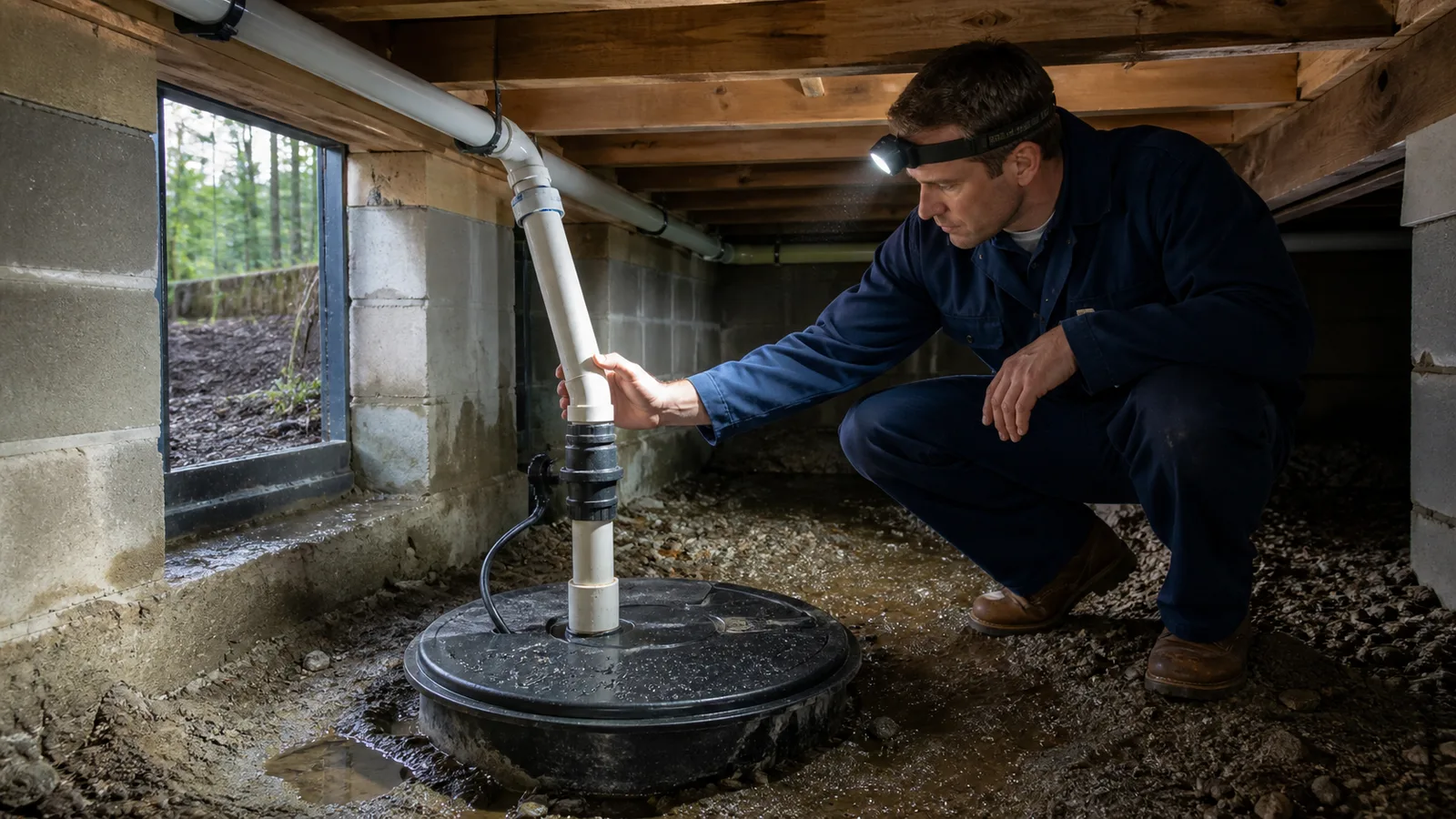
Locate the basin, pump, float, check valve, discharge route, electrical supply and backup. Note whether the system serves foundation drainage, a basement or crawlspace, and whether a second pump exists. Do not enter a flooded crawlspace or touch equipment in standing water. If floodwater, sewage or energized wiring may be present, leave the area and use qualified emergency help.
- •Flood map, elevation certificate and permit history
- •Basin condition, pump label, float movement and check valve
- •Discharge route, outlet condition and destination
- •Dedicated power, alarm and backup method
- •Sewage, contaminated water and wet-electrical hazards
Test the system before the storm window
Follow the manufacturer’s maintenance instructions and have a professional inspect anything unsafe or inaccessible. A controlled test should confirm that the float starts the pump, water leaves the basin, the check valve limits return flow and the discharge does not immediately recycle to the foundation. Listen for unusual cycling or vibration and verify that the outlet is not blocked by vegetation, sediment or damage. Never test by defeating guards or exposing wiring.
Record model and serial numbers, approximate age, test date and observed run time. If the pump cycles with no recent rain, investigate the source rather than assuming the machine is simply working well. If it does not run, distinguish pump failure from a tripped circuit, failed float, blocked impeller or discharge problem through qualified diagnosis. Replacing only the pump may not fix a poor basin, undersized line or bad outlet.
Plan backup power without creating another hazard
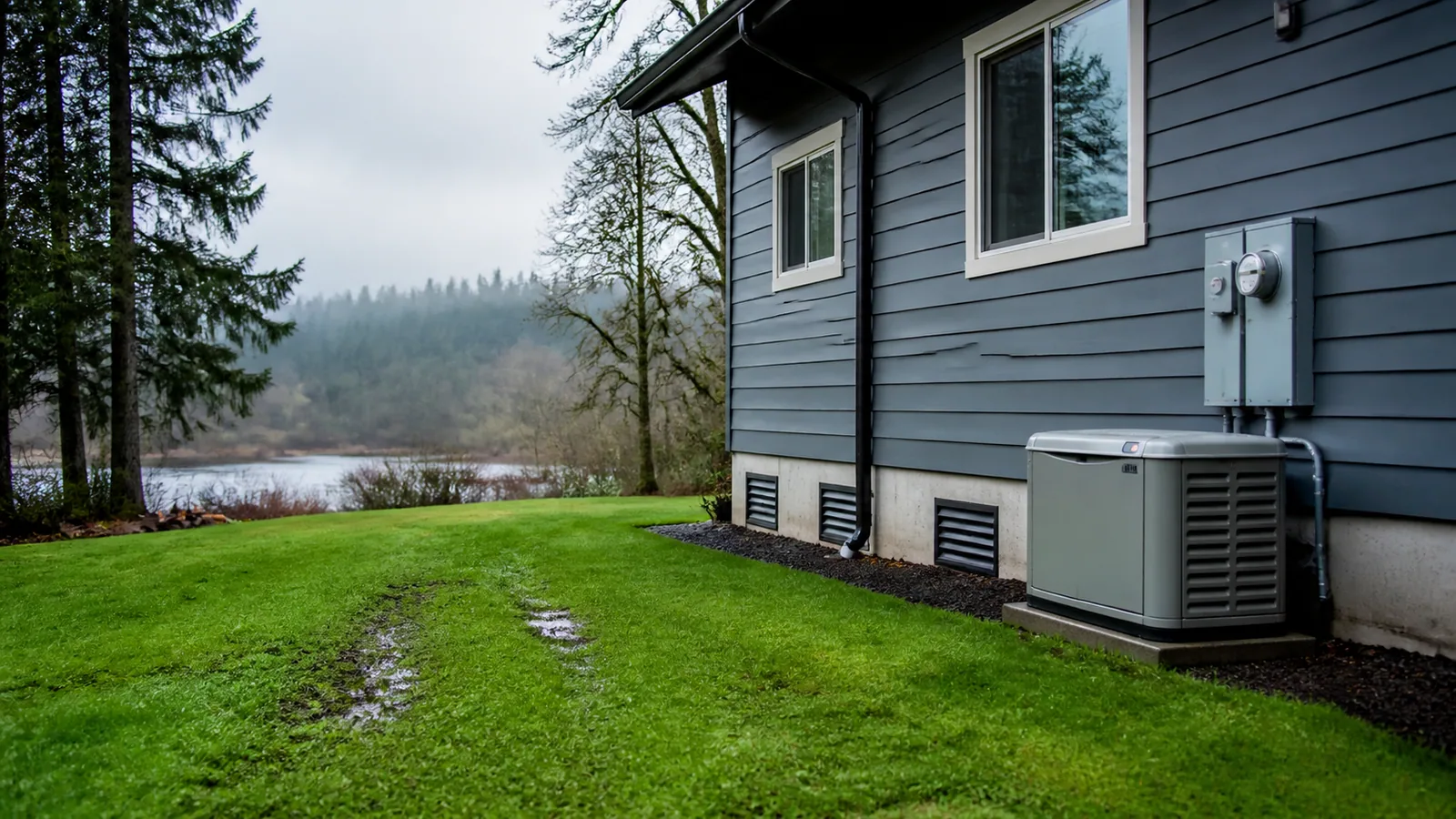
A battery backup has finite capacity, and actual runtime depends on pump demand, battery condition and system design. Ask the installer to document what is backed up, how alarms work, how batteries are tested and replaced, and what happens during an extended outage. A portable generator should never be improvised into house wiring. Permanent transfer equipment and generator connections are electrical work requiring the applicable licensed contractor, permit and inspection.
Keep electrical equipment above likely water exposure when the approved design allows and protect cords and connections from damage. Test alarms where they can be heard or monitored. A backup that has never been loaded is not a plan. For a private well, an outage also affects water supply and treatment; for municipal sewer or septic, backup risks are different. Include all critical systems in the household outage checklist rather than focusing only on one pump.
Write a complete flood-readiness repair scope
A good quote identifies the observed water source, pump and basin work, check valve, discharge size and destination, electrical circuit, alarm, backup, excavation, restoration, permit responsibility, testing and exclusions. It should not promise “flood proof” without engineering and a defined design basis. If a backwater valve, foundation drainage, grading or structural retrofit is proposed, price and permit that scope separately with the appropriate professional.
Save progress photos, permit and inspection results, test records, manuals and an emergency shutdown plan. Verify Washington contractor registration and plumbing or electrical credentials as the scope requires. KABLAY does not issue flood determinations or guarantee protection; it helps Woodland homeowners organize an address-specific request. Official flood maps, city review and qualified design remain the authority for the property.
Plan the next step
Continue with a relevant local service, named request or supporting guide.
Homeowner questions
Will a sump pump flood-proof my Woodland home?+
No. It addresses a defined water path and can fail or be overwhelmed. Parcel flood risk and broader mitigation need official review and qualified design.
How often should I test the pump?+
Follow the manufacturer and service plan, and test before wet-weather risk. Record the result instead of waiting for an emergency.
Can I discharge water anywhere outside?+
No assumption is safe. Confirm the approved destination and ensure water does not recycle to the foundation, damage neighbors or enter a prohibited system.
Can I connect a generator directly to the house for the pump?+
Never improvise or backfeed. Permanent transfer equipment and generator connections require appropriate electrical design, licensing, permitting and inspection.
Primary sources
Official requirements can change. Confirm the current rule for your address and project with the named authority.