Post-Construction Cleaning in Battle Ground, WA: Dust and Final-Clean Scope
Separate contractor cleanup from a detailed final clean, contain drywall and silica dust, protect new finishes and write a room-by-room handoff before move-in.
Source-reviewed homeowner guide
Quick takeaways
- ✓Separate trade cleanup, debris hauling and final cleaning.
- ✓Match the cleaning method to the dust source.
- ✓Protect new finishes and pre-1978 occupants.
- ✓Accept the job room by room in daylight.
Define where construction ends and cleaning begins
“Broom clean” is not the same as move-in ready. Before pricing, list every room and separate debris hauling, trade cleanup, rough cleaning and detailed final cleaning. The renovation contractor should remove tools, fasteners, packaging, cutoffs and regulated waste and should deliver completed, cured surfaces. A cleaning crew should not be asked to hide unfinished punch-list work, scrape unknown residue from new products or move heavy construction debris that was never disclosed.
Walk the Battle Ground project with the contractor and cleaner before the final-clean date. Record square footage, ceiling height, stairs, occupied zones, pets, water and power access, parking and the condition of cabinets, fixtures, appliances, windows and floors. Photograph existing scratches and manufacturer labels. If inspections or corrections remain, schedule them before detailed cleaning; opening walls, sanding a patch or trimming a door afterward can spread dust through the finished house again.
Identify dust before selecting the method
Drywall dust, sawdust, ordinary soil, grout haze, paint drips and dust from cutting concrete or engineered stone are not interchangeable. OSHA regulates worker exposure to respirable crystalline silica and restricts housekeeping practices that create exposure when safer feasible methods exist. The cleaner should know what work produced the residue. Do not begin with dry sweeping or compressed air that redistributes fine material into lungs, ducts, cabinets and newly cleaned rooms.
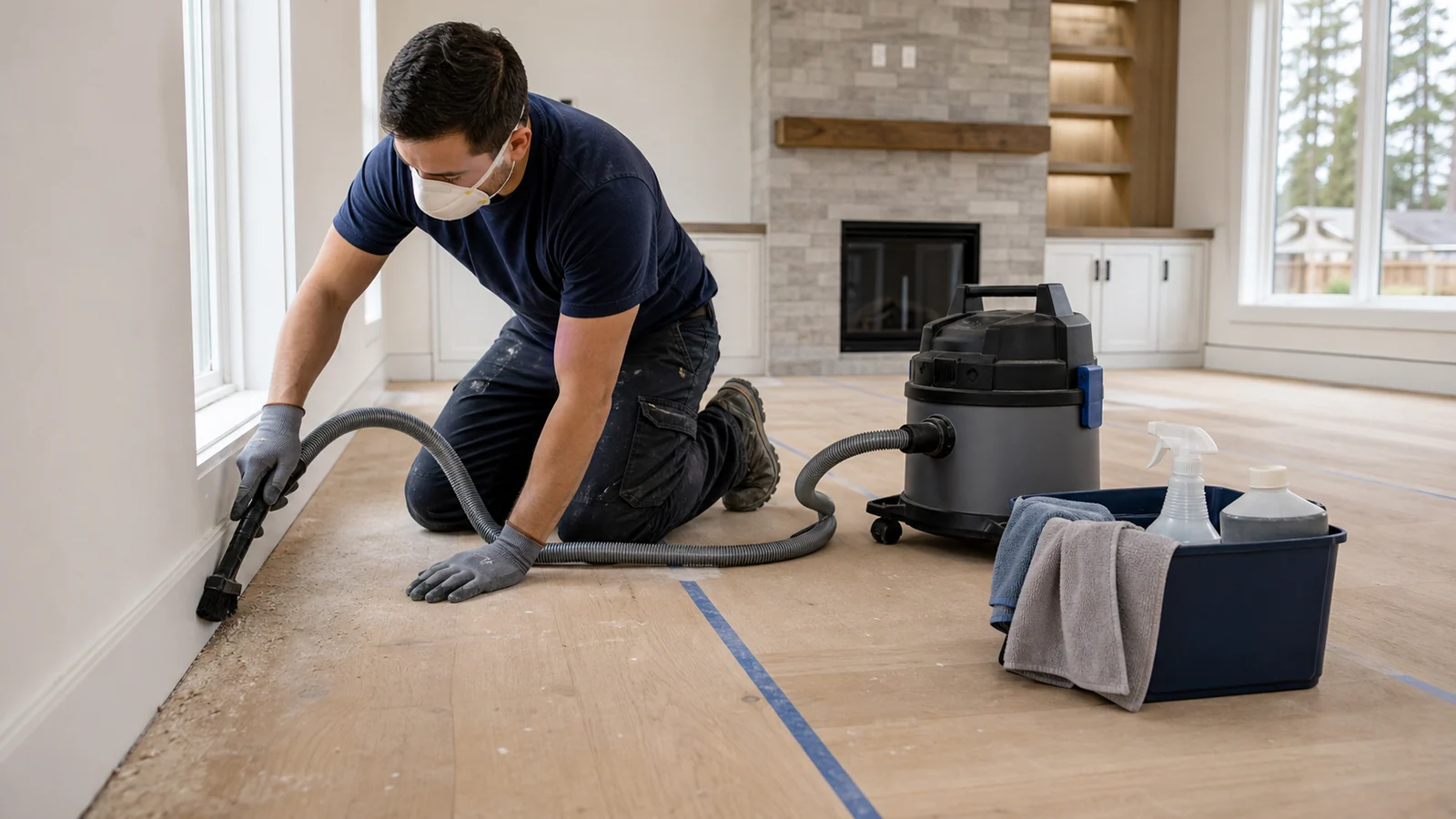
EPA remodeling guidance emphasizes containment, source control and ventilation. Keep dusty areas separated until the creating trade finishes its own controlled cleanup. Use appropriate HEPA-filtered vacuuming and damp wiping for fine settled dust, moving from high surfaces down and from clean zones toward the exit. Filters, bags and tools must match the hazard and manufacturer instructions. Ordinary household vacuums can leak fine particles and should not be presented as HEPA systems merely because a replacement filter fits.
- •Debris hauling and final cleaning separated
- •Dust-generating materials identified
- •HEPA equipment and damp-wipe method specified
- •HVAC registers and occupied zones protected
- •Unknown lead, silica or mold residue escalated
Protect new finishes and older-home occupants
New paint, grout, sealants, floor finishes and cabinetry may have cure times and chemical restrictions. Collect product care instructions before anyone uses solvent, scraper, steam or abrasive pad. Test a small hidden area and assign responsibility for adhesive, paint, silicone and cement residue. A cleaner should not be forced to choose between leaving a mark and damaging a warranty. Ventilation after installation also matters; EPA advises protecting occupants from pollutants and continuing suitable ventilation after products that off-gas are installed.
For pre-1978 homes, renovation dust can include lead when painted surfaces were disturbed. EPA describes lead-safe containment and cleaning practices and recommends certified help for covered work. Final cleaning does not retroactively make an uncontrolled renovation lead-safe. Stop and clarify who performed the disturbance, what containment was used and whether verification or testing is needed. Likewise, visible mold, sewage, sharps and unknown chemical residue require a separate qualified plan, not a standard housekeeping add-on.
Use a room-by-room acceptance checklist
A complete Battle Ground scope can include cabinet and drawer interiors, tops of doors and trim, ledges, fixtures, appliance exteriors and approved interiors, window glass and tracks, baseboards, closets, stairs, floors and accessible vents. State whether stickers, protective films, garage, porch and exterior glass are included. Set the number of cleaning passes and the method for dust that settles after HVAC operation. Price high glass, heavy residue and return visits explicitly rather than assuming they are part of one flat fee.
At handoff, inspect in daylight with clean socks or shoe covers. Use a white cloth on representative horizontal surfaces, open cabinets, look along floors with low-angle light and check that drains and appliance openings are free of debris. Save before-and-after photos and a signed exception list. Battle Ground requires permits for many remodel scopes, but a clean room does not prove permit finals. Keep the building closeout, trade warranties and cleaning acceptance as separate records.
Plan the next step
Continue with a relevant local service, named request or supporting guide.
Compare cleaning services in Battle Ground →
Review deep, move-in, post-renovation and window cleaning.
Describe post-construction cleaning →
Add rooms, materials, dust source, surfaces, glass and timing.
Build a detailed turnover checklist →
Define cabinets, appliances, floors, photos and exclusions.
Close out a Battle Ground remodel →
Keep permit finals, punch lists and contractor records separate.
Homeowner questions
Is post-construction cleaning the contractor’s responsibility?+
The contract should separate trade cleanup and debris removal from a detailed final clean. Do not rely on an undefined “broom clean” promise.
Can I use a household vacuum on drywall dust?+
Many household vacuums can release fine dust. Specify suitable HEPA-filtered equipment and follow its containment and filter instructions.
Why avoid dry sweeping?+
It can redistribute fine dust. Silica rules also restrict dust-creating housekeeping where safer feasible methods are available.
When should final cleaning happen?+
After dusty corrections and inspections are complete, surfaces have cured, debris is removed and the space is ready for a documented handoff.
Primary sources
Official requirements can change. Confirm the current rule for your address and project with the named authority.