After Drywall Repair in Hazel Dell, WA: Cleanup, Records and Follow-Up
Separate contractor debris removal from detailed cleaning, check the repaired surface and know which records to keep after the crew leaves.
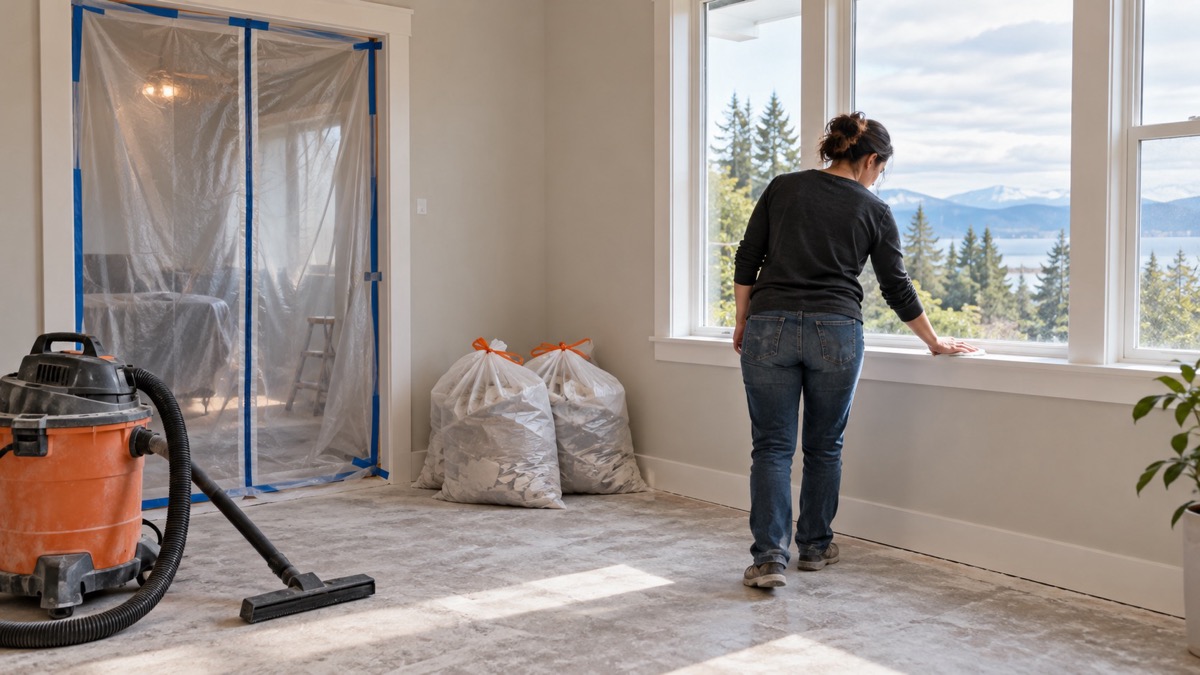 Illustration · not a completed project photo
Source-reviewed homeowner guide
Quick takeaways
- ✓Define whether paint and texture are included.
- ✓Separate debris hauling from detailed cleaning.
- ✓Check the patch and access path.
- ✓Keep records and investigate returning moisture.
Define the handoff before the patch is made
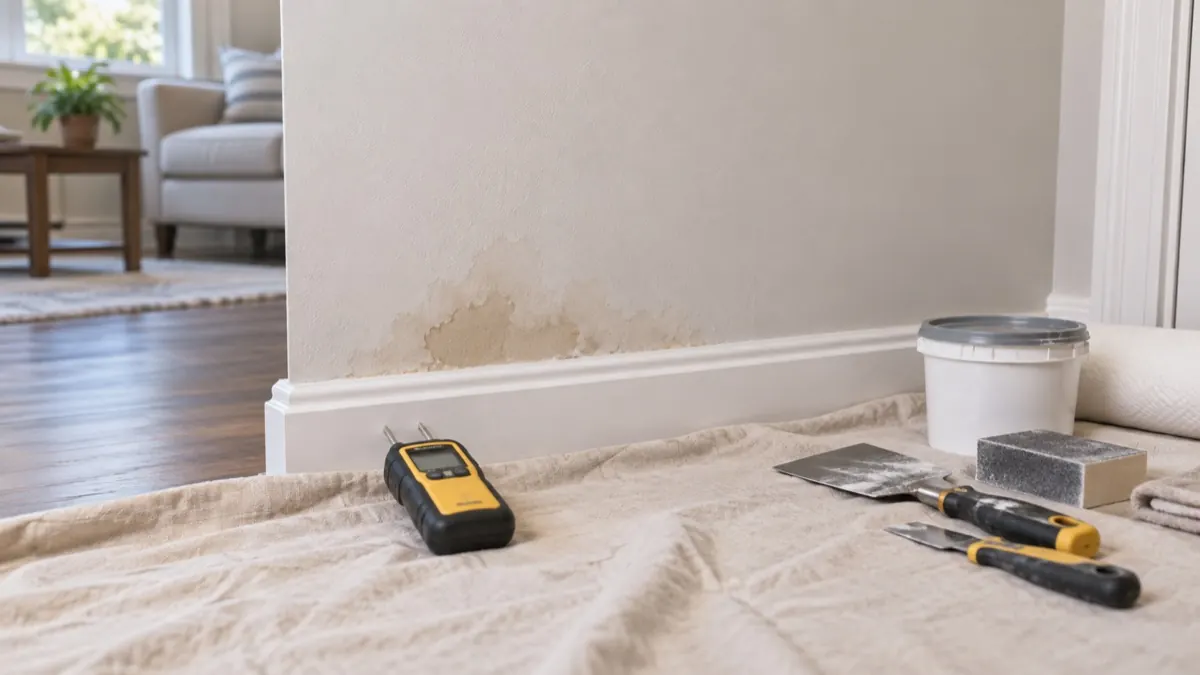
A drywall repair can finish at several different stages: taped and sanded, primed, texture matched or fully painted. Put the expected finish level in the accepted scope with the surrounding wall or ceiling as a reference. For a water-damaged patch in Hazel Dell, also record who confirmed that the moisture source was corrected and when the cavity was ready to close. A smooth new patch over an unresolved leak is not a completed repair.
Ask who removes demolished board and packaging, who cleans fine dust from the immediate work zone, and whether adjacent rooms, window tracks, vents or furniture are included. These are separate tasks. A contractor may leave the trade area broom clean while a post-construction cleaner handles detailed surfaces later; neither arrangement should be assumed. Agree on protection, equipment and timing before anyone cuts or sands.
- •Finish stage and texture reference
- •Moisture source and closure check
- •Debris removal versus detailed cleaning
- •Rooms and surfaces included
Inspect the repair and the surrounding room
When the surface is ready for its agreed inspection, look across it in ordinary room light and compare the texture, joint edges, primer or paint boundary to the accepted scope. Note any visible ridges, missed corners, fastener spots or paint marks on trim. Do not demand an invisible match if the agreement only covered a raw patch; instead, document the next painting stage and who owns it. Photograph specific concerns from a fixed distance and close up.
Walk beyond the patch. Check floors, door tracks, windowsills and the path used to move material. Confirm tools, sharp offcuts, screws and bags have been removed from occupied areas. If more sanding is needed, schedule it before the final detailed clean; otherwise the room will be dusty again. Put remaining corrections and the return date in a short written punch list, then ask for a receipt and any product or warranty documents actually offered.
Treat older coatings and disposal as separate safety questions
If covered renovation disturbs paint in a pre-1978 home, EPA’s lead-safe rule calls for containment, specific work practices, thorough cleanup and verification by appropriately certified people. Ordinary housekeeping is not a substitute for that required process. Ask the provider about the applicable rule and the work-area handoff before occupants return. Do not run a household vacuum over unidentified fine dust or scatter it through occupied rooms.
Clark County lists paint and other household hazardous products in its waste guidance. Determine what the contractor will take away and where leftover homeowner materials should go; do not put unknown chemicals or paint in ordinary trash by assumption. Save before-and-after photos, accepted changes, receipts and the name of the contact for follow-up. If staining or moisture returns, document when and where it appeared and address the source before ordering another cosmetic patch.
Plan the next step
Continue with a relevant local service, named request or supporting guide.
Homeowner questions
Is a drywall patch automatically paint-ready?+
No. Confirm whether the agreed handoff is raw, sanded, primed, textured or painted.
Is broom-clean the same as a detailed clean?+
No. Define the rooms and surfaces for each task in the written scope.
What if the water stain returns?+
Record the recurrence and address the moisture source before another cosmetic repair.
Primary sources
Official requirements can change. Confirm the current rule for your address and project with the named authority.