Crawlspace Moisture After High Water in Woodland, WA
A safe sequence for documenting water, separating plumbing from groundwater, drying materials and avoiding cosmetic repairs before the source is controlled.
Source-reviewed homeowner guide
Quick takeaways
- ✓Do not enter water, sewage or electrical hazards.
- ✓Diagnose plumbing, surface water, groundwater and condensation separately.
- ✓Document dry conditions before insulation or finish restoration.
Treat entry conditions as a safety decision
Do not enter a crawlspace with deep water, sewage, damaged wiring, unstable supports, strong chemical odor or uncertain air. Shut off affected electrical circuits only from a dry, safe location if you know how, and call the appropriate professional or emergency service. Photograph from the access and outside first. A contractor can plan safer pumping, electrical isolation and confined access.
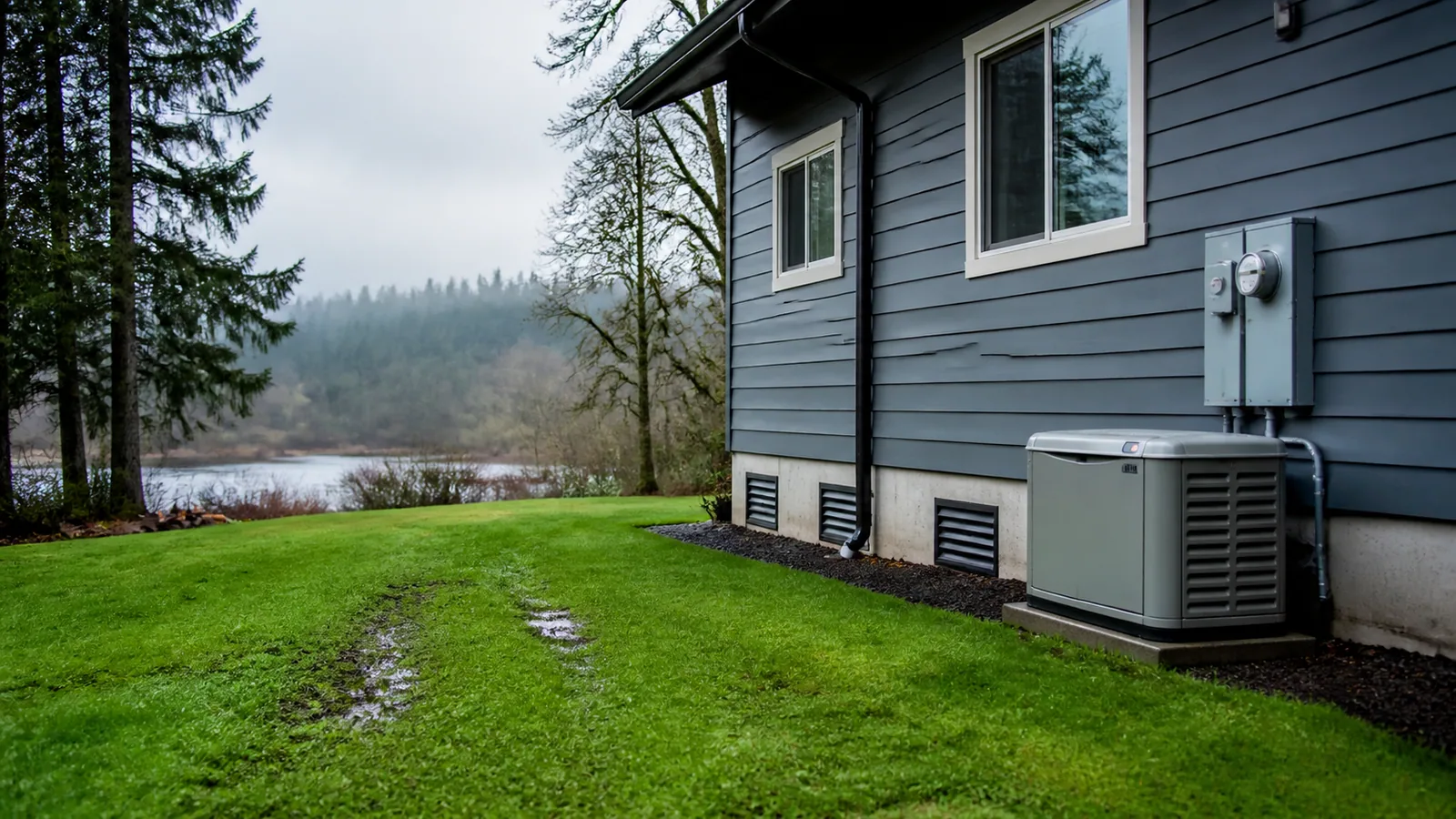
Record rainfall timing, river or neighborhood water conditions, plumbing use, sump operation and whether moisture continues during dry weather. Photograph the water boundary, foundation vents, ground cover, insulation, ducts, pipes, posts, downspouts, grade and discharge points. Those observations help separate a leaking pipe, surface drainage, groundwater, sewer event and condensation instead of labeling every wet crawlspace “mold.”
Control the source before removing finishes
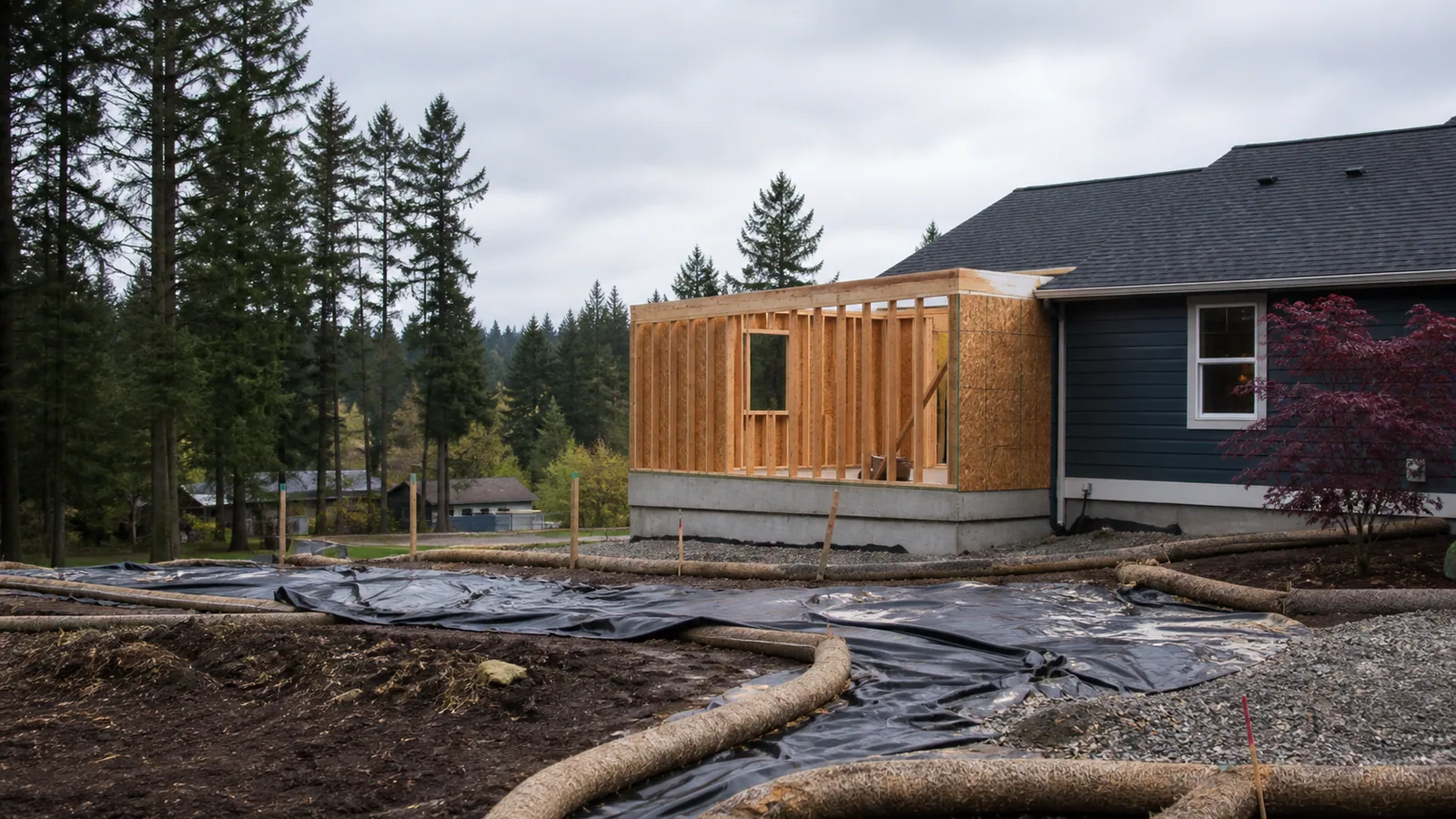
Woodland states that large portions of the city are in floodplain and that development activity there can require additional review. Floodwater management, a private drainage change and an interior pipe repair are different scopes. Do not pump dirty water into a street drain or neighboring lot without an approved destination. Confirm floodplain or shoreline implications before permanent grading, openings, walls or equipment changes.
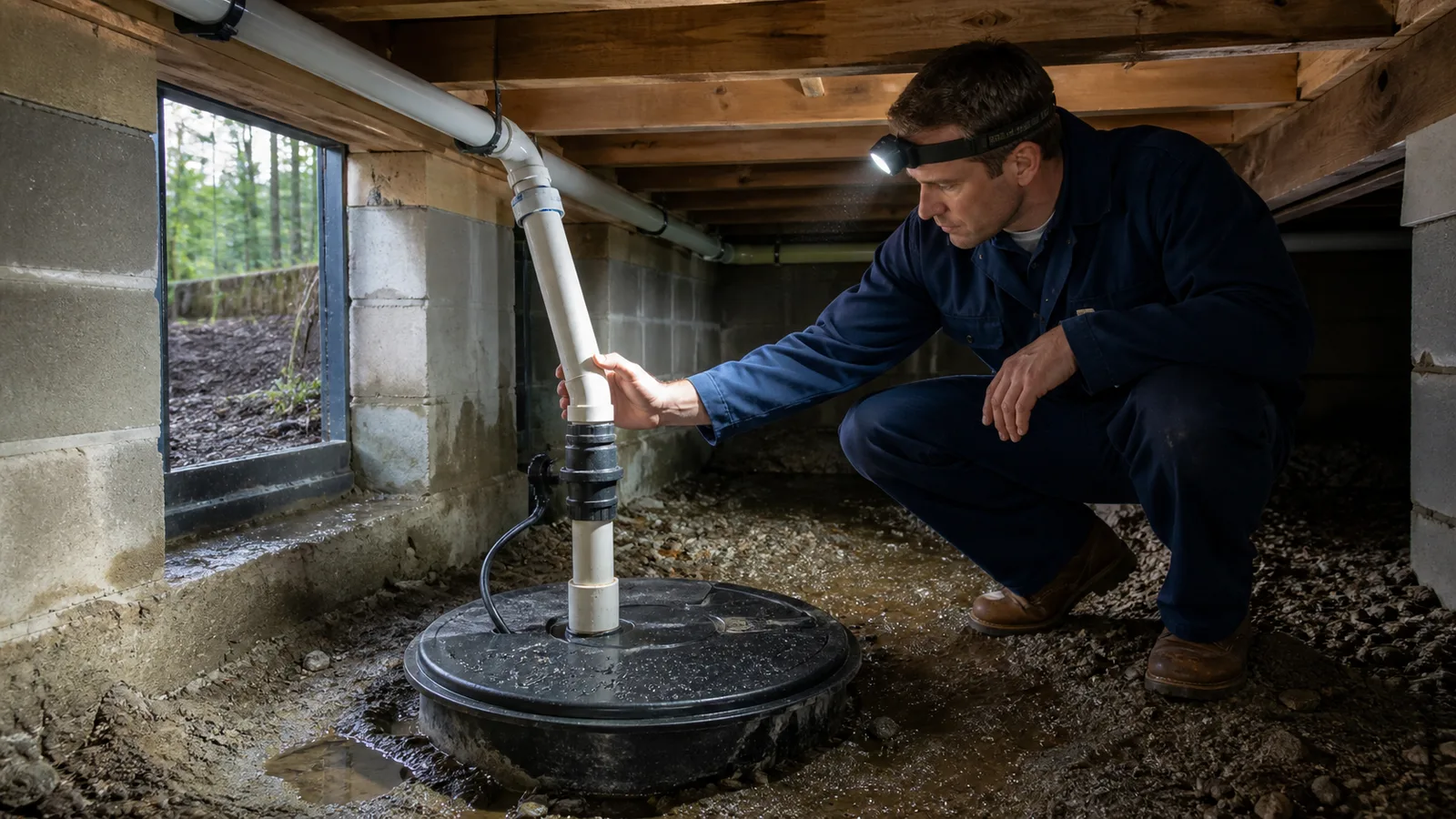
A durable plan may involve gutter or grade correction, an approved sump system, plumbing repair, ground-cover restoration, duct or insulation work and controlled drying. Do not install a pump without a legal, freeze-protected discharge and serviceable power. A pump can manage water but does not repair a foundation leak or blocked drainage path. Ask every bid to name the diagnosed source and the evidence supporting it.
- •Entry hazards and electrical condition assessed
- •Rain, plumbing use and dry-weather behavior recorded
- •Exterior grade, downspouts and discharge mapped
- •Floodplain review checked before permanent changes
- •Drying measurements recorded before reconstruction
Dry and remove materials by condition
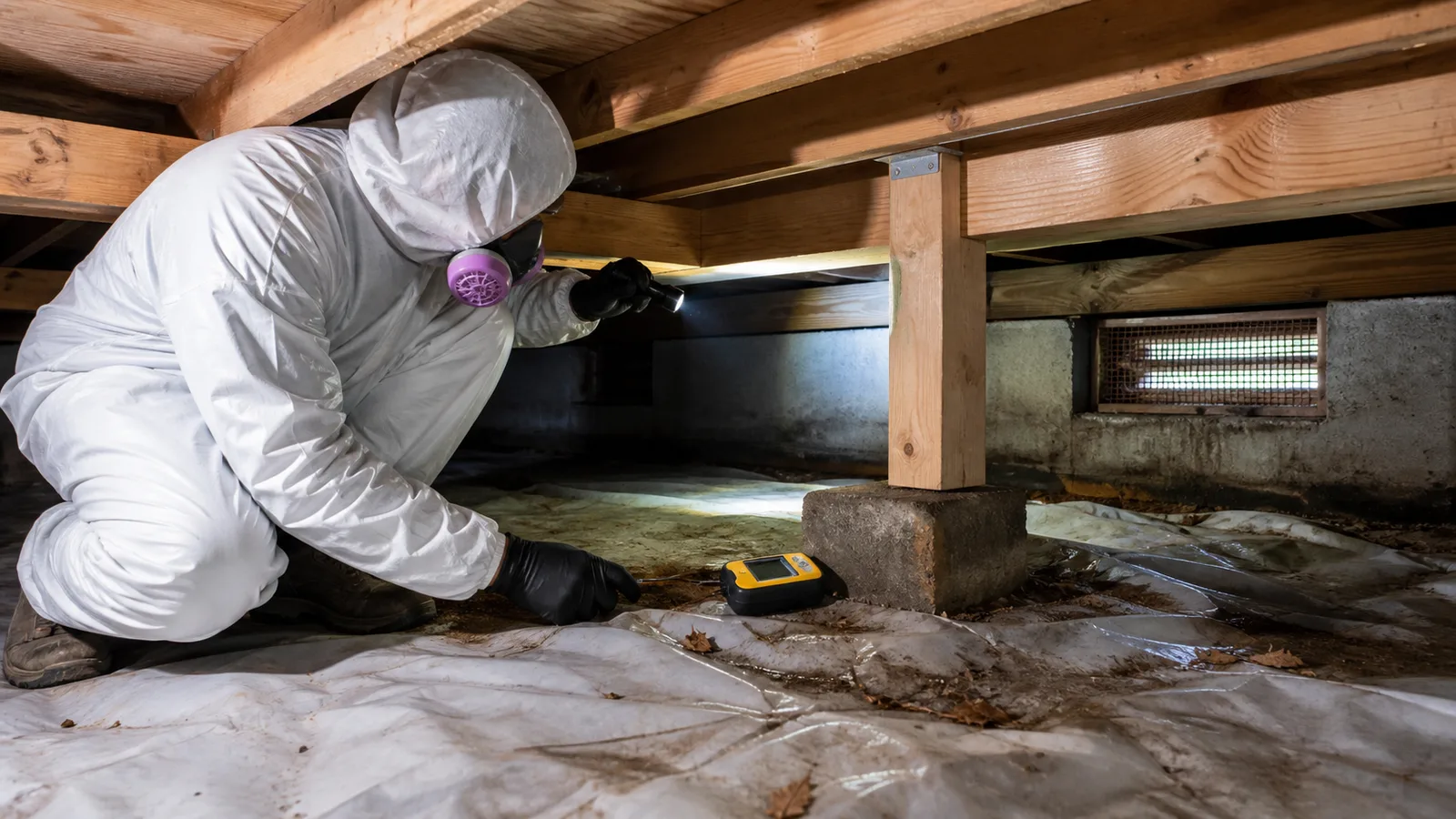
The EPA emphasizes moisture control as the key to mold control. Wet porous insulation, paper-faced drywall or debris may need removal depending on contamination, duration and condition, while sound framing may be cleaned and dried. Do not coat damp wood, hide staining with paint or replace insulation against wet materials. Ask for moisture readings, drying goals, containment and disposal methods rather than a promise to spray everything.
If sewage or contaminated floodwater entered, use professionals equipped for that hazard. Protect occupied areas from tracked soil and airborne debris. Drying equipment needs safe power and a planned condensate route. A dehumidifier alone cannot overcome ongoing water entry. Before reconstruction, document that the source is controlled and materials have reached an appropriate dry condition for the planned finish.
Close the project with maintenance and records
A complete scope identifies investigation, water removal, contamination category, discarded materials, drying equipment, electrical provisions, plumbing or drainage repair, permits, inspection, insulation, ground cover and finish restoration. Separate emergency work from permanent work. Verify contractor registration and any specialty qualifications; Clark County or other authorities may regulate specific septic, electrical or structural parts separately.
Keep before-and-after photos, moisture logs, equipment readings, permits, invoices and product information. Test alarms and backup power for an installed sump, and inspect the discharge during rain. Recheck the crawlspace after the next sustained storm and during the dry season. If water returns, use the record to challenge the source diagnosis rather than paying for another layer of cosmetic cleanup.
Plan the next step
Continue with a relevant local service, named request or supporting guide.
Homeowner questions
Can I pump crawlspace water into the street?+
Do not assume so. The water and destination may be regulated; confirm an approved discharge.
Does a sump pump fix the source?+
Not necessarily. It manages collected water but may not correct grading, foundation, plumbing or drainage failures.
Should wet insulation stay in place to dry?+
Condition and contamination matter. Ask for a material-specific assessment and moisture readings.
When should I recheck the crawlspace?+
After the next sustained rain and again in a dry period.
Primary sources
Official requirements can change. Confirm the current rule for your address and project with the named authority.