Bathroom Remodel Change Orders in Longview, WA: Approve Before Extra Work
When demolition reveals hidden damage, document the finding, revised scope, permit impact, cost and schedule before work resumes.
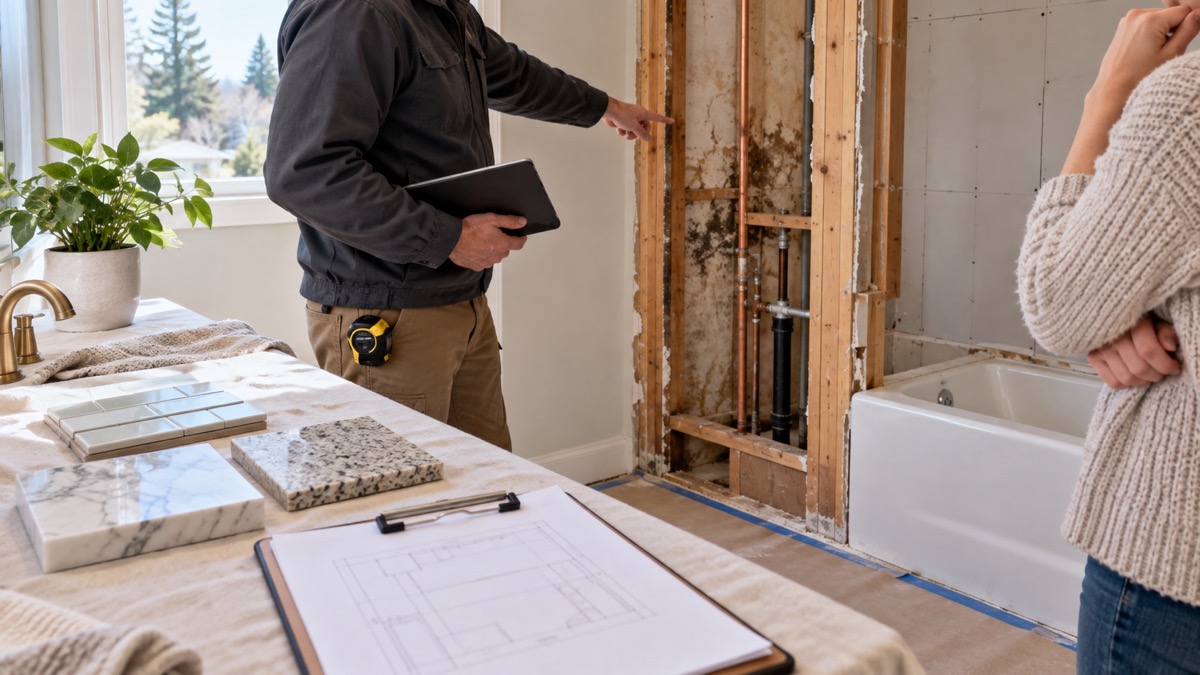 Illustration · not a completed project photo
Source-reviewed homeowner guide
Quick takeaways
- ✓Photograph hidden conditions before covering.
- ✓Stop affected work until the revision is agreed.
- ✓Price scope, tax and schedule in writing.
- ✓Keep permit and inspection records.
Treat a newly exposed condition as a decision point
Removing tile or a vanity can expose soft framing, damp substrate, an old drain arrangement or an electrical conflict. A photograph is evidence of the visible condition, not a diagnosis of its full cause. Ask the contractor to stop the affected portion, make it safe, show you the opened area and explain what inspection or specialist assessment is needed. Unrelated work may continue if it does not conceal the issue or interfere with required inspection.
Create one dated record with the location, photographs, who observed the condition and what is known versus still unknown. Avoid approving “repair all damage” without a boundary. For a Longview bathroom, distinguish a limited substrate replacement from moving fixtures, altering wiring or changing structural members. Each can require a different qualified trade, permit and revised schedule.
- •Dated photos before covering
- •Condition and proposed investigation
- •Work paused or allowed to continue
- •Who decides and by when
Make the change order specific enough to price
Washington L&I tells homeowners to put changes in writing and avoid verbal amendments. A useful change order identifies the original contract item, new work, quantities or allowances, materials, exclusions, added or credited amount, tax treatment, and revised payment milestone. It should also say whether the completion date moves and whether a further hidden condition will trigger another approval instead of an open-ended charge.
Compare the change to the original bid so demolition, waterproofing, tile, plumbing and cleanup are not paid for twice. Record who supplies fixtures and who bears the cost if a selected product is unavailable. Both sides should receive the accepted version before the added work begins. A text saying “go ahead” without a price and scope can create an avoidable dispute.
Recheck Longview permits and the closeout path
Longview’s Building Division lists building, plumbing and mechanical permits, inspections and a property-record search. Use the exact jobsite address to confirm which authority applies and ask the responsible office whether the changed bathroom plan needs a permit revision or another inspection. The contractor should identify who files the update and who schedules inspections; the homeowner should keep permit numbers and final results with the contract.
Do not cover a wall or shower assembly while required inspection or moisture investigation is still open. At completion, compare the installed work with the original agreement plus every accepted change order, then walk through a punch list before final payment. L&I recommends receipts, written payment stages and applicable lien releases. KABLAY can connect a Longview request to an available provider, but cannot infer the condition behind an unopened wall.
Plan the next step
Continue with a relevant local service, named request or supporting guide.
Homeowner questions
Can the contractor proceed on a verbal change?+
Washington L&I advises written changes. Record scope, price and timing before additional work starts.
Does every opened wall require a new permit?+
No universal rule applies. Ask Longview or the actual parcel jurisdiction about the changed scope and required inspection.
What if the extent of damage is still unknown?+
Authorize a bounded investigation first, then price the repair once the condition is documented.
Primary sources
Official requirements can change. Confirm the current rule for your address and project with the named authority.